
























Folding carton styles are mainly distinguished by their closure and base structure. Common options include straight tuck, reverse tuck, French reverse tuck, 1-2-3 snap-lock, auto-lock, auto-bottom, crash-lock, and seal-end cartons. Sleeves, tray-and-sleeve cartons, windows, hangers, and inserts are related formats or features. The right choice depends on product weight, filling method, shelf presentation, board, volume, and total cost.
If you are comparing options for a food or beverage SKU, begin with Armour Rose’s custom folding carton solutions after confirming the product and filling requirements.
Two cartons can share the same dimensions, the same board, and the same artwork, then be quoted at different prices, erect at different speeds, and fail at different rates in transit. The difference is style: how the top and bottom of the box open, close, and lock. For brands running protein bars, cookies, popcorn, or single-serve snacks, that one structural decision sits underneath unit cost, pack line labour, and how the product looks facing a shopper.
What a Folding Carton Is, and Why Style Drives Cost
A folding carton is a paperboard package made from a die-cut, creased blank. It is commonly supplied flat and formed, filled, and closed by hand or with equipment. Many cartons use a glued side seam, but the exact construction depends on the style and supplier specification.
Style is structural, not graphic. It influences load support, setup and filling, board use, and shelf presentation. A quote can change when the closure, blank layout, board specification, tooling, or assembly requirements change, even when the outside dimensions and artwork stay the same. That is why the style conversation belongs at the start of a folding carton packaging project rather than after artwork is approved.
Folding Carton Style vs. Format: What Are You Comparing?
Packaging teams often use “carton style” as a broad term, but several different decisions can be involved:
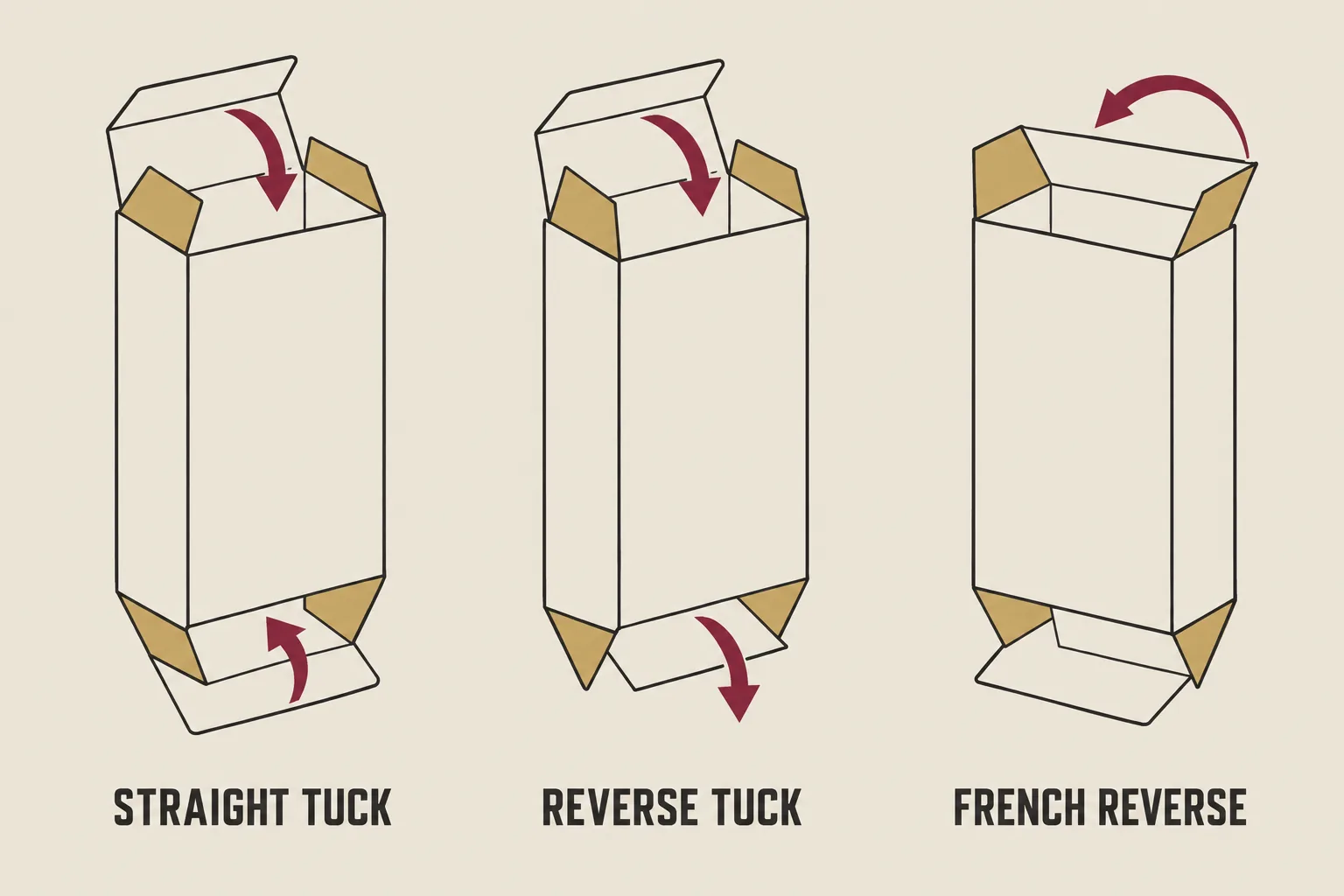
- Closure styles include straight tuck, reverse tuck, French reverse tuck, and seal-end cartons.
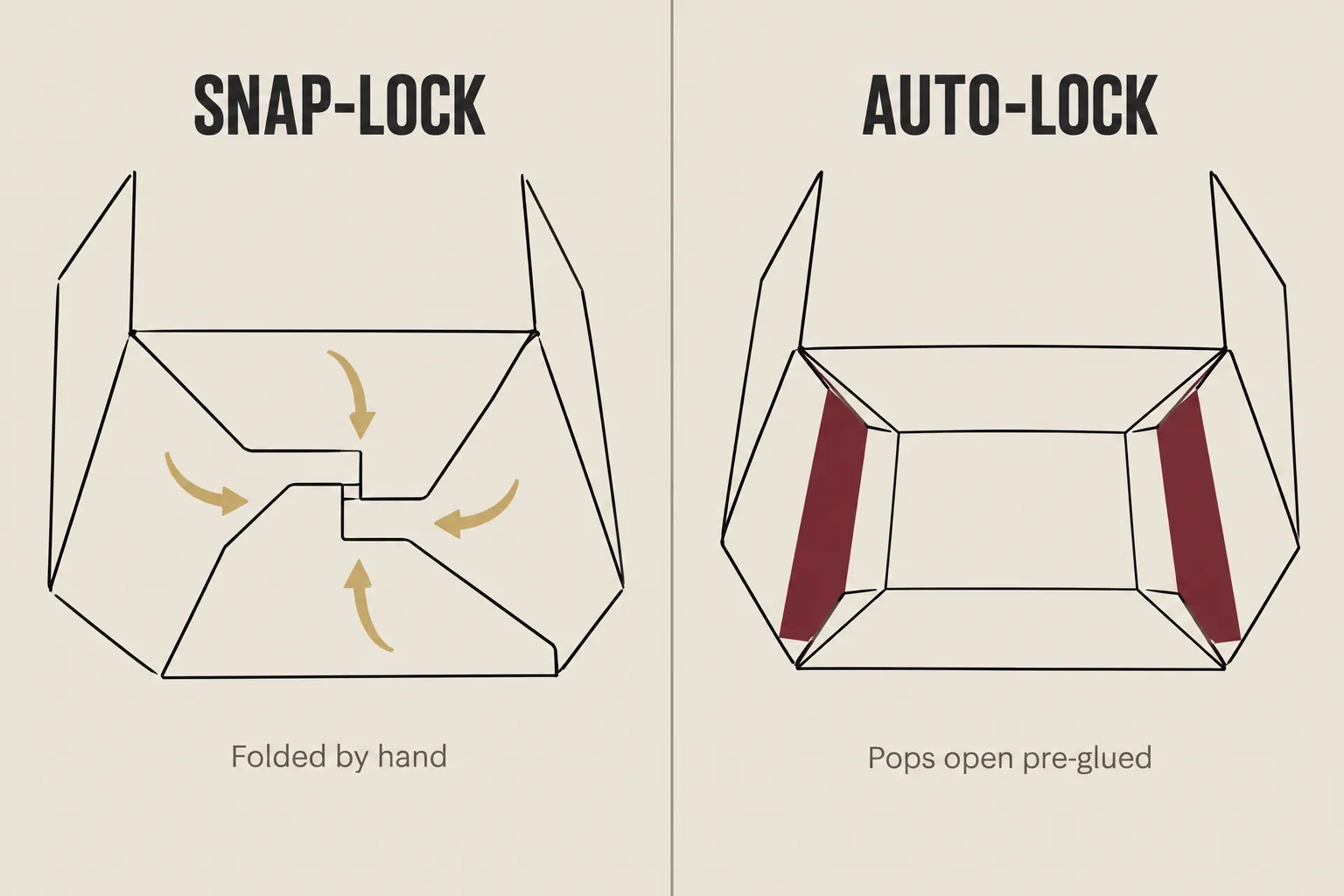
- Base structures include 1-2-3 snap-lock bottoms and pre-glued auto-lock or crash-lock bottoms.
- Formats include sleeves, trays, tray-and-sleeve cartons, two-piece cartons, and display cartons.
- Features include windows, inserts, cutouts, hang tabs, and dispensing openings.
Separating these categories makes a quote easier to compare. A sleeve, for example, is a format; an auto-lock bottom is a base structure; and a window is a feature that may be added to a compatible blank.
Folding Carton Styles at a Glance
| Style | Main structure | Often considered for | Main trade-off |
|---|---|---|---|
| Straight tuck end | Top and bottom flaps tuck in the same direction. | Clean front-facing retail presentation. | Board yield and price depend on the blank, sheet layout, and board. |
| Reverse tuck end | Top and bottom flaps tuck in opposite directions. | Common retail cartons where material efficiency matters. | A tuck edge may be visible on the front panel. |
| French reverse tuck | The top closure hinges from the front and tucks into the rear; the bottom closure hinges from the rear and tucks toward the front. | Finished presentation and graphic flexibility. | The lock and dust-flap details must be specified. |
| 1-2-3 snap-lock bottom | Interlocking bottom flaps fold together without a pre-glued base. | Heavier or denser products packed by hand. | More assembly work at the filling stage. |
| Auto-lock or crash-lock bottom | A pre-glued bottom pops into shape when the carton is opened. | Faster hand erection and added base support. | Converting and glue requirements can affect the quote. |
| Seal-end carton | Top and bottom flaps are glued closed during filling. | Machine-filled, higher-volume products. | The structure must match the cartoner and opening requirements. |
| Sleeve and tray | A sleeve fits over a separate tray or inner component. | Premium presentation, variety packs and some meal-kit formats. | Two components require coordinated sizing and production. |
The Paperboard Packaging Council provides a useful industry overview of standard tuck, French reverse tuck, straight tuck, automatic-bottom, and six-corner designs in its folding carton design guide.
How Board and Tooling Set the Boundaries
Food cartons are specified by more than a broad board family. The quote may depend on fibre, board grade, caliper (thickness), coating or barrier, print requirements, food-contact considerations and the load the carton must carry. A board that works for a light bar multipack may not be appropriate for a dense or moisture-exposed product.
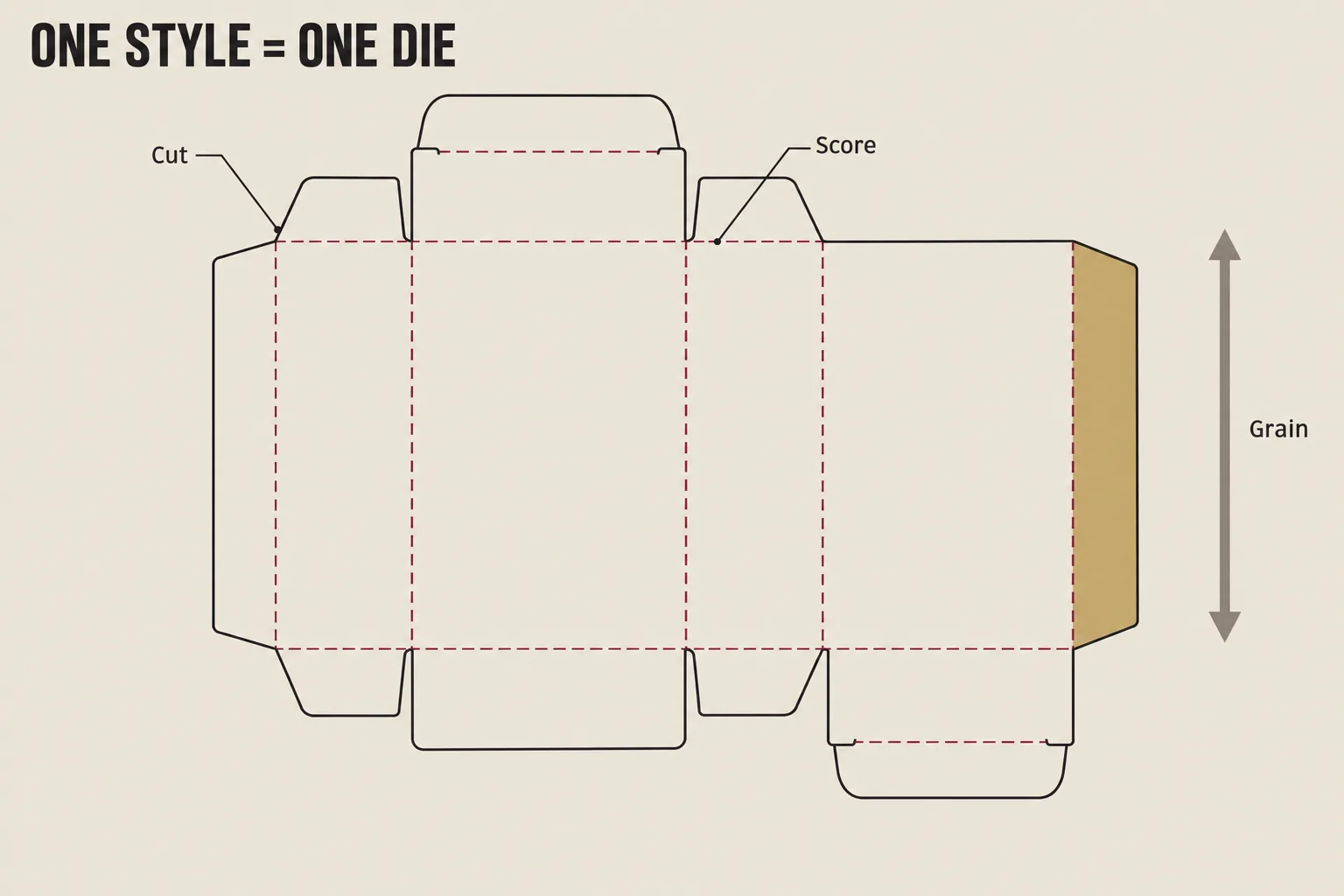
A new structural style normally requires its own dieline, and production tooling is based on that blank. A style change can therefore require a new cutting die even when the outside dimensions remain the same. Score placement and grain direction also affect how a carton folds and squares up. A physical sample and a trial using the intended filling method can expose fit or setup issues before production; this sample-before-tooling approach is also discussed in Michigan Paper Die’s folding carton design guide.
Tuck End Styles: The Everyday Workhorses
Tuck ends close with flaps that fold into the body of the box, without glue at the closure. They are commonly considered for light-to-medium-weight retail products such as bars, sachets, cookie sleeves, tea, and single-serve snacks. The final choice still depends on the product, board, and filling method.
Straight Tuck End (STE)
Top and bottom flaps tuck in from the same direction, with both closures commonly hinged from the rear panel and tucking toward the front. This can leave a clean front-facing panel. Board yield and price still depend on blank dimensions, sheet layout, board, and volume, so compare the straight tuck with a reverse tuck on the same specification.
Reverse Tuck End (RTE)
The top flap tucks from the front and the bottom from the back. This arrangement can improve sheet nesting, but actual material savings depend on the blank, board, run size, and supplier quote. A tuck edge may be visible on the front, so review a physical sample when shelf presentation matters.
French Reverse Tuck (FRT)
French reverse tuck is a variation in which the top closure hinges from the front panel and tucks into the rear, while the bottom closure hinges from the rear and tucks toward the front. It can provide a finished appearance and more graphic flexibility, but the exact locking and dust-flap details must be specified for the final structure.
Lock and Glued Bottoms: When Weight Enters the Picture
A tuck bottom may be suitable for a lighter, stable product, while heavier, denser, or shifting contents may call for a reinforced base such as a snap-lock or auto-lock structure. Product weight is only one input; dimensions, board, load distribution, handling, and the filling method also matter.
Snap-Lock Bottom (1-2-3 Bottom)
Four bottom flaps interlock and fold together in a three-step sequence without pre-gluing the base. Also called a lock bottom, snap bottom, or Houghland bottom, it ships flat and is typically assembled at the filling stage. The bottom does not require pre-gluing, but the added setup time and consistency of hand assembly should be tested against the expected volume.
Auto-Lock Bottom (Crash Bottom)
The bottom panels are pre-glued during converting. When the flat carton is opened, the base pops into shape and locks. An auto-bottom is among the faster styles to erect by hand; whether its converting cost is offset by labour depends on run volume, erection method and supplier quote. It is often paired with a tuck top, but the final combination must be matched to the filling process.
Seal End Cartons
Top and bottom flaps are glued closed during filling, usually on a cartoning machine. Seal-end structures are commonly considered for machine-filled, higher-volume products, but the exact carton must be compatible with the cartoner and product. A glued closure may make opening visible, but tamper-evidence performance should be confirmed for the specific structure and market.
Two-Piece and Specialty Styles
Two-piece paperboard formats include a tray-and-sleeve or separate base-and-lid construction. A rigid setup box is a different construction and should not be treated as the same folding-carton style. These formats may add assembly and component cost, so they are evaluated against presentation, protection, and production needs. A sleeve over a tray can let a brand change outer graphics without reworking the tray, but the two components still need coordinated sizing and production. See Armour Rose’s related carton sleeves and wraps service for another sleeve format.
Other Standard and Specialty Carton Formats
Window Cartons
A window or cutout can let shoppers see part of the product or an inner package. The opening changes the available print area and may affect dust, moisture, light, and structural considerations, so it should be evaluated with the board and product requirements.
Tuck-Top Cartons
A tuck-top carton uses a tuck closure at the top and can be paired with different bottom structures. It is not a single bottom style; the final specification should identify both the top closure and the base.
Six-Corner Cartons
A six-corner structure uses additional panels and glued areas to create a more supported shape. It can be useful where stability or presentation matters, but it requires a structure and filling method suited to the product.
Display, Hanger and Insert Features
Display cartons, hang-tab cartons, cutouts and inserts help with merchandising or product presentation. A PDQ or shelf-ready format also has to work with the case pack, retail handling, and replenishment process; Armour Rose offers related shelf-ready packaging and trays.
How to Choose: A Practical Decision Path
1. Weigh the product and check how it settles. Light and stable keeps tuck ends in play. Heavier, denser, or shifting product moves you to a lock or auto bottom. 2. Match the closure to how the box gets filled. Hand packing may favour an auto-bottom when rapid erection is important. An automated cartoner requires a machine-compatible structure, which may be seal-end, tuck-end, auto-bottom, or another qualified design. 3. Confirm co-manufacturer equipment requirements and carton specifications before tooling. This is where many avoidable fit and setup problems can be found. 4. Decide which panel faces the shopper, then weigh straight tuck against reverse tuck on appearance versus board yield. 5. Model total cost, not unit cost: board, tooling, labour to erect, pallet and freight efficiency, damage rate in the field.
A costly mistake is choosing a style from a folding carton chart before confirming the filling line, case pack, and physical sample that the production run requires.
What to Prepare Before Requesting a Folding Carton Quote
A useful quote request should include:
- A physical product sample or the dimensions of the primary package.
- Product weight, dimensions, and how the contents settle during filling and handling.
- Whether the carton is filled by hand, semi-automatically, or on an automatic cartoner.
- Co-packer, cartoner, and equipment details, including any feed or opening limitations.
- Case-pack quantity, pallet-stacking requirements and delivery locations.
- The proposed artwork or full copy, including any applicable regulatory requirements. Canadian food brands can consult the Canadian Food Inspection Agency’s food-labelling guidance for industry while confirming their final label requirements.
- Number of SKUs, expected order frequency, and estimated annual volume.
- Exposure to grease, moisture, temperature changes, abrasion, or other handling conditions.
- Whether the carton must fit inside a pouch, shipper, tray, or retail display.
These details help a packaging partner compare structures on fit, performance, production, and total cost rather than on dimensions alone.
Folding Carton vs. Corrugated Shipping Box
A folding carton is generally a printed paperboard retail package that ships flat and is erected before filling. A corrugated shipping box uses a fluted structure designed to add strength for case-level handling and distribution. A food brand may use both: a folding carton for shelf presentation and a corrugated shipping box for case-level transport.
Where Folding Cartons Fit in a Complete Packaging Program
Cartons do not always stand alone. A retail SKU may use printed film or a pouch inside the carton and a corrugated case or display outside it; confirm those requirements before finalizing the carton. When multiple packaging components are sourced separately, brands also need to coordinate colour, specifications, and lead times across vendors.
Armour Rose Group is a Toronto-based custom-packaging sourcing and brokerage partner for food and beverage brands across Canada and the United States. It coordinates carton, film, pouch, corrugated, display, and other packaging requirements through third-party manufacturing partners. The value is a single point of coordination for specifications, colour targets, timing, and supplier communication across the packaging program.
Armour Rose’s process starts by reviewing current packaging, filling requirements and volumes, then develops solution options and pricing estimates for customer review. Where applicable, it can help coordinate material and supplier documentation; the buyer remains responsible for confirming food-contact, labelling, sustainability and other compliance requirements for the final specification.
Frequently Asked Questions
Related readingCustom Folding Cartons Dimensioned Before ToolingRead the guide →Frequently asked questions
What are the standard types of folding cartons?
What is the difference between a straight tuck and a reverse tuck carton?
What is the difference between a 1-2-3 bottom and an auto-lock bottom?
Which folding carton style works best for hand packing versus machine filling?
What information is needed before requesting a folding-carton quote?
What is the difference between a folding carton and a corrugated shipping box?
Can folding cartons be recycled?
Getting the Style Right Before You Tool
Weight, fill method, selling face, board, volume, and total cost should be reviewed together. There is no single “best” style for every product; the correct structure is the one that fits the product, equipment and commercial requirements.
Specifying a new carton, or questioning one you have run for years? Schedule a packaging review to compare structures against your product, filling method, volumes, and wider packaging program.