













Flexible films and pouches designed for freshness, durability, and shelf appeal.

Custom boxes and sleeves built for protection, display, and a premium presentation.

High-quality labels and shrink sleeves that elevate your product and ensure compliance.

Displays and trays designed to capture attention and boost conversions.

Food-safe containers and takeout bags built for freshness, durability, and on-the-go convenience.

Corrugated boxes are the workhorse of the packaging world and your number-one choice for safely delivering products to your customers.


Packaging designed to keep coffee fresh, protected, and shelf-ready.
Flexible packaging solutions that preserve aroma, freshness, and quality.
Durable, eye-catching packaging built for snack brands of every size.
Protective packaging that helps maintain crunch, freshness, and shelf appeal.
Custom packaging made to keep popcorn fresh, crisp, and ready to stand out.
Reliable packaging that protects texture, freshness, and product presentation.
Packaging solutions designed to protect baked goods and enhance presentation.
High-performance packaging for bars that need freshness, durability, and impact.
Vibrant packaging designed to protect and showcase confectionery products.
Secure, professional packaging built for supplements and wellness products.
Freshness-focused packaging for dried fruits, nuts, and healthy snacks.
Durable packaging designed to preserve crunch, freshness, and quality.
Protective packaging made for freshness, shelf life, and convenient storage.
Reliable packaging designed for pet food, treats, and specialty products.
Practical packaging solutions for prepared meals, kits, and convenience foods.
Functional packaging built for restaurants, takeout, delivery, and foodservice.
Premium packaging designed to protect products and strengthen brand presentation.

Specialized packaging solutions focused on protection, presentation, and compliance.
A clear container exists so a customer can see the product, and anything that interferes with that undermines the entire purchase decision. Condensation is the main culprit. Warm bakery product placed in a sealed container releases moisture that condenses on the inside surface, and within minutes an attractive item looks damp and unappealing. Anti fog treatment addresses it, and so does venting, though venting trades away moisture retention that some products need. Scuffing during transit and stacking is the second issue, since a container that arrives with a hazed lid presents no better than one that fogged. Both are specification decisions rather than manufacturing defects.
Grab and go containers are handled repeatedly, stacked in transit, stacked again on a counter and picked up by customers who put them back. Each of those steps can damage the clarity that justified choosing a clear container.
Deli and bakery clear containers, takeout and carry out containers, printed labels, carton sleeves and wraps, folding cartons and corrugated shipping cases. A clear container almost always needs a label or a sleeve, and those come from different suppliers to the container itself.
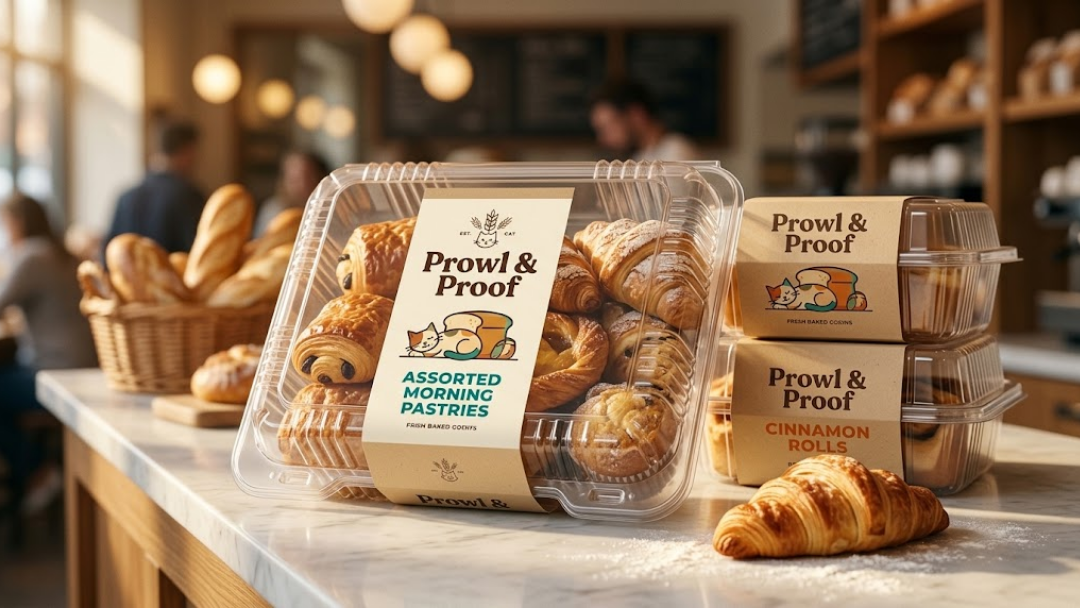
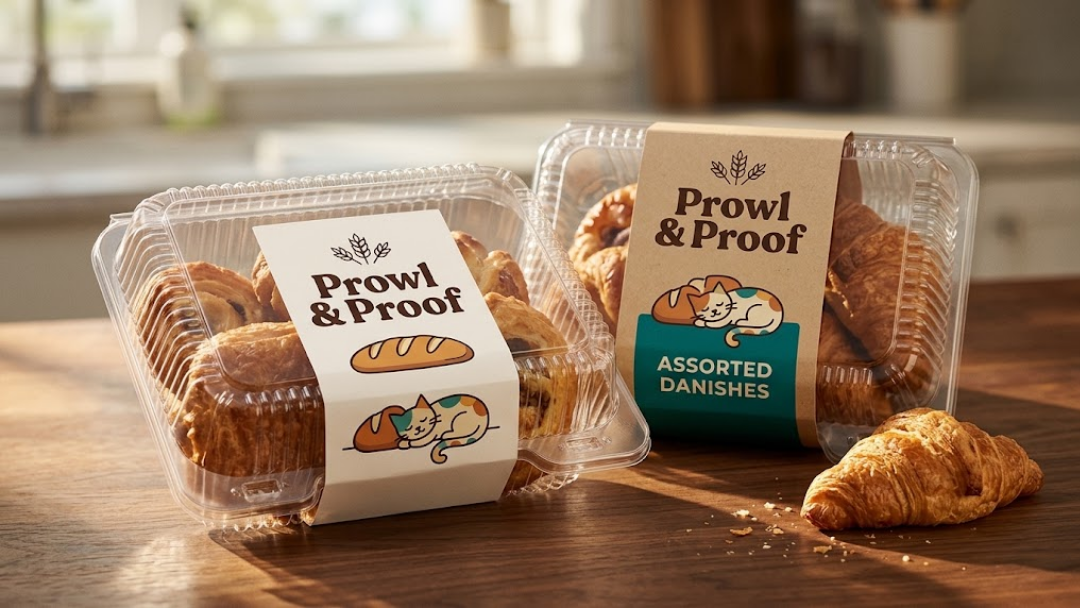
Four decisions, and the first one is usually settled by whether the product is packed warm.
Anti fog treatment, venting or both, decided from whether product is packed warm and how much moisture it needs to retain.
Hinged single piece or separate base and lid, chosen from assembly labour, stack behaviour and how the item presents.
A tamper evident closure or a sealing label where the item sits on an unattended counter or ships for delivery.
Printed labels or a board sleeve carrying ingredient, allergen and date copy without covering the product.
Deli and bakery clear containers protect fresh foods while keeping products visible and presentation-ready. Explore packaging solutions tailored to the food, freshness, portion and handling requirements of each market.
Built around breakage protection first and shelf appeal second, because broken pieces undo good print instantly.
Built around what the product actually does inside the box, so a warm loaf doesn't turn soggy and a pastry doesn't dry out.
Guards against the three real failure modes: oil oxidation, puncture and weight, that break more packs than barrier alone.
Coordinates tray, lidding film, sleeve and carton components from multiple industries under one ship date.
Built for consistent supply across many locations at weekly frequency, where reliability at volume matters more than unit price.
Two dimensions of the specification affect cost long after the purchase. Empty containers have to nest efficiently, because a bakery or deli counter has very little storage and a container that nests poorly consumes space nobody has. Filled containers have to stack without the lid of one bearing on the product in the one below, and without hinged lids springing open under load, which is a closure and rigidity question rather than a size question. Filled stacking also affects how much a counter can display, which is a merchandising consideration as much as a logistics one. We check nesting and filled stack behaviour on samples, because both are easy to state on a specification sheet and only demonstrable with the actual product inside.
On deli and bakery clear containers the whole point is visibility, so every decision is measured against whether it protects the view of the product.
Whether product is packed warm decides the anti fog and venting requirement. Getting this wrong produces a container that fogs on the counter and hides what you are selling.
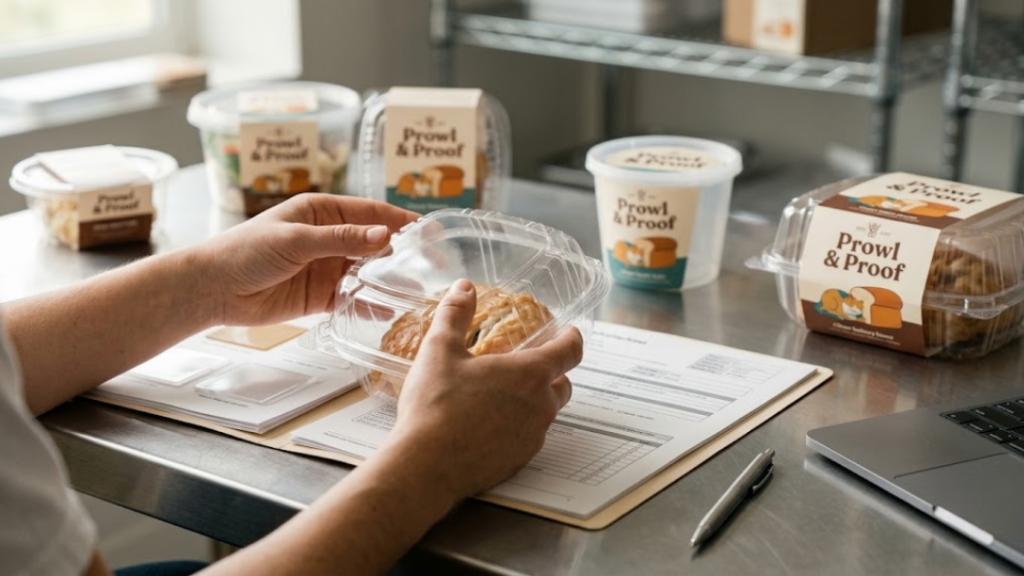
An unattended self serve counter usually needs tamper evidence, and the way items stack on the counter affects how many can be displayed and how they look.
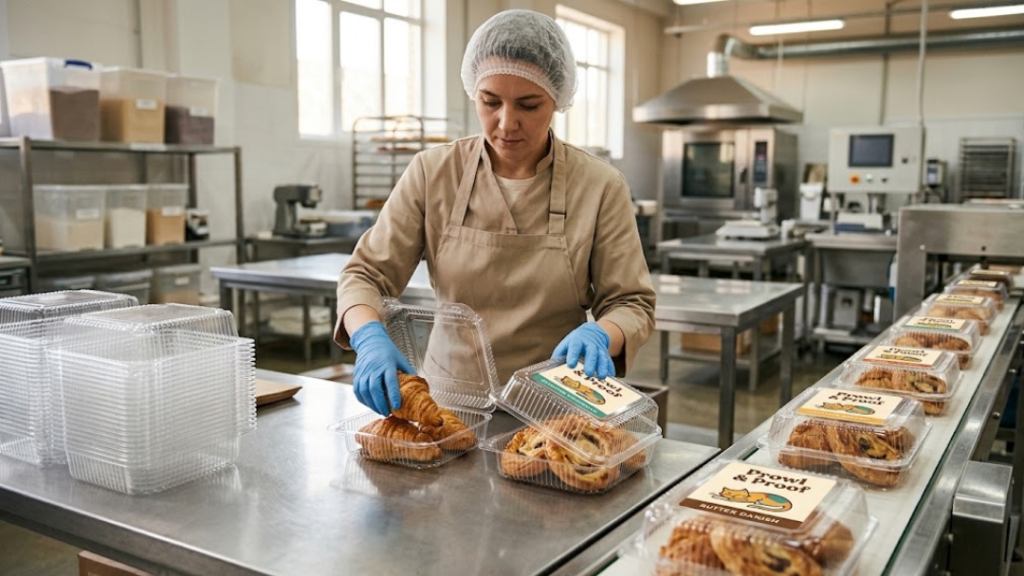
Empty stock has to fit the space a counter actually has. Nesting efficiency is easy to overlook at quotation and expensive in daily practice.
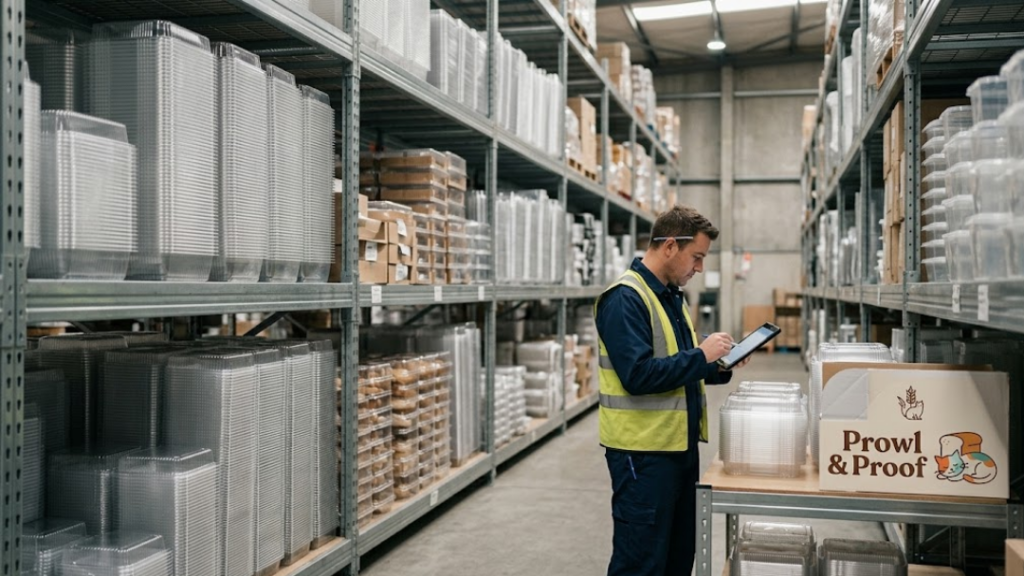
Ingredient, allergen and date copy has to go somewhere without covering the product. That is a label or sleeve decision made alongside the container, not after it.
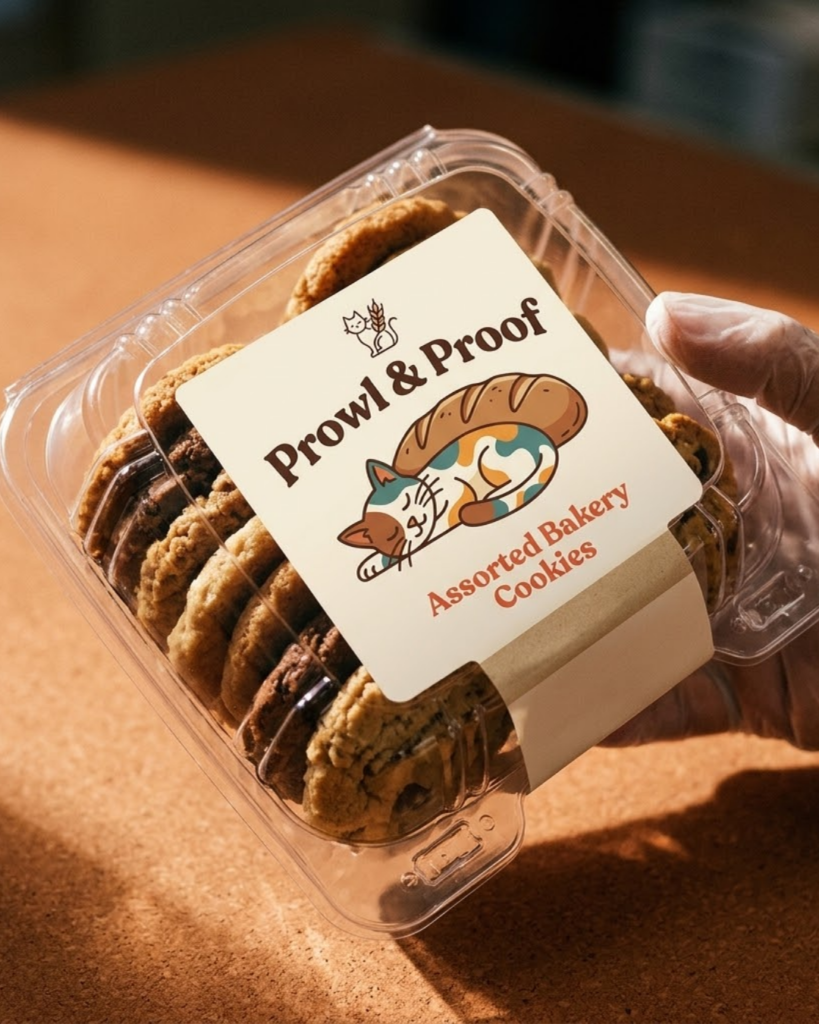
We specify from the product and the counter, then test on samples, because clarity and stacking cannot be validated on paper.
We take the product, its pack temperature, the counter arrangement, storage available, reorder frequency and the copy that has to appear.
We set anti fog, venting, construction, tamper evidence and labelling, then sample with your actual product to check clarity and stacking.
We manage supply with delivery and customs brokerage, and can hold inventory and release against each site's reorder pattern.
A clear container needs a label or a sleeve carrying regulated copy, and a case to ship it in. We purchase across all of those from manufacturing partners and sell them as one program.
The container, the label and the board sleeve specified together, so regulated copy fits without covering the product it sits on.
Clarity, fogging and filled stacking checked with your actual product rather than assumed from a specification sheet.
Held inventory released against each site's reorder pattern, which suits counters with high frequency ordering and no storage.
Clear containers alongside your carry out packaging, cartons and cases on one purchase order and one point of contact.
Clear containers belong wherever the product sells itself on sight. In store bakery counters are the largest use, covering cakes, pastries, muffins, cookies and single slices, and cookie and cracker programs sold loose or by weight follow the same pattern. Beyond that they cover prepared salads, sandwiches, sushi, cut fruit, deli salads and hot bar items in grocery, plus grab and go in cafes and convenience. What all of those share is a customer deciding in a few seconds based on how the food looks, which is why clarity, fogging and scuffing matter more here than in any other packaging format. It is also why the label or sleeve carrying the regulated copy has to be planned around the product rather than across it, and why sourcing both together avoids a label that hides what it is describing.
Reliability that teams can measure.
As a small but growing brand, we struggled to find a packaging supplier who would take us seriously. AR not only welcomed us — they partnered with us. Their work with other startups showed in the quality of our packaging, and Daron went above and beyond, including helping our co-manufacturer optimize their equipment so our pouches came out perfect. We couldn’t ask for a more supportive, solution-focused partner.
ARG is the packaging partner we always needed. They cut through confusion, move fast, and operate like part of our internal team. Their expertise has streamlined our product development, and their above-and-beyond support — like Daron personally delivering samples to our co-manufacturer — is unmatched. We trust them completely.
Armour Rose Group believed in us when other suppliers didn’t. They treated us with the professionalism of a much larger brand and played a real role in helping us scale. Their team is collaborative, reliable, and always willing to solve problems together. Daron’s proactive support and genuine investment in our success stand out above anything we’ve experienced in packaging. Highly recommended.
From day one, the team has been a trusted partner. They provided clear guidance, cost-effective solutions under tight timelines, and the flexibility to scale with a startup. Communication is fast, pricing is transparent, and deliveries are consistently on time and high quality. Support is always there when needed, which makes a real difference. The entire experience makes you feel safe and in good hands— we absolutely recommend Armour Rose Group.
With anti fog treatment, venting, or a combination, chosen from how the product is packed. Fogging happens when warm product releases moisture that condenses on the inside surface, so the first question is always whether the item goes into the container warm. Anti fog treatment keeps the surface clear without losing moisture from the product. Venting lets the moisture escape but also lets the product dry out, which suits some items and ruins others. We specify from your product and pack temperature and check it on samples, because this is one of those requirements only a real test confirms.
No, we source them. Armour Rose purchases from manufacturing partners and sells to customers. On this format the useful part is that we also source the labels, board sleeves, cartons and shipping cases around the container, which is where regulated copy and shelf presentation actually get resolved. A container supplier can sell you an excellent container and has no involvement in whether the label carrying your allergen copy ends up covering the product the container was chosen to display.
Hinged units are one piece, faster to assemble and close, and reduce the risk of mismatched components at a busy counter. The trade is that a hinged lid can spring open under stack pressure and the hinge is a weak point in transit. Separate base and lid stacks more predictably and allows different materials for each, but adds assembly labour and the risk of running out of one component. For a high volume counter with limited labour, hinged usually wins. Where filled stacking is heavy or transit is long, two piece often performs better.
It depends on whether the counter is attended and whether the item is ever handled off premises. On a self serve grab and go fixture, and on anything going out for delivery, tamper evidence is generally expected and sometimes required by the retailer. It can be built into the container as a closure feature or applied as a sealing label, and the label route has the advantage of carrying your regulated copy at the same time. We would rather establish the requirement before specifying, since retrofitting a sealing label to a container it does not suit is awkward and looks it.
This is the format where we are most cautious about claims, and we would rather explain why than gloss it. Clarity is the functional requirement, and the materials that deliver reliable clarity, anti fog performance and rigidity are more constrained than in board formats. Options containing recycled content do exist and vary considerably in what they can achieve visually. On the labels, sleeves and shipping cases around the container, recycled content and FSC-certified board are readily available and documentable. We will tell you what a partner can evidence rather than what the category markets.
Yes, and it usually helps in this category, because a deli or bakery counter reorders frequently and has almost no storage. We can produce or procure an efficient quantity, hold it, and release against each site’s reorder pattern, which separates what you buy from what you have to store. Nesting efficiency matters alongside that, since a container that nests poorly consumes shelf space you do not have even at a modest order size. For operators with sites in both Canada and the United States we manage the customs brokerage on those releases as well, so a counter in either market reorders the same way.
Send us your product, pack temperature, counter arrangement and the copy that has to appear. We will specify the container and the label or sleeve around it. Start here.