














Flexible films and pouches designed for freshness, durability, and shelf appeal.

Custom boxes and sleeves built for protection, display, and a premium presentation.

High-quality labels and shrink sleeves that elevate your product and ensure compliance.

Displays and trays designed to capture attention and boost conversions.

Food-safe containers and takeout bags built for freshness, durability, and on-the-go convenience.

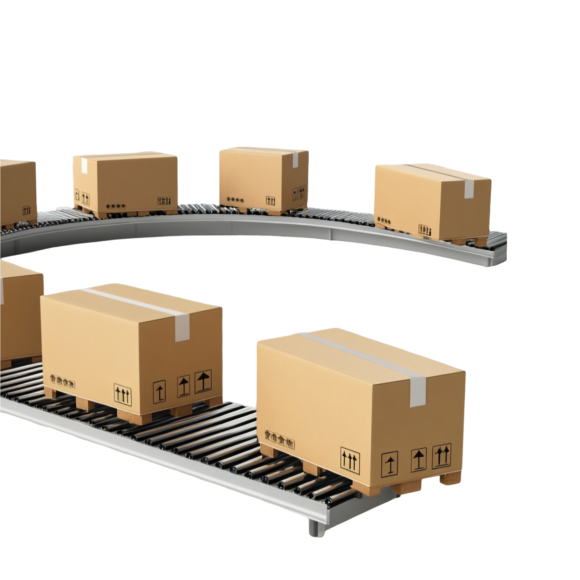
Corrugated boxes are the workhorse of the packaging world and your number-one choice for safely delivering products to your customers.


Packaging designed to keep coffee fresh, protected, and shelf-ready.
Flexible packaging solutions that preserve aroma, freshness, and quality.
Durable, eye-catching packaging built for snack brands of every size.
Protective packaging that helps maintain crunch, freshness, and shelf appeal.
Custom packaging made to keep popcorn fresh, crisp, and ready to stand out.
Reliable packaging that protects texture, freshness, and product presentation.
Packaging solutions designed to protect baked goods and enhance presentation.
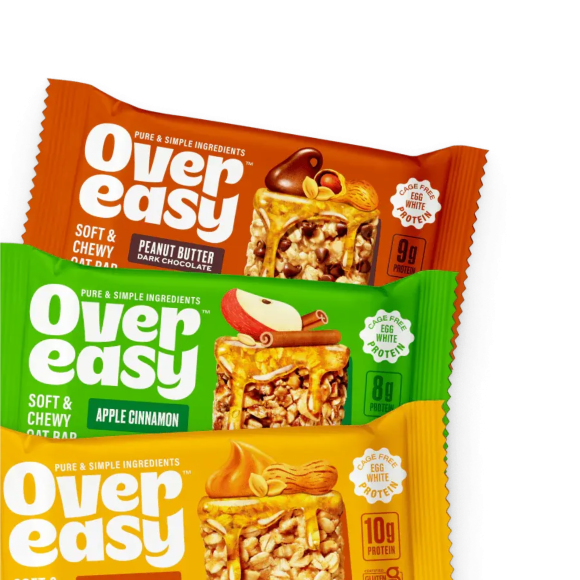
High-performance packaging for bars that need freshness, durability, and impact.
Vibrant packaging designed to protect and showcase confectionery products.
Secure, professional packaging built for supplements and wellness products.
Freshness-focused packaging for dried fruits, nuts, and healthy snacks.
Durable packaging designed to preserve crunch, freshness, and quality.
Protective packaging made for freshness, shelf life, and convenient storage.
Reliable packaging designed for pet food, treats, and specialty products.
Practical packaging solutions for prepared meals, kits, and convenience foods.
Functional packaging built for restaurants, takeout, delivery, and foodservice.
Premium packaging designed to protect products and strengthen brand presentation.
Specialized packaging solutions focused on protection, presentation, and compliance.
Corrugated is bought per case and paid for twice, once at the plant and again on every truck it travels on. A case that is fractionally too large loses a layer on the pallet, and a pallet that ships eight layers instead of nine costs eleven percent more per unit to move for the life of the product. That arithmetic almost always exceeds the saving available from a cheaper board grade, which is why the specification starts from the pallet and works inward rather than starting from the case and hoping. It is also why the case cannot be sensibly specified without knowing exactly what goes inside it and how it is arranged.
The shipping case is usually the final packaging decision and the one with the longest cost tail. By the time it is specified, the retail pack dimensions are fixed and the opportunity to optimize the pallet has often already been lost.
Corrugated shipping cartons, folding carton retail boxes, printed films and pouches, shelf-ready trays, floor and pallet displays and labels. Because we source the retail pack as well as the case, the count and the cube are settled once rather than negotiated between two suppliers.


Corrugated shipping boxes come down to four variables, and three of them are about performance under load rather than about the box itself.
Single or double wall and flute profile chosen from compression requirement, print requirement and storage conditions.
Regular slotted, half slotted, die cut or tray and lid, selected from how the case is packed and how it is opened.
Flexo direct print for identification and logistics, or litho lamination where the case doubles as a retail unit.
Dimensions worked backward from the pallet footprint so every layer is full and no column is wasted.
Corrugated shipping boxes provide durable protection for products moving through storage, handling and distribution. Explore packaging solutions tailored to the size, weight, protection and shipping requirements of each market.
Bags, cartons and displays specified to your roast, your filling equipment and your shelf-life target, sourced to arrive on schedule.
Built around your blend's aroma sensitivity, your fill line and your shelf-life target, so a delicate blend still tastes right months later.
Portfolio packaging that accounts for each SKU's different barrier and protection needs instead of forcing one spec across the whole line.
Built around crush resistance, your line speed and shelf-life target, because a crushed bag or a stale chip ends the sale outright.
Specified for popped volume and fragility rather than the kernel, since popcorn's real packaging problem starts after it pops.
Built around breakage protection first and shelf appeal second, because broken pieces undo good print instantly.
Built around what the product actually does inside the box, so a warm loaf doesn't turn soggy and a pastry doesn't dry out.
Specified to your actual flow-wrapping equipment, not a lab sample line, so the wrapper runs cleanly at full production speed.
Specified against oil migration, fat bloom and heat, since sugar and cocoa butter punish a spec that dry snacks tolerate fine.
Structured around what your supplement facts panel and ingredient list require, so the back of the pack holds what regulation demands.
Guards against the three real failure modes: oil oxidation, puncture and weight, that break more packs than barrier alone.
Coordinates the folding carton and the sealed inner liner as one structural package instead of two separately sourced components.
Specified for real shelf life, where oxygen ingress causes rancidity rather than staleness, leaving no margin for a loose barrier spec.
Rated for the weight, grease and abrasion of the product itself, since a five-pound bag reloads its own seal on every handling.
Coordinates tray, lidding film, sleeve and carton components from multiple industries under one ship date.
Built for consistent supply across many locations at weekly frequency, where reliability at volume matters more than unit price.
Structured for formula compatibility first, since essential oils, alcohol and surfactants can soften films and degrade seals over years.
Specialized packaging solutions focused on protection, presentation, and compliance.
A board grade is a specification for the material. What actually matters is whether a case at the bottom of a pallet holds the weight above it for as long as it needs to, and that depends on conditions as much as material. Humidity reduces compression strength considerably, so a case that performs in a dry warehouse can fail in a chilled one or after time in an unconditioned container. Stack height and storage duration both compound it. Case design matters too, since hand holes, perforations and a die cut opening feature all remove material from the panels that carry the load. We calculate the compression requirement from your real stack height, storage duration and conditions, then choose the grade, rather than reading a grade from a chart and hoping the conditions cooperate.
Corrugated shipping boxes are unusual in that the cheapest specification and the cheapest total cost are often different answers.
Cases per layer and layers per pallet decide freight cost per unit for the life of the product. A dimension change of a few millimetres can add or remove a whole layer.

Compression requirement follows from how high cases are stacked and for how long. Both over and under specification cost money, in different ways.

Corrugated loses strength in humid or chilled conditions. A case specified for a dry warehouse can fail in cold chain, and that is a specification error rather than a manufacturing fault.

Case count has to match how the retailer actually orders. A case built to a convenient number rather than the buyer’s unit creates split cases and handling cost at every delivery.

We specify corrugated shipping boxes inward from the pallet and the retail ordering unit, because those two constrain everything else.
We establish pallet footprint, stack height, storage conditions, retail ordering unit, retail pack dimensions and how the case is packed and opened.
We calculate compression requirement, set flute, grade, style and dimensions for full pallet utilization, then price through qualified plants.
We manage production, coordinate delivery and customs brokerage across both markets, and can hold inventory for release against demand.
Corrugated trays and cases are a significant share of what we move, and we also source the retail pack that fills them, which is what allows the cube to be designed rather than inherited.
When we specify the pouch or carton as well, void space can be designed out instead of discovered after both tools are cut.
We work from the pallet inward, because the freight cost of a poorly dimensioned case outlasts and outweighs any unit price negotiation.
Delivery, multi-site distribution and customs brokerage handled as part of the program rather than left as your problem.
More than one vetted corrugated plant, which matters on a high volume item where a stockout stops your shipping line.
Almost every product we source packaging for ends up in a corrugated case, which puts this format in an unusual position. It is the last thing specified and the first thing that should be, because the pallet footprint is fixed and everything else could in principle be designed to fit it. In practice the retail pack is designed first, the case is fitted around it, and a permanent freight inefficiency gets locked in. Where we can influence both, we work the other way round. That applies across snack and food categories, and it applies with more force in cold chain where humidity reduces compression strength and in bulk categories where product weight is high. Where the case also has to work as a shelf-ready or display unit, the requirements change again and both jobs need designing together.
Reliability that teams can measure.
As a small but growing brand, we struggled to find a packaging supplier who would take us seriously. AR not only welcomed us — they partnered with us. Their work with other startups showed in the quality of our packaging, and Daron went above and beyond, including helping our co-manufacturer optimize their equipment so our pouches came out perfect. We couldn’t ask for a more supportive, solution-focused partner.
ARG is the packaging partner we always needed. They cut through confusion, move fast, and operate like part of our internal team. Their expertise has streamlined our product development, and their above-and-beyond support — like Daron personally delivering samples to our co-manufacturer — is unmatched. We trust them completely.
Armour Rose Group believed in us when other suppliers didn’t. They treated us with the professionalism of a much larger brand and played a real role in helping us scale. Their team is collaborative, reliable, and always willing to solve problems together. Daron’s proactive support and genuine investment in our success stand out above anything we’ve experienced in packaging. Highly recommended.
From day one, the team has been a trusted partner. They provided clear guidance, cost-effective solutions under tight timelines, and the flexibility to scale with a startup. Communication is fast, pricing is transparent, and deliveries are consistently on time and high quality. Support is always there when needed, which makes a real difference. The entire experience makes you feel safe and in good hands— we absolutely recommend Armour Rose Group.
Work inward from the pallet rather than outward from the product. Start with your pallet footprint, then the retailer’s ordering unit, then the retail pack dimensions, and derive case dimensions that fill every layer with no wasted column. Then calculate the compression requirement from your actual stack height, storage duration and conditions, and choose the flute and grade to meet it. Specifying in the other order, which is the common practice, tends to lock in a freight inefficiency that costs more over the product’s life than any board saving recovers.
No, we source. Armour Rose purchases from manufacturing partners and sells to customers, and corrugated trays and cases are a substantial part of what we move. The advantage in this format is that we also source the pouch, film or retail carton going inside the case, so the void space and the case count can be designed together. A box plant can only optimize the box around whatever dimensions it is given, and by then the expensive decisions have already been made by someone else.
By calculating the compression requirement rather than reading a grade from a chart. The inputs are the weight above the bottom case, how high cases are stacked, how long they stay stacked, and the humidity and temperature they sit in. Humidity in particular reduces compression strength significantly, so a case that works in a dry warehouse can fail in a chilled facility or after time in an unconditioned container. Design features matter too, since hand holes and perforations remove material from the panels doing the work.
Sometimes, and where it genuinely can it is a real saving in both material and handling labour. The tension is that a case optimized for compression and freight is not optimized for appearance or for easy opening, and shelf-ready formats need perforations or a tear line that remove strength from the panels carrying the load. It is a solvable problem when both requirements are on the table from the start. It is much harder when a case is designed as a shipper and then asked to present product on a shelf afterward.
Corrugated is the strongest position in packaging for substantiated claims. Recycled content is standard rather than exceptional in corrugated manufacture, and FSC-certified board is readily available, with documentation a partner can generally provide. There is also a genuine material reduction argument here that does not exist in most formats, because right sizing a case removes board and reduces freight at the same time. Where a brand wants a defensible sustainability position, optimizing corrugated is usually more effective and more provable than pursuing claims on flexible film.
You may not need to, and if the case is well dimensioned for your pallet then a local supply is often a sensible arrangement. The question worth testing is whether the case is right rather than whether it is cheap. We would look at your pallet utilization, your compression requirement against actual conditions, and the void space inside the case, because those three tend to hold more money than the unit price does. If the answer is that your current case is already well specified, we will tell you that and focus on the formats where we can help.
Send us your case dimensions, pallet pattern, stack height and retail pack details. We will show you what the cube is costing and specify a case around it. Request a review.