













Flexible films and pouches designed for freshness, durability, and shelf appeal.

Custom boxes and sleeves built for protection, display, and a premium presentation.

High-quality labels and shrink sleeves that elevate your product and ensure compliance.

Displays and trays designed to capture attention and boost conversions.

Food-safe containers and takeout bags built for freshness, durability, and on-the-go convenience.

Corrugated boxes are the workhorse of the packaging world and your number-one choice for safely delivering products to your customers.



Packaging designed to keep coffee fresh, protected, and shelf-ready.
Flexible packaging solutions that preserve aroma, freshness, and quality.
Durable, eye-catching packaging built for snack brands of every size.
Protective packaging that helps maintain crunch, freshness, and shelf appeal.
Custom packaging made to keep popcorn fresh, crisp, and ready to stand out.
Reliable packaging that protects texture, freshness, and product presentation.
Packaging solutions designed to protect baked goods and enhance presentation.
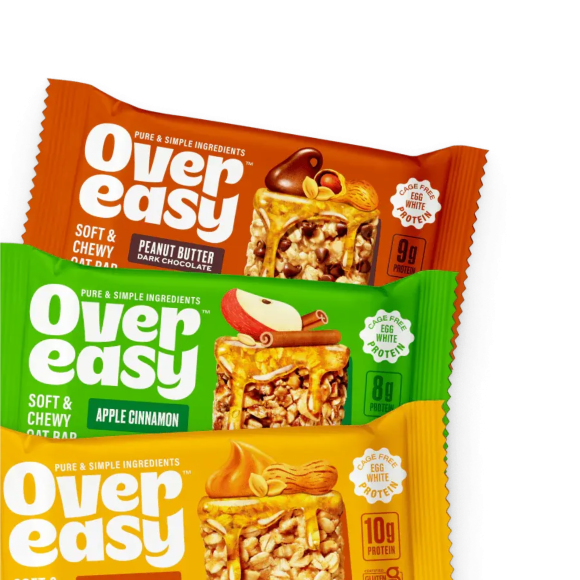
High-performance packaging for bars that need freshness, durability, and impact.
Vibrant packaging designed to protect and showcase confectionery products.
Secure, professional packaging built for supplements and wellness products.
Freshness-focused packaging for dried fruits, nuts, and healthy snacks.
Durable packaging designed to preserve crunch, freshness, and quality.
Protective packaging made for freshness, shelf life, and convenient storage.
Reliable packaging designed for pet food, treats, and specialty products.
Practical packaging solutions for prepared meals, kits, and convenience foods.
Functional packaging built for restaurants, takeout, delivery, and foodservice.
Premium packaging designed to protect products and strengthen brand presentation.

Specialized packaging solutions focused on protection, presentation, and compliance.
Supplement brands tend to design the front of the pack and then discover the back cannot hold what regulation requires. A supplement facts panel, an ingredient list, allergen statements, a lot code, a best-before date and bilingual copy for the Canadian market all compete for the same area. Change a serving size and the panel grows, which can push a pouch up a size or force a carton onto a different die. Powders make it tighter still, because a scoop needs headspace and a gusset wide enough to retrieve it. We size the pack around what has to be printed and dispensed, then work outward to the graphic.
Supplement lines move faster than most food categories. Flavours rotate, doses change, subscription sizes appear alongside retail sizes. Each change touches artwork, and if the structure was specified tightly around one formulation, each change also touches tooling.
Stand-up and flat bottom pouches, stick packs and sachets, folding cartons for bottles and multipacks, corrugated shippers, shelf-ready trays and labels. A supplement program usually needs a primary pack, a carton and a shipper, and those normally come from three different suppliers.
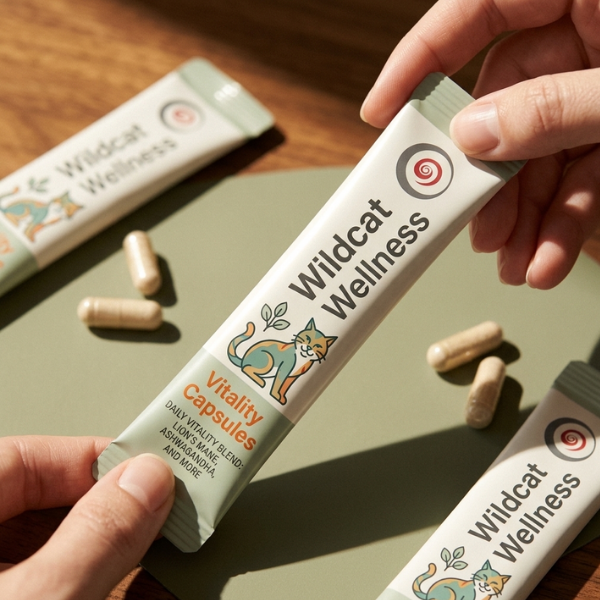
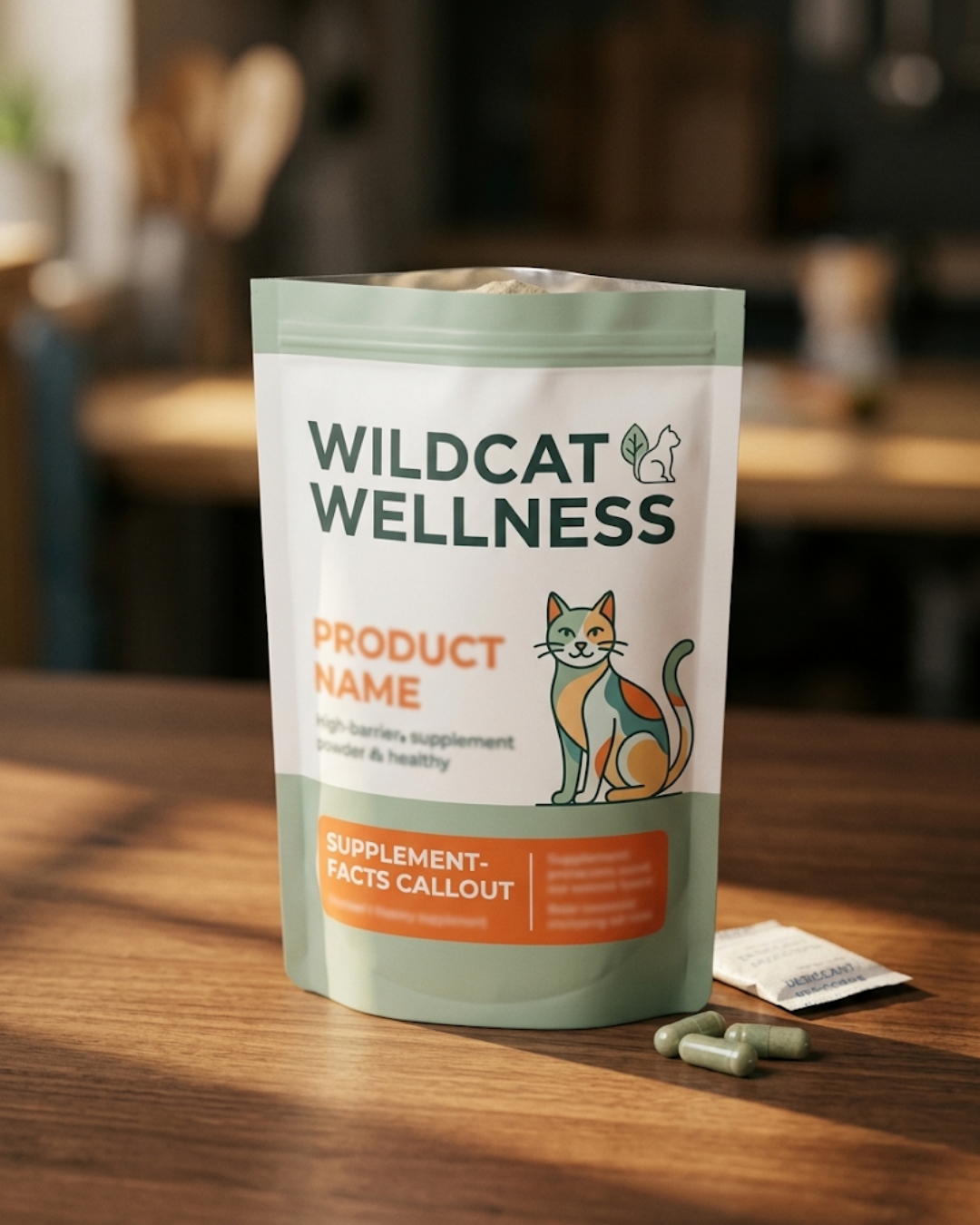
Dose format drives every custom supplement packaging decision. A tub-replacement pouch, a single-serve stick and a capsule carton are three separate engineering problems that happen to carry the same brand.
For powders and supplements needing barrier protection, resealable convenience and a lightweight shelf-ready format.
For premium supplement powders requiring stable shelf presentation, easy filling and multiple panels for branding.
For automated supplement lines requiring custom web widths, dependable barriers and consistent high-speed sealing.
For individually wrapped supplement products requiring smooth machine performance, secure seals and printed presentation.
For single-serve powders and liquids, specified to the pitch, web width and sealing requirements of your filler.
For bulk powders and repeat-use supplements requiring convenient resealing and dependable moisture and oxygen protection.
For bottles, blisters and multipacks requiring printed cartons dimensioned around the primary container.
For shipping supplement products with dependable protection, stacking strength and efficient distribution handling.
For adding branding and product information around tubs, bottles and multipacks without changing the primary package.
For automated supplement lines requiring consistent carton dimensions, reliable feeding and efficient high-speed packing.
For single-serve supplements and smaller packs needing organized, highly visible placement at counters and retail shelves.
For larger supplement promotions requiring durable branded displays, strong visibility and store-ready placement.
For supplement products needing faster stocking, organized retail presentation and protection through distribution.
A protein blend, a collagen powder and a fine micronised creatine do not fill the same way, and the film has to account for that. Fine powders carry static, cling to the seal area and create channel leaks that look fine coming off the line and fail a shelf-life test six weeks later. Auger fillers, vacuum fillers and volumetric cups each throw off dust differently and each want a different sealant behaviour and film stiffness. For stick packs and sachets the pitch, web width and cut-off have to match the machine exactly, because the tolerance there is far tighter than on a pouch. We work from your equipment specification, or from the requirements of the co-manufacturer running the fill, and we put those numbers in front of the plant rather than assuming a standard structure will cope.
These are the questions we work through before quoting custom supplement packaging. Answering them early is what keeps a reformulation from becoming a retooling.
Vitamin actives and probiotics degrade against moisture and oxygen at very different rates, so the barrier target comes from the claim you need to hold at end of shelf life, not from a standard film.
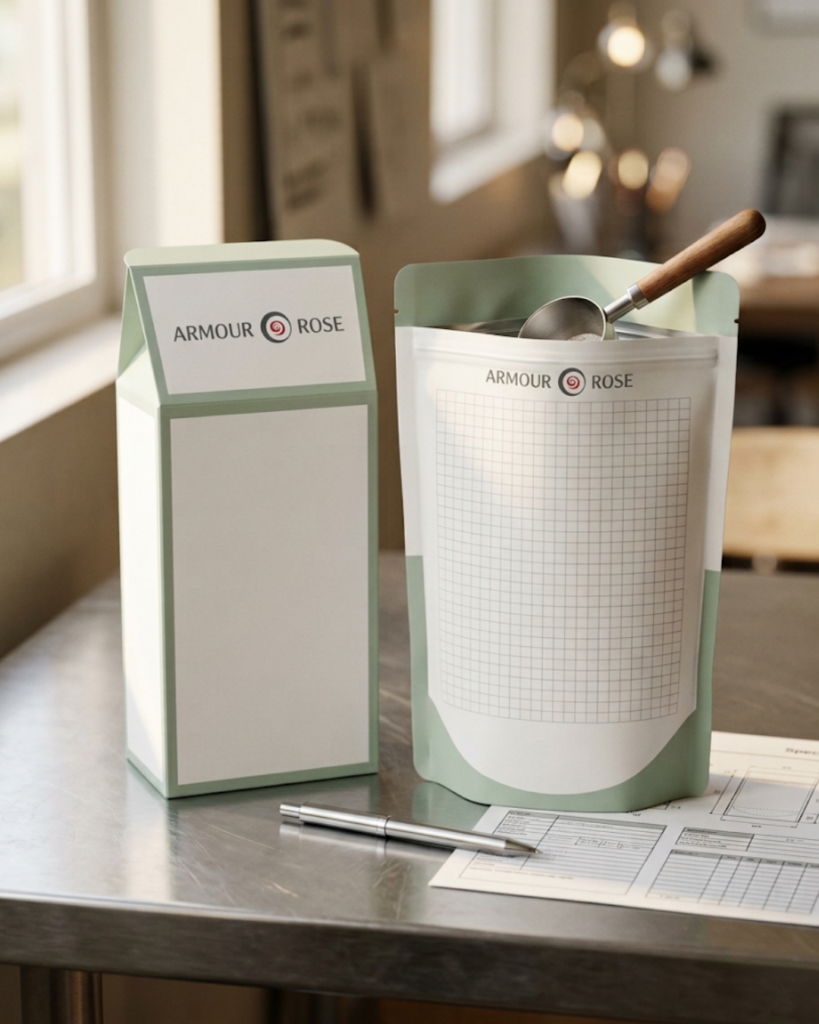
How the consumer gets the product out changes the format. A scoop needs headspace and gusset width, a pour needs a spout or a wide opening, and a single dose removes the reclosure question entirely.
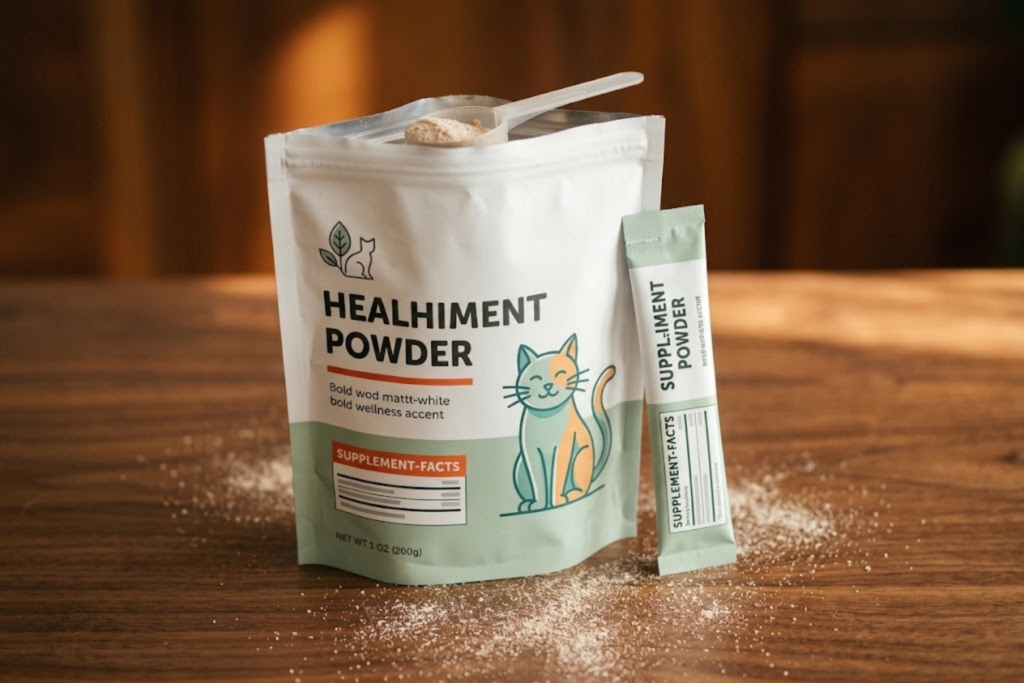
Facts panels, allergen copy, lot coding and bilingual requirements for the Canadian market set a hard minimum printable area. That minimum often decides the pack size before design begins.
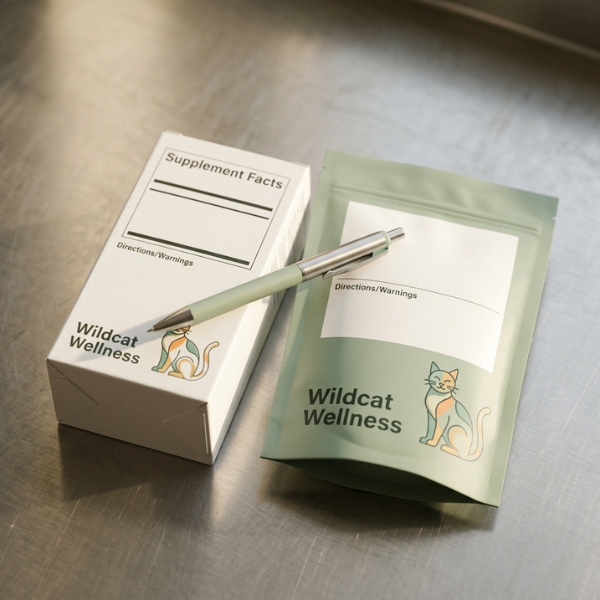
A pack that sits on a planogram, a club pack and a pack shipped alone in a carton face different drop, crush and cube requirements. Deciding channel late means specifying twice.
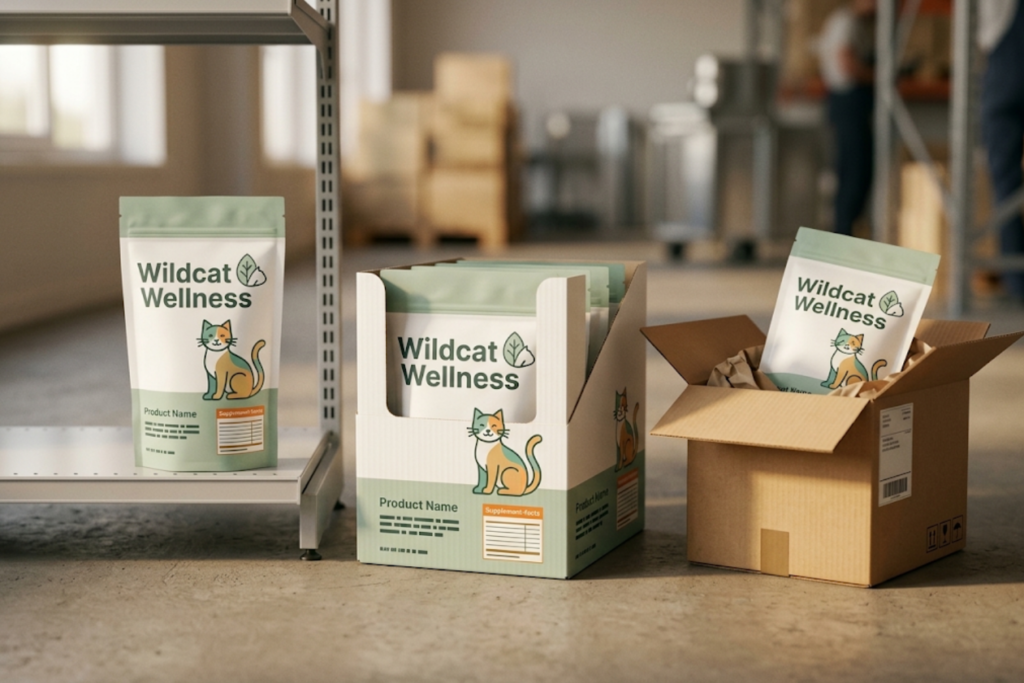
We begin a custom supplement packaging review with what you buy today, what it costs you in total rather than per unit, and where the current setup constrains you.
We look at formats, purchase frequency, quantities, delivery locations, and your filling or co-packing requirements, then identify gaps in supply and strategy.
We write the specification around your filler, your panel and your channel, then price it through qualified plants and present options with the trade-offs stated.
We manage production, coordinate delivery and customs brokerage, and can run inventory make-and-hold programs so your release schedule drives shipments.
Supplement brands reformulate, rebrand and add SKUs faster than they can rebuild a supplier base. We buy from our manufacturing partners and sell to you, so we can change the process without you changing vendors.
We have no press to fill, so a stick pack recommendation is not a disguised pitch for the one thing we happen to run.
We look at usage and purchasing patterns across the program, because the saving is often in consolidation and frequency rather than unit price.
We supply brands across Canada and the United States and handle customs brokerage, so a border crossing is a logistics step rather than a surprise.
More than one qualified plant in the formats we supply most, which matters when a launch date is fixed and a press is not.
Supplement brands rarely stay in one format. A protein powder line adds a ready-to-drink, then a bar, then a single-serve travel pack, and each addition drags in a packaging process the existing supplier cannot run. A flexible converter cannot produce your folding cartons. A carton printer cannot produce your flow wrap film. The brand ends up managing four relationships to sell four products that share one logo. Because we source across categories, the same review that covers your powder pouches also covers bar wrap film and cartons and the shipper that carries both. That is also where most of the saving hides for growing brands, since consolidating spend across formats gives real leverage in a way that squeezing a single line item does not.
Reliability that teams can measure.
As a small but growing brand, we struggled to find a packaging supplier who would take us seriously. AR not only welcomed us — they partnered with us. Their work with other startups showed in the quality of our packaging, and Daron went above and beyond, including helping our co-manufacturer optimize their equipment so our pouches came out perfect. We couldn’t ask for a more supportive, solution-focused partner.
ARG is the packaging partner we always needed. They cut through confusion, move fast, and operate like part of our internal team. Their expertise has streamlined our product development, and their above-and-beyond support — like Daron personally delivering samples to our co-manufacturer — is unmatched. We trust them completely.
Armour Rose Group believed in us when other suppliers didn’t. They treated us with the professionalism of a much larger brand and played a real role in helping us scale. Their team is collaborative, reliable, and always willing to solve problems together. Daron’s proactive support and genuine investment in our success stand out above anything we’ve experienced in packaging. Highly recommended.
From day one, the team has been a trusted partner. They provided clear guidance, cost-effective solutions under tight timelines, and the flexibility to scale with a startup. Communication is fast, pricing is transparent, and deliveries are consistently on time and high quality. Support is always there when needed, which makes a real difference. The entire experience makes you feel safe and in good hands— we absolutely recommend Armour Rose Group.
Most programs need three layers. The primary pack holds the product, typically a stand-up or flat bottom pouch for powder, a stick pack or sachet for single doses, or a bottle for capsules. The secondary pack is usually a printed folding carton, which carries the regulated copy and protects the primary. The tertiary pack is a corrugated shipper or a shelf-ready tray sized to the retailer’s case count. We source all three layers rather than one, which is why we can reconcile the case count and the carton dimensions before tooling is committed.
A broker, and we say so plainly. We purchase custom packaging consumables from our manufacturing partners and sell them to our customers. The practical benefit is independence. A plant that only prints film will recommend film, and a carton printer will recommend a carton, because that is what each can make. We are not choosing between our own capabilities, we are choosing between qualified suppliers, and if the right answer for your dose format is a stick pack rather than the pouch you asked about, there is no cost to us in saying so.
By specifying against the filler rather than the product description. Fine powders carry static and migrate into the seal area, where they create narrow channels that pass a visual check and fail under shelf-life testing. The controllable variables are the sealant layer, film stiffness, seal jaw configuration and dwell time at your actual line speed. We ask what filler is running, whether it is auger, vacuum or volumetric, and what particle size you are handling, then specify a structure the plant can support and the line can hold. Where a co-manufacturer is doing the fill, we work from their equipment requirements.
Yes, and it is worth planning early because it is a structural question more than a design one. Bilingual copy alongside a supplement facts panel, allergen statements and lot coding sets a hard minimum on printable area, and that minimum can decide whether a format works at your target pack size. We supply brands across Canada and the United States nationwide, so we generally specify with both markets in view and confirm the printable area is sufficient before a die is cut or a pouch size is locked.
Within what can actually be substantiated. On flexible film the realistic option is material with a percentage of post-consumer recycled content, and whether that is feasible depends on the barrier your actives require, since PCR content and high barrier performance sometimes pull against each other. On folding cartons, sleeves and corrugated the position is stronger, with recycled content and FSC-certified board both available. We will tell you which claims a partner can document, because a retailer or a quality assurance team will eventually ask for that paperwork.
You may not need to change anything on that line. The question is what happens to the formats that converter cannot make. Many of our customers buy only one product line from us at first, often film, while continuing to buy cartons, corrugated and displays from other vendors. The value shows up when the program is reviewed as a whole, because consolidating spend across formats creates leverage that no single line item does, and it removes the version-control problem that comes with running one artwork release across three unconnected suppliers.
Tell us the dose format, the filler and the channel. We will come back with a specification, qualified plant options and pricing across the primary, carton and shipper. Book a packaging review.