













Flexible films and pouches designed for freshness, durability, and shelf appeal.

Custom boxes and sleeves built for protection, display, and a premium presentation.

High-quality labels and shrink sleeves that elevate your product and ensure compliance.

Displays and trays designed to capture attention and boost conversions.

Food-safe containers and takeout bags built for freshness, durability, and on-the-go convenience.

Corrugated boxes are the workhorse of the packaging world and your number-one choice for safely delivering products to your customers.

Packaging designed to keep coffee fresh, protected, and shelf-ready.
Flexible packaging solutions that preserve aroma, freshness, and quality.
Durable, eye-catching packaging built for snack brands of every size.
Protective packaging that helps maintain crunch, freshness, and shelf appeal.
Custom packaging made to keep popcorn fresh, crisp, and ready to stand out.
Reliable packaging that protects texture, freshness, and product presentation.
Packaging solutions designed to protect baked goods and enhance presentation.
High-performance packaging for bars that need freshness, durability, and impact.
Vibrant packaging designed to protect and showcase confectionery products.
Secure, professional packaging built for supplements and wellness products.
Freshness-focused packaging for dried fruits, nuts, and healthy snacks.
Durable packaging designed to preserve crunch, freshness, and quality.
Protective packaging made for freshness, shelf life, and convenient storage.
Reliable packaging designed for pet food, treats, and specialty products.
Practical packaging solutions for prepared meals, kits, and convenience foods.
Functional packaging built for restaurants, takeout, delivery, and foodservice.
Premium packaging designed to protect products and strengthen brand presentation.

Specialized packaging solutions focused on protection, presentation, and compliance.
Cereal and cluster granola sold at retail usually needs a folding carton for shelf presence and a sealed inner liner for barrier. Structurally they are one package. Commercially they come from two vendors on two lead times with two minimums, and the brand carries the risk in the middle. When the liner is specified slightly wide for the carton, it wrinkles at the top seal and the fill line slows down. When the carton is specified without knowing the liner gauge, the pack does not close cleanly. Neither supplier is wrong. Nobody was looking at both.
Granola is demanding for reasons that are easy to underestimate. It carries oils from nuts and seeds, it loses crunch fast against moisture, and the clusters that justify the price break down in transit if the pack lets them move.
Printed films and pouches, folding carton retail boxes, inner liner film, corrugated shipping cartons, shelf-ready trays and labels. Because we source across paperboard and flexible, a bag-in-box program is a single conversation rather than a coordination exercise between two suppliers.
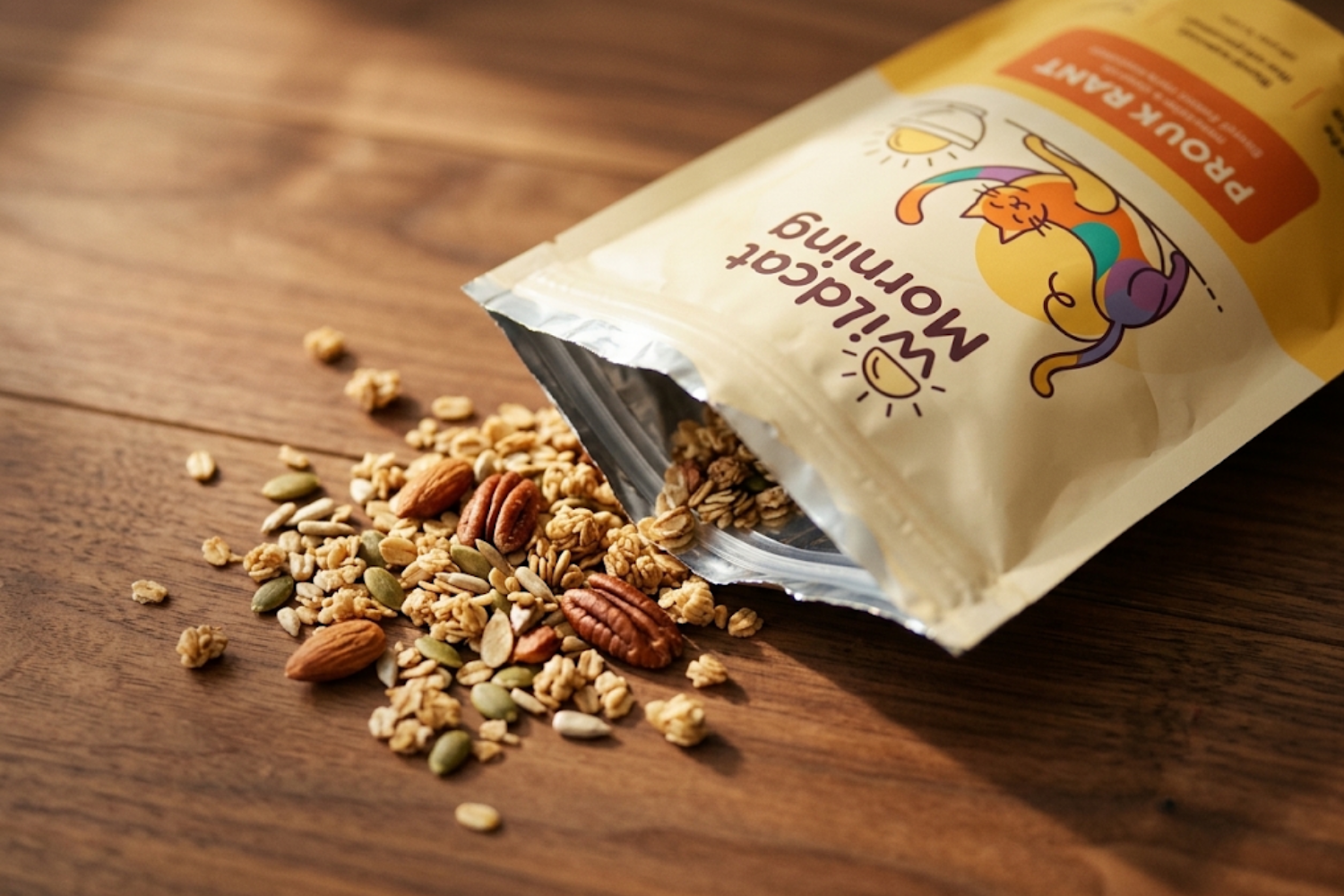
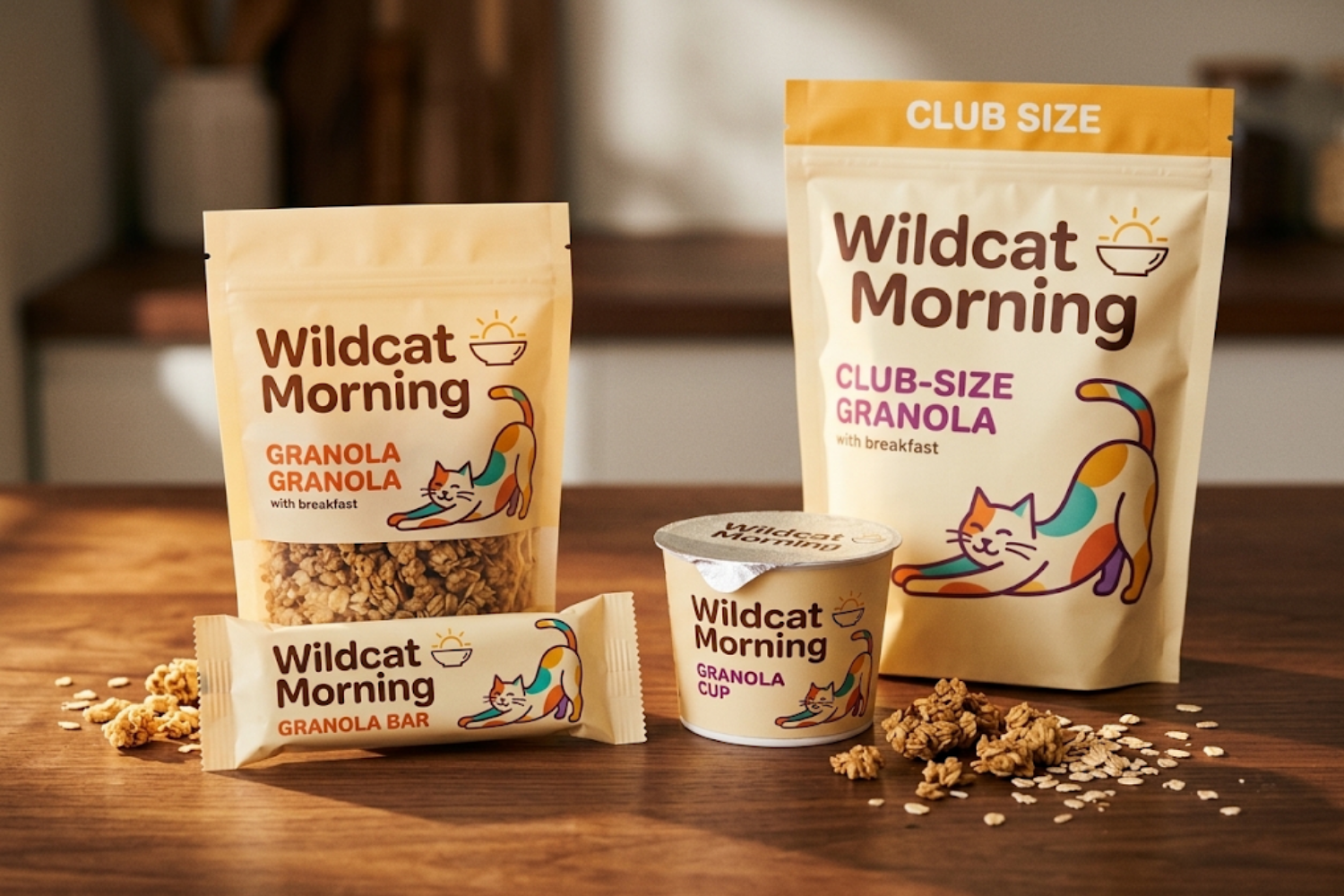
Bulk density and channel drive the choice. Light, high-volume product behaves differently from a dense cluster granola at the same fill weight.
For multi-serve granola and cereal needing barrier protection, resealable convenience and strong shelf presence.
For premium granola and clusters requiring a stable footprint, higher fill weights and more printable space for branding.
For larger cereal and granola fills needing flexible capacity, efficient packing and dependable product protection.
For high-volume cereal and granola lines requiring efficient filling, reliable seals and lightweight flexible packaging.
For form-fill-seal lines requiring film slit and wound to your forming tube, web width and production speed.
For individually portioned granola and cereal products requiring consistent machine performance and secure seals.
For multi-serve granola requiring a zipper and film gauge suited to repeat opening, fill weight and freshness.
For cereal and cluster granola requiring printed retail cartons sized around the liner, product volume and case count.
For shipping cereal and granola with dependable protection, stacking strength and efficient distribution handling.
For adding branding and product information to granola and cereal packs while maintaining an efficient retail format.
For automated cereal and granola lines requiring consistent carton dimensions, reliable feeding and efficient production.
For club-store and promotional placement requiring durable displays that carry larger product volumes securely.
For faster retail stocking, organized shelf presentation and added protection through shipping and handling.
Low bulk density creates its own problems on a vertical form-fill-seal line. Product falls slowly and entrains air, so the fill cycle takes longer than the weight suggests and the pack finishes with more headspace than planned. That headspace is where clusters break. Film stiffness matters more here than on a dense product, because a soft film will not hold form on the tube at speed. Web width has to match the forming shoulder, core diameter has to match the unwind, and repeat length has to match the cut-off or graphics drift out of register down the roll. Where the run happens at a co-manufacturer rather than your own plant, we work from their machine specification. Those numbers go to the plant before it quotes, which is what separates film that performs in a sample from film that performs at production speed.
These are the questions we work through on a granola and cereal packaging program before anyone quotes it.
Crispness is the product attribute customers notice first and complain about fastest. The moisture barrier target comes from the crunch you need to hold at the end of your stated shelf life, not from a standard film specification.
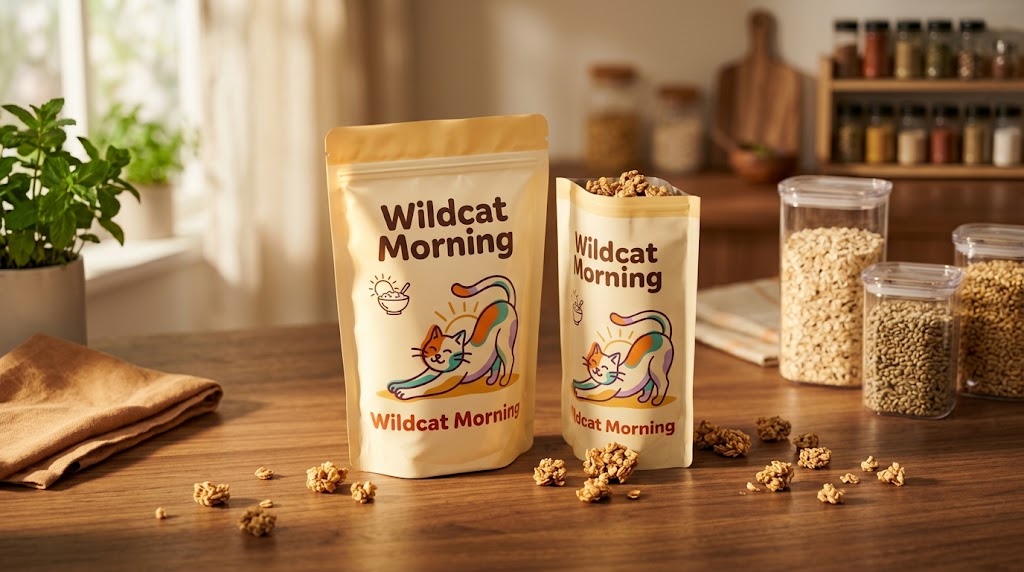
Granola with a high nut, seed or coconut oil content oxidizes the same way a nut pack does. Metallized structures and opaque films address different parts of that, and the oil content decides how far to go.
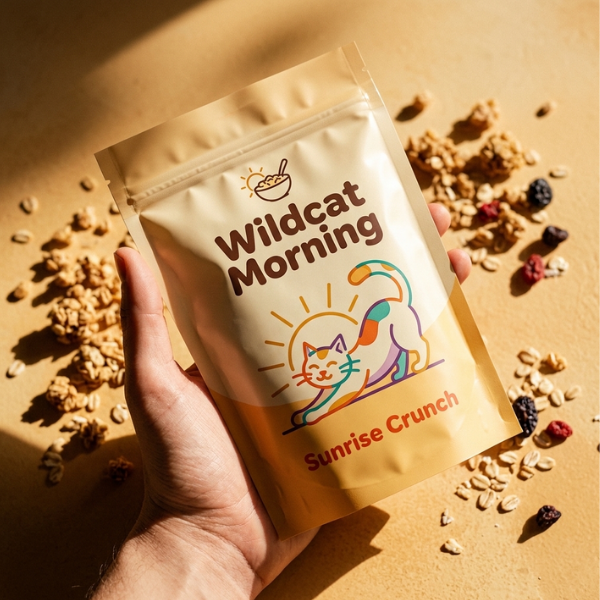
Clusters are the reason the product commands a premium and the first thing lost in transit. Fill level, headspace and drop height at the fill point all affect how much product arrives intact.
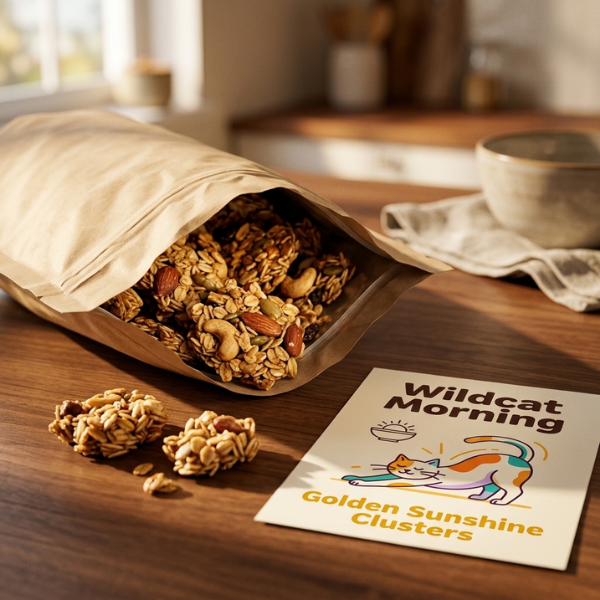
Light product ships air. Pack dimensions, case count and pallet pattern decide freight cost per unit, and on a low density product that line often exceeds the difference between two film quotes.
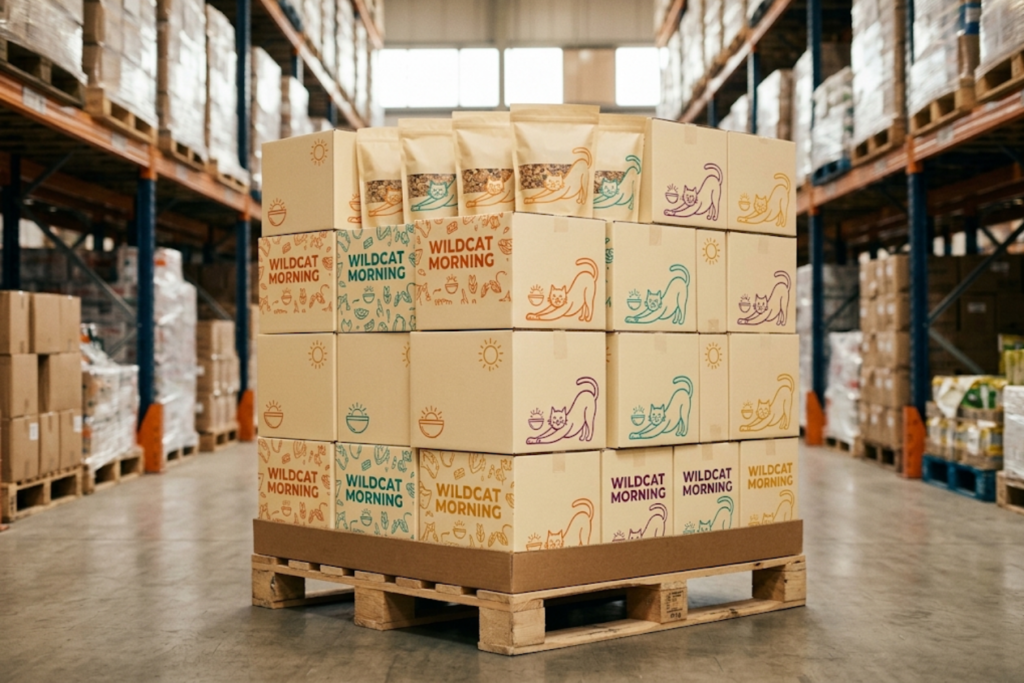
We start from what you buy today and where the current specification is costing you, rather than from a product list.
We map current formats, purchase frequency, quantities, delivery points and equipment or co-packing requirements, then flag the gaps in supply and specification.
We write the carton and the liner as one specification, price it through qualified plants and bring back options with the trade-offs stated rather than a single number.
We manage the run, coordinate delivery and customs brokerage across Canada and the United States, and can hold inventory against a release schedule.
We purchase from our manufacturing partners and sell to you. That means we can quote the box and the bag in the same conversation, which no single converter in either industry can do.
Carton and liner specified, quoted and scheduled together, so the two arrive matched instead of merely arriving.
We understand the business and the packaging requirement before proposing anything, so the solution covers where you are heading rather than only this order.
Vendors are vetted before your job reaches them, with more than one qualified option in the formats we supply most.
Produce an efficient annual quantity and release against demand, which softens the minimums that make two-component packaging awkward to buy.
Granola brands almost never stay in one format. A cluster granola line adds a bar, then a single-serve cup, then a club-size pouch, and each addition brings in a process the existing supplier cannot run. A flexible converter cannot make your cartons. A carton printer cannot make your film. So the brand ends up managing four relationships to sell four products off one recipe. Because we source across categories, the same review that covers your pouches and liners also covers bar wrap film and cartons and the shipper carrying both, and it covers the crossover into cookie and cracker formats where many granola brands go next. That breadth is also where the saving sits for a growing brand, because consolidating spend across formats creates leverage that squeezing a single line item never does.
Reliability that teams can measure.
As a small but growing brand, we struggled to find a packaging supplier who would take us seriously. AR not only welcomed us — they partnered with us. Their work with other startups showed in the quality of our packaging, and Daron went above and beyond, including helping our co-manufacturer optimize their equipment so our pouches came out perfect. We couldn’t ask for a more supportive, solution-focused partner.
ARG is the packaging partner we always needed. They cut through confusion, move fast, and operate like part of our internal team. Their expertise has streamlined our product development, and their above-and-beyond support — like Daron personally delivering samples to our co-manufacturer — is unmatched. We trust them completely.
Armour Rose Group believed in us when other suppliers didn’t. They treated us with the professionalism of a much larger brand and played a real role in helping us scale. Their team is collaborative, reliable, and always willing to solve problems together. Daron’s proactive support and genuine investment in our success stand out above anything we’ve experienced in packaging. Highly recommended.
From day one, the team has been a trusted partner. They provided clear guidance, cost-effective solutions under tight timelines, and the flexibility to scale with a startup. Communication is fast, pricing is transparent, and deliveries are consistently on time and high quality. Support is always there when needed, which makes a real difference. The entire experience makes you feel safe and in good hands— we absolutely recommend Armour Rose Group.
Yes, and it is the main reason brands come to us for this category. Granola and cereal packaging in a bag-in-box format needs a folding carton and a sealed barrier liner, and those normally come from two separate industries with no shared specification. We source both paperboard and flexible formats, so the liner is dimensioned to the carton and the carton is dimensioned to the case count before either tool is committed. That removes the two failures we see most often, which are a liner that wrinkles at the top seal and a carton that does not close cleanly over the fill.
We source it. Armour Rose purchases custom packaging consumables from manufacturing partners and sells them to customers. The practical benefit is that our recommendation is not limited by what one plant happens to run. A converter with a film press will propose film, and a carton printer will propose a carton, because those are the only answers available to them. We choose between qualified suppliers instead of between our own capabilities, and if the right answer is a pouch rather than the carton you asked about, there is no cost to us in saying so.
By setting the moisture barrier from the claim rather than from a catalogue. Crispness is lost through moisture transfer into the pack, so the variables are the barrier layer, the seal integrity and how long the product has to survive under real distribution conditions rather than laboratory ones. We work backward from the shelf life you need to state and the humidity the product will actually see, then specify a structure that holds it. Where a cost target would compromise that, we say so during specification instead of after the first production run reaches a warm warehouse.
Some settling is physics and cannot be removed entirely, so the work is in limiting movement and managing what the customer sees. Fill level and headspace matter most, because product that can move will break, and headspace is often larger than planned on low density granola. Drop height at the fill point is the second factor and is a conversation with the filler. Format is the third, since a flat bottom pouch presents differently after transit than a pillow pouch, and window placement decides whether the customer sees clusters or fines. Some brands drop the window and use printed graphics instead.
The honest position differs by material. On flexible film and liners, the realistic option today is material containing a percentage of post-consumer recycled content, and whether that works depends on the moisture barrier your crunch claim needs, since those two requirements can pull against each other. On the carton and corrugated side the ground is much firmer, with recycled content and FSC-certified board both available. Given that a cereal program is mostly paperboard by weight, that is usually where the meaningful gain is. We will tell you which claims a partner can document.
Not at all, and it is how most of our relationships start. Many customers buy a single product line from us at first while continuing with their existing vendors elsewhere. The value builds as the program is reviewed as a whole, because consolidating across formats creates purchasing leverage that a single line item cannot, and it removes the version control problem that comes from running one artwork release through three unconnected suppliers. We would rather earn the second format than bundle it into the first quote.
Send us your current carton and liner specifications, your fill weights and your line details. We will come back with one specification, qualified plant options and pricing. Start with a packaging review.