


















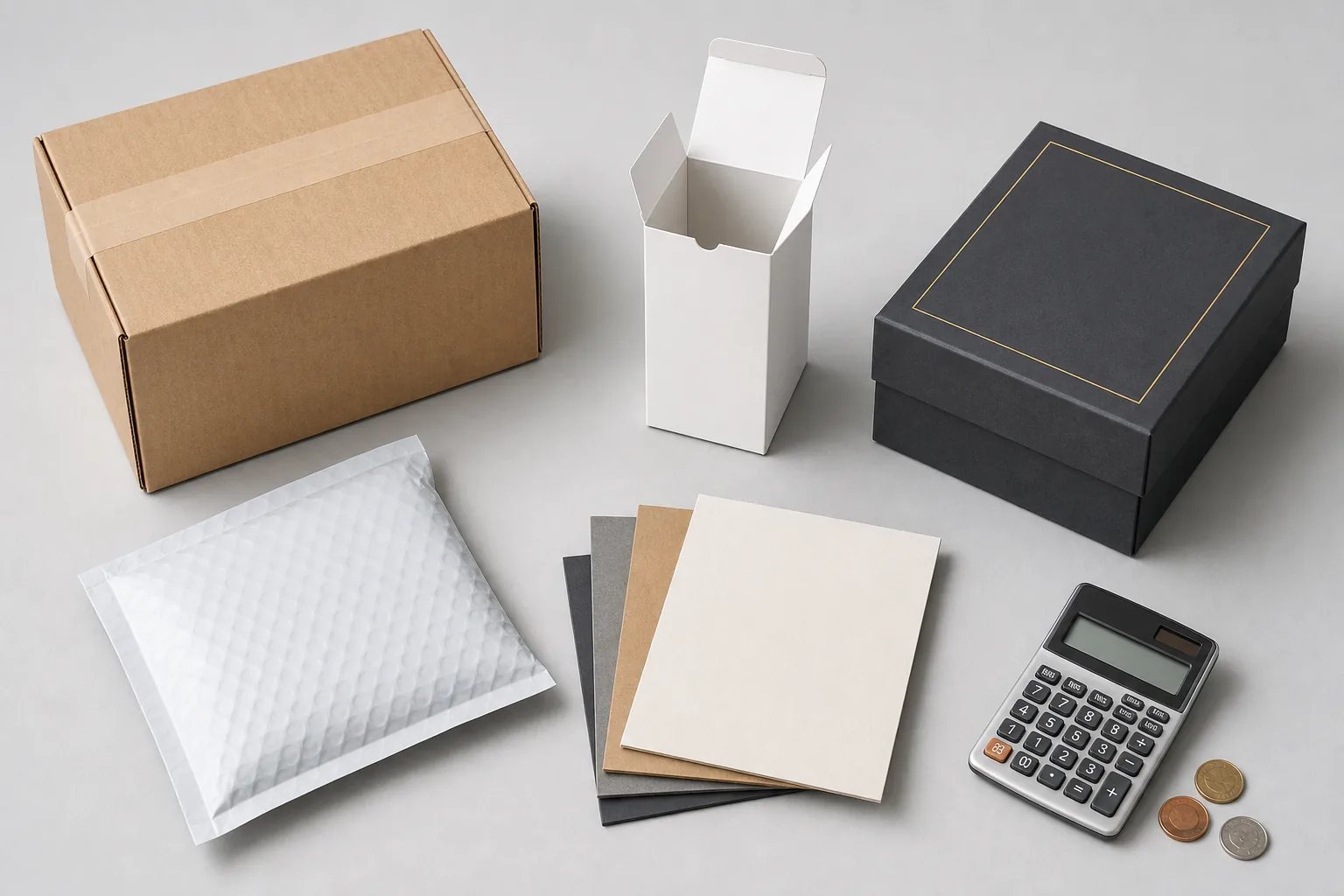
The total cost of packaging is the full sum of every expense required to design, produce, ship, store, and dispose of the packaging around your product, not just the price you pay per box, pouch, or label. It is the number that actually hits your margin, and it is almost always higher than the unit price on a quote.
If you run a snack, bar, beverage, or better-for-you brand, that distinction matters. The cheapest quote rarely produces the lowest true cost once freight, storage, waste, and coordination across multiple suppliers are added up. This guide breaks down every line item that rolls into packaging cost, shows how to calculate your own number, and explains why food brands in particular should think in terms of total cost rather than unit cost.
What Is the Total Cost of Packaging?
At its simplest, “package cost” means what you pay a supplier for a single unit of packaging. Total cost of packaging is broader. It captures everything from the one-time setup fees to the ongoing costs of getting packaging made, delivered, filled, stored, and eventually recycled or thrown away.
The practical takeaway: when you compare two quotes purely on unit price, you are looking at one line in a much longer bill. A folding carton that costs a few cents less per unit can quietly cost more overall if it ships in less efficient cases, needs a second vendor for the matching film, or generates more rework on your line.
A Simple Formula
Total packaging cost per unit = (material and print cost + setup and tooling + freight + storage + waste and rework + coordination time + disposal) ÷ units delivered and used
Most quotes cover only the first two terms. The rest is where total cost is won or lost.
The Main Components That Make Up Packaging Cost

Packaging cost is easier to understand when you split it into three groups: fixed costs, variable costs, and the hidden costs that give “total” its name.
Fixed Costs (one-time and setup)
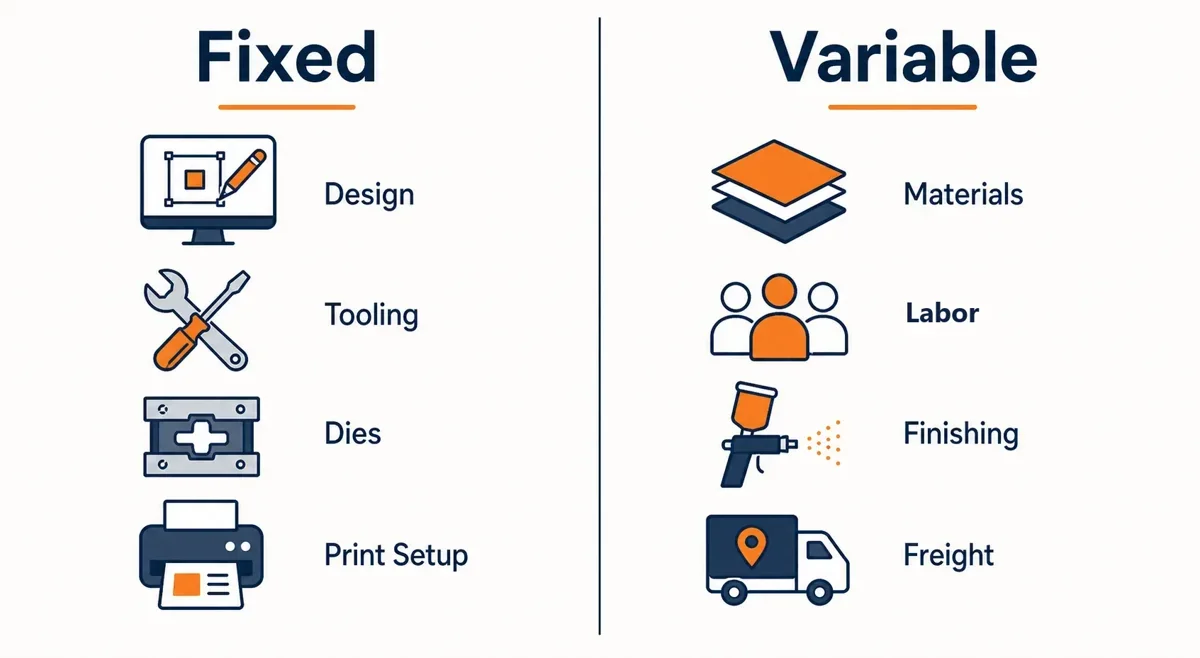
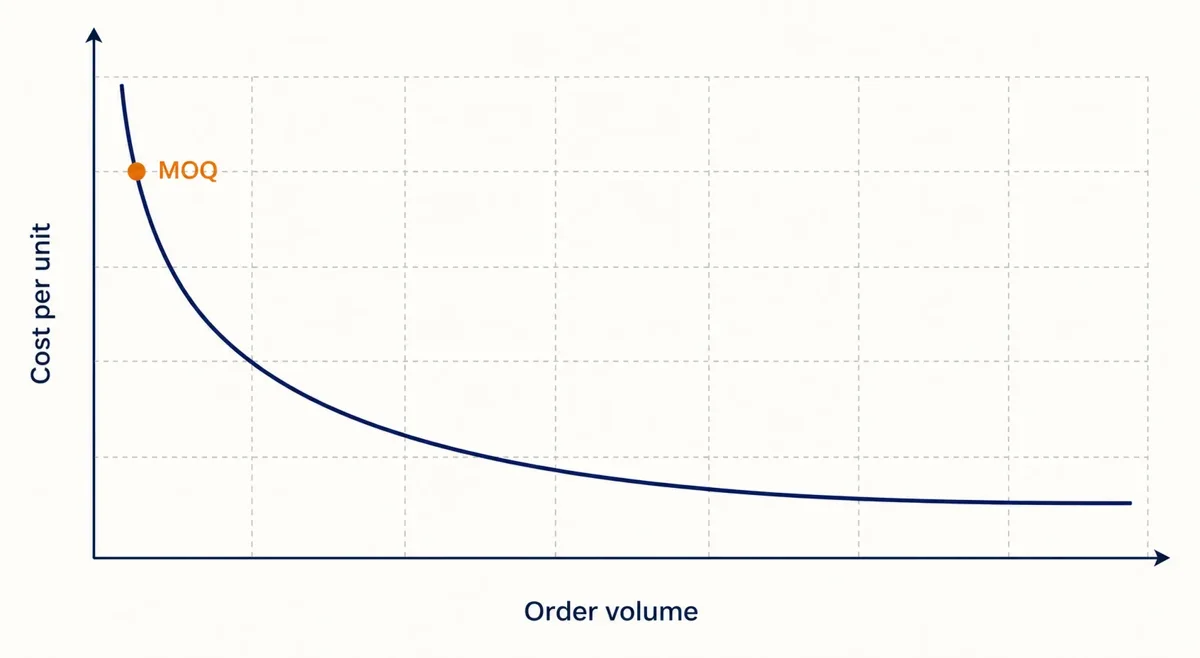
Fixed costs are spent once, usually before your first unit ships. They include structural and graphic design, custom tooling for cartons and trays, print setup, and prototyping or sampling. These are real costs, but they are spread across the full production run. On a small run, the setup cost per unit is steep. On a run many times larger, the same setup barely moves the per-unit number. This is why small runs often feel expensive: you are paying for the same setup with fewer units to carry it. Minimum order quantities for custom printed packaging are set by the manufacturer and vary by format.
Variable Costs (per-unit and volume-driven)
Variable costs scale with how much you make. The main drivers are the material (paperboard, corrugated, film, foil), the print process and number of colors, any coatings or finishes, the size and dimensions of the pack, and the order quantity. Larger orders usually lower the per-unit price because setup is diluted and materials are bought in bulk. Material prices themselves move with the market, so a quote you get today may not hold six months from now.
Hidden and Downstream Costs
This is the group most quotes ignore, and it is where total cost is won or lost:
- Freight, both inbound (packaging to you) and outbound (finished product to retail).
- Warehousing and storage for packaging inventory, especially if minimum order quantities force you to buy more than you need right away.
- Waste, rework, and changeovers when a spec runs poorly on your line or a print job comes back off-color.
- Coordination cost of managing several vendors for film, cartons, trays, and pouches.
- Disposal and end-of-life handling, which increasingly carries recycling and compliance obligations. The U.S. Environmental Protection Agency reports that containers and packaging make up the largest share of municipal solid waste by product category, which is why end-of-life handling draws growing attention.
Add these together and the “cheap” option often loses.
How Much Does Packaging Actually Cost?
Buyers always want a number. The honest answer is that packaging spans a very wide range depending on format, material, order size, and printing. Simple stock components can run pennies per unit, while custom, small-run, highly decorated packaging can run several dollars per unit or more.
Published rules of thumb for packaging as a share of retail price vary widely and rarely separate food from other categories, so use your own numbers instead. Calculate your total cost per unit with the formula above, divide it by your net selling price, and compare the result with your own history and margin targets. If the share is climbing, find out which line is driving it. A higher number is not automatically a problem if the packaging is helping the product sell.
Cost Per Unit vs. Cost Per Pound
Most brands think in cost per unit, but another measure matters. Freight is billed by weight, pallet count, or cube depending on how you ship, so a heavier pack can cost more to ship on every single order for the life of the product. For foods sold by weight, per-pound packaging cost also feeds directly into your cost of goods. A lighter, right-sized pack can lower both material and freight cost at once, which is why weight is worth tracking alongside unit price.
Packaging Cost for Food and Beverage Products
Food and beverage packaging carries its own cost drivers, and they are the reason a food pack rarely compares cleanly to, say, a hardware box.
First, safety and compliance. Materials that touch food have to be food-contact safe, which narrows your material choices and can raise cost versus a non-food equivalent.
Second, barrier and shelf life. Snacks, bars, and specialty beverages often need films or structures that block oxygen, moisture, or light to protect flavor and extend shelf life. More barrier usually means more cost, but it protects against spoilage and returns.
Third, retail-ready presentation. Getting on a shelf and looking good there adds real line items. For the food brands we work with, that typically means:
- Printed films for bars, snacks, and flexible packs.
- Folding carton boxes for multipacks, cookies, and better-for-you retail formats.
- Labels and shrink sleeves for branding that stays consistent shelf to shelf.
- Corrugated trays and PDQ (retail-ready) displays that ship product and merchandise it in one unit.
- Flat and stand-up pouches for popcorn, granola, and beverage formats.
- Food service containers for brands that sell into food service.
Each of these formats prices differently, and a brand often needs several of them at once. That is exactly where multi-vendor coordination costs start to creep into the total.
Who Bears the Cost of Packaging: Manufacturer or Consumer?
Packaging is paid for first by the manufacturer or brand that buys it. It then flows down the supply chain and is ultimately reflected in the retail price the consumer pays. So in the long run the consumer funds packaging, but the brand carries it upfront and absorbs any overspend directly out of its margin before a single unit sells.
That is the practical reason to control total packaging cost: every dollar of waste, excess freight, or vendor inefficiency comes out of your margin first. Lowering true total cost protects profitability without forcing a price increase that could cost you shelf competitiveness.
How Packaging Costs Are Classified in Accounting
Kept simple, packaging usually splits into two buckets. Primary packaging, the material that is part of the sellable product, is commonly treated as part of the cost of goods sold. Shipping and secondary packaging used to fulfill and transport orders is often treated as an operating or fulfillment expense. The exact treatment depends on your business and your accounting rules, so confirm the specifics with your accountant. The reason it matters is that where a cost sits changes how it shows up in your margins and your reporting.
Why Total Cost of Ownership Beats Chasing the Lowest Unit Price
Total cost of ownership is simply the idea that the real cost of packaging includes acquisition, operation, and disposal over time, not just the purchase price. Reframed for a growing food brand, the goal is lower total cost rather than just a lower unit cost: lowering the whole bill by cutting freight, reducing rework and changeovers, tightening inventory, and removing the friction of juggling suppliers.
This is where single-source accountability can make a real difference. When your films come from one vendor, your cartons from another, your trays from a third, and your pouches from a fourth, you multiply purchase orders, quality standards, lead times, and points of failure. Consolidating those product lines with one partner can simplify coordination, help keep quality consistent across formats, and lower the true total cost even when a single line item is not the rock-bottom price. It is the difference between buying packaging and having a packaging solution.
How to Lower Your Total Packaging Cost (Practical Steps)
You do not need a huge budget to bring total cost down. A few disciplined moves do most of the work:
- Consolidate vendors toward a single source. Fewer suppliers can mean less coordination cost, more consistent quality, and better leverage across your full packaging spend.
- Right-size your dimensions. Trimming excess size and weight cuts material and, on every future order, freight.
- Plan volumes to hit better price tiers. Understanding minimum order quantities and buying to the right tier lowers per-unit cost without overbuying inventory you have to store.
- Start with discovery, not a spec. Before locking in a material or format, map your current packaging, your challenges, and where you are heading. The right spec for a startup shipping 10,000 units is rarely the right spec at 500,000.
That discovery-first approach is the A-R-G Process. We Ask First, to understand your business and your packaging. We Resolve Second, with a solution and transparent pricing that show where your cost really comes from. We help you Grow Third, so your packaging scales with you rather than being re-quoted every time volume jumps.
Related readingHow to Reduce Packaging Costs for Food BrandsRead the guide →
Frequently asked questions
What is the average cost for packaging?
There is no single average. Per-unit costs range from pennies for simple stock items to several dollars for custom, decorated, small-run packaging. The more useful number is your own total cost per unit, calculated with the formula above.
How do you classify packaging cost in accounting?
Primary packaging is often part of cost of goods sold, while shipping and secondary packaging is often an operating or fulfillment expense. Confirm the exact treatment with your accountant.
How expensive is packaging?
It varies widely by material, format, order size, and printing. The bigger cost story is usually the total, including freight, storage, and waste, not the unit price alone.
What does "package cost" mean?
Package cost usually refers to the price per unit of packaging. Total cost of packaging is broader and includes design, production, freight, storage, and disposal.
What is the total cost of packaging per pound?
Per-pound cost matters because freight is often billed by weight. A lighter, right-sized pack can lower shipping cost on every order and, for foods sold by weight, feeds directly into cost of goods.
What is the total cost of packaging for food?
Food packaging carries added costs for food-contact-safe materials, barrier protection for shelf life, and retail-ready presentation, so it often runs higher than comparable non-food packaging.
Map Your True Total Packaging Cost
The lowest quote and the lowest cost are rarely the same thing. If you want to understand what your packaging is really costing you, and where consolidating film, cartons, trays, and pouches could protect your margin, that starts with a conversation about your business, not a spec sheet. Get a Quote or schedule a call to map your total packaging cost.