

















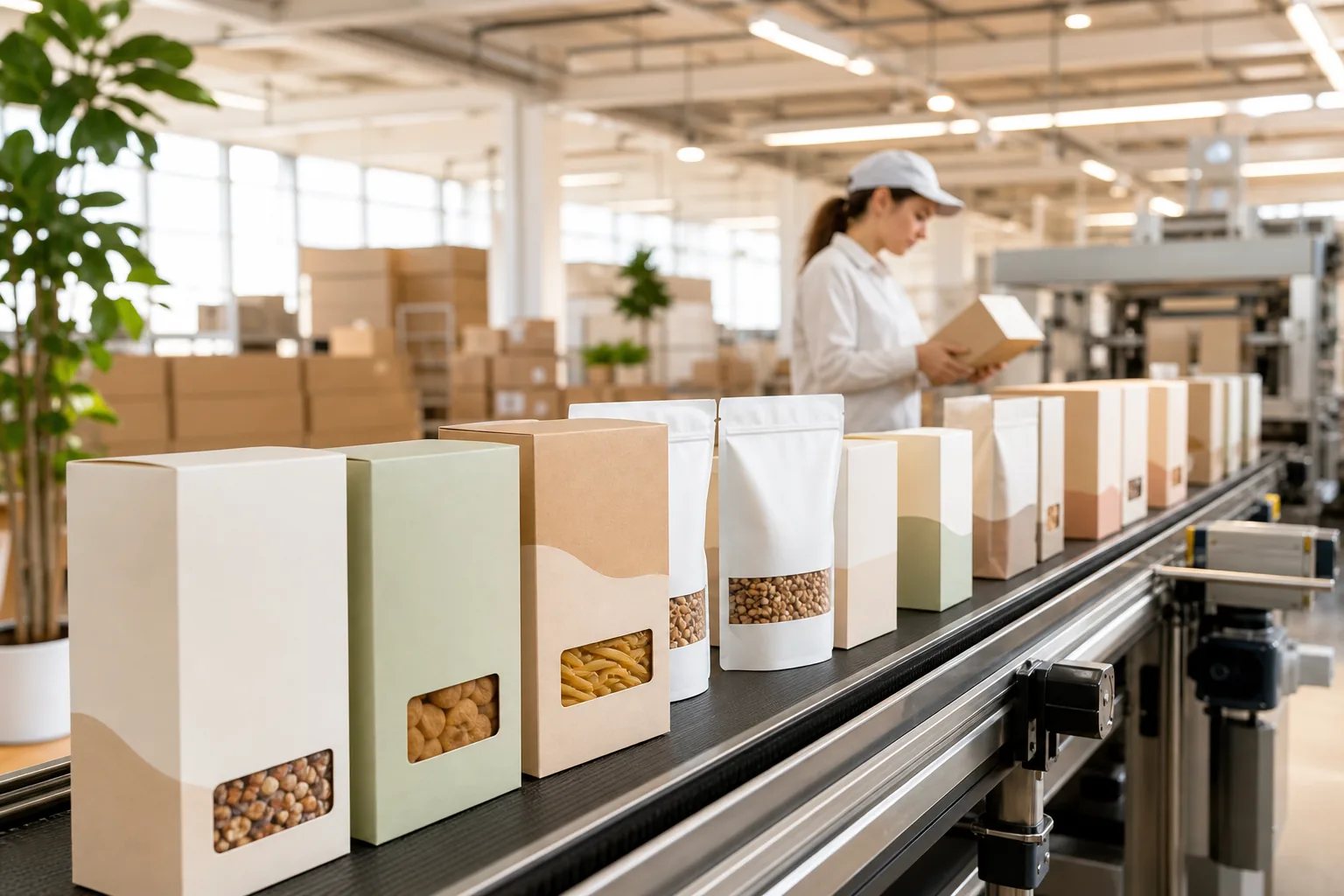
Packaging is a significant controllable line item on a food or beverage P&L, and every design or sourcing decision compounds across every unit you ship. A slightly oversized box, a film that runs poorly on the line, or one extra vendor to coordinate quietly adds up to real money over a year. Brands that spend well share one habit: they measure total cost, not just the per-unit price of a box or a roll of film. That shift is where most of the savings actually live.
What Actually Drives Up Food Packaging Costs
You cannot cut what you have not diagnosed. Before chasing a lower price, break down where the cost is really coming from.
Material choice and over-specification
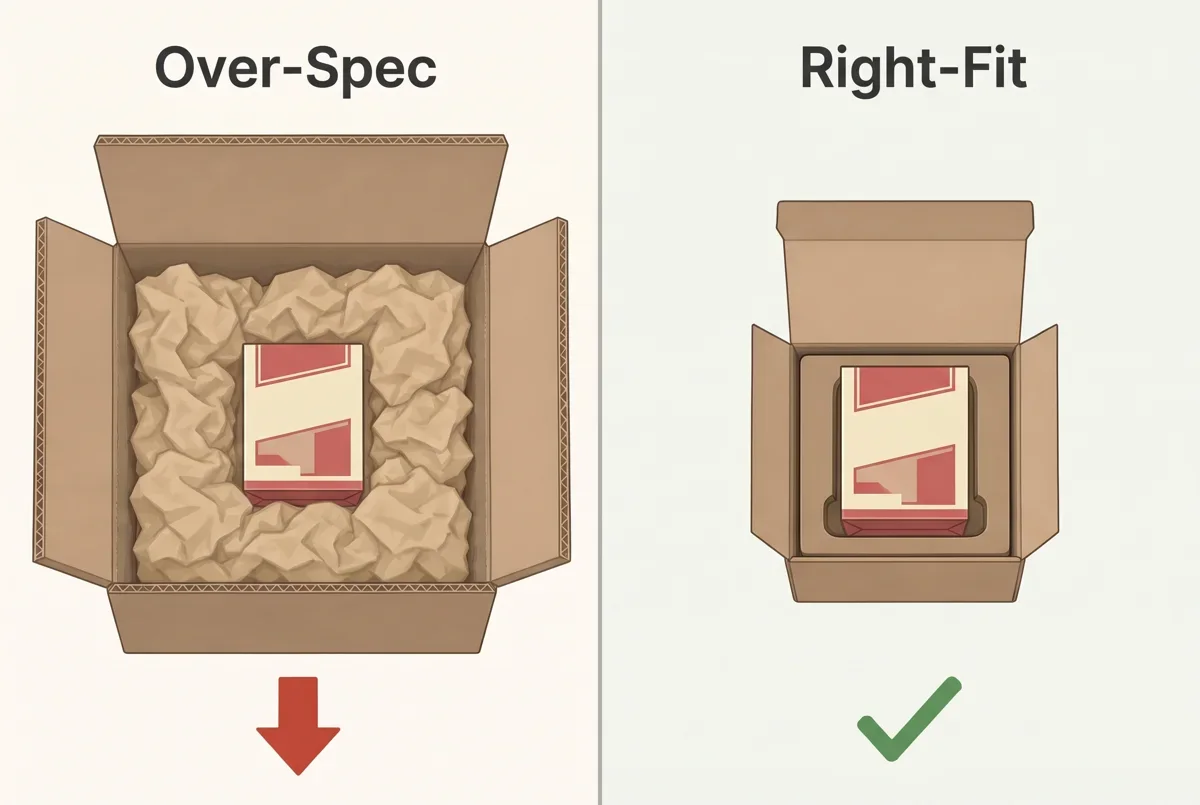
Many packages use heavier board or thicker film than the product needs. Over-specifying feels safe, but you pay for that extra material on every unit. Matching the substrate to the actual protection requirement, no more, is often the fastest saving available.
Wrong-sized packaging and wasted space
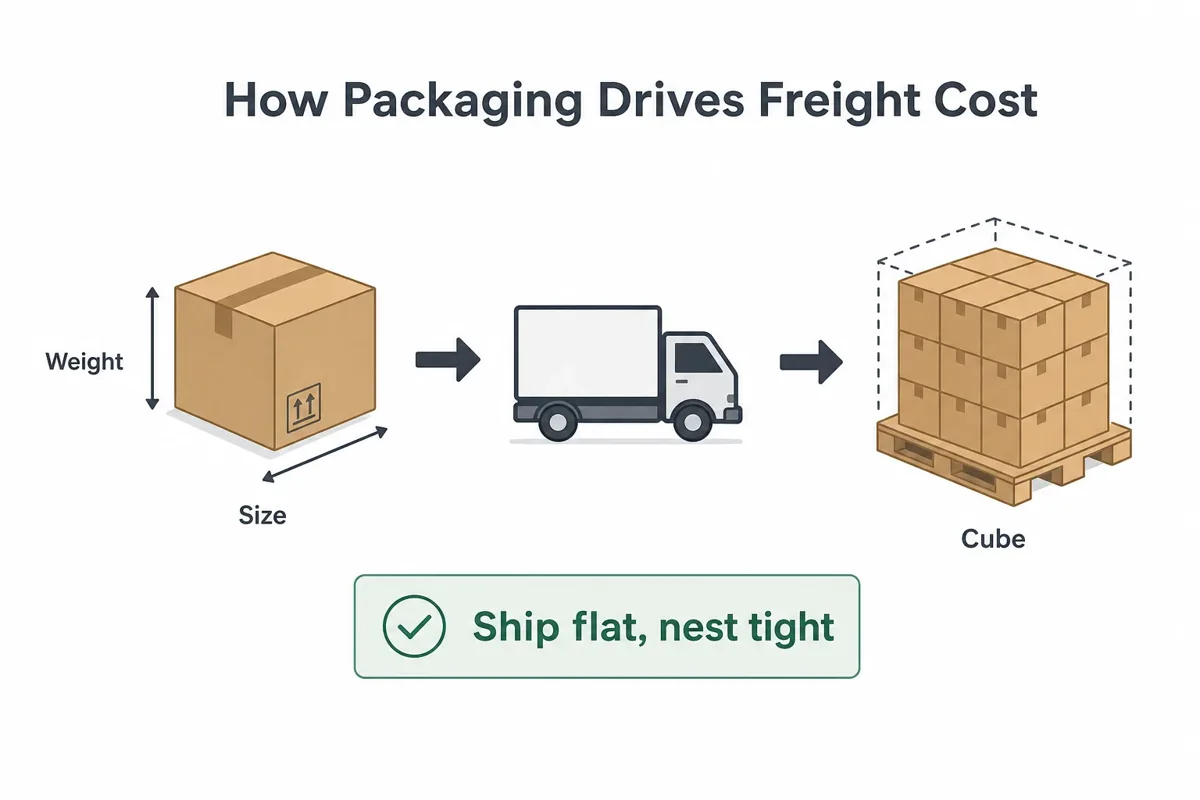
A pack that is too big wastes material and invites dimensional-weight penalties, since parcel carriers charge for the space you ship, not just the weight. Excess void fill adds cost twice: once for the fill, once for the air you pay to move.
Short runs, frequent changeovers, and low volume
Small, one-off orders rarely qualify for volume pricing, and frequent changeovers on the line add setup cost. Fragmented ordering keeps you stuck at the wrong end of every price break.
Managing multiple vendors across product lines
When films come from one supplier, cartons from another, and trays from a third, coordination becomes its own hidden expense: separate freight lanes, separate minimums, mismatched lead times, and more of your team’s hours spent chasing status. This is where the real cost of packaging quietly starts.
How to Reduce Packaging Costs: 7 Practical Steps
- Audit and itemize your current spend. List every component and separate necessary cost from unnecessary cost. You cannot improve a number you have never written down.
- Right-size every package. Correct box and pouch dimensions cut material and freight at once. The U.S. Environmental Protection Agency’s guide to reducing wasted food and packaging shows how trimming excess material lowers cost and waste in the same move.
- Lightweight the design without weakening protection. Thinner films, optimized board grades, and small structural tweaks can protect the product just as well while using less material. A packaging partner that sources custom packaging solutions built for protection and shelf appeal can help you lighten a pack without losing the look that sells it on shelf.
- Consolidate volume for better pricing. Combining volume across SKUs and formats, and committing to firmer forecasts, can move you into better price breaks and steadier supply without overbuying inventory you have to store.
- Optimize for shipping and storage. Improve cube efficiency, tune case-pack counts, and use the full pallet. Fitting more sellable product into the same trailer lowers cost per unit delivered.
- Reduce freight through smarter sourcing. Freight is one of the most overlooked levers in total cost. Sourcing closer to your fill site or combining shipments can take real dollars out of the landed price.
- Consolidate vendors into a single source. One partner across printed films, folding cartons, corrugated trays, pouches, and labels can cut coordination overhead and give you one coordinated quote instead of four disconnected ones.
How to Reduce Food Packaging Without Overspending
Sustainability and cost align better than most people expect, as long as you focus on using less material rather than only swapping to premium “eco” substrates.
Use less material first
Source reduction beats material swaps on cost almost every time. Removing an unnecessary layer, shrinking a label, or eliminating an insert lowers spend and footprint together. Research on eco-friendly food packaging points to reduction and smarter design, not just costlier materials, as the practical path forward.
Where recyclable and mono-material options pay off
Single-material structures can be easier to recycle and, in some regions, cheaper to handle at end of life. The right choice depends on your product and market, which is exactly why it is worth evaluating rather than assuming greener always costs more. A study on packaging-waste reduction and consumer preference found that cutting packaging can support brand appeal rather than hurt it.
Balance eco goals with shelf life
Under-packaging is a false economy. If a lighter pack shortens shelf life or lets product spoil, the waste cost erases the material saving. Aim for the lightest pack that still protects the product all the way to the shopper.
Two Frameworks: 4 C's and 5 P's of Packaging
Two simple checklists help you judge whether a pack earns its cost. Definitions vary by source, so treat them as thinking tools.
The 4 C’s of packaging
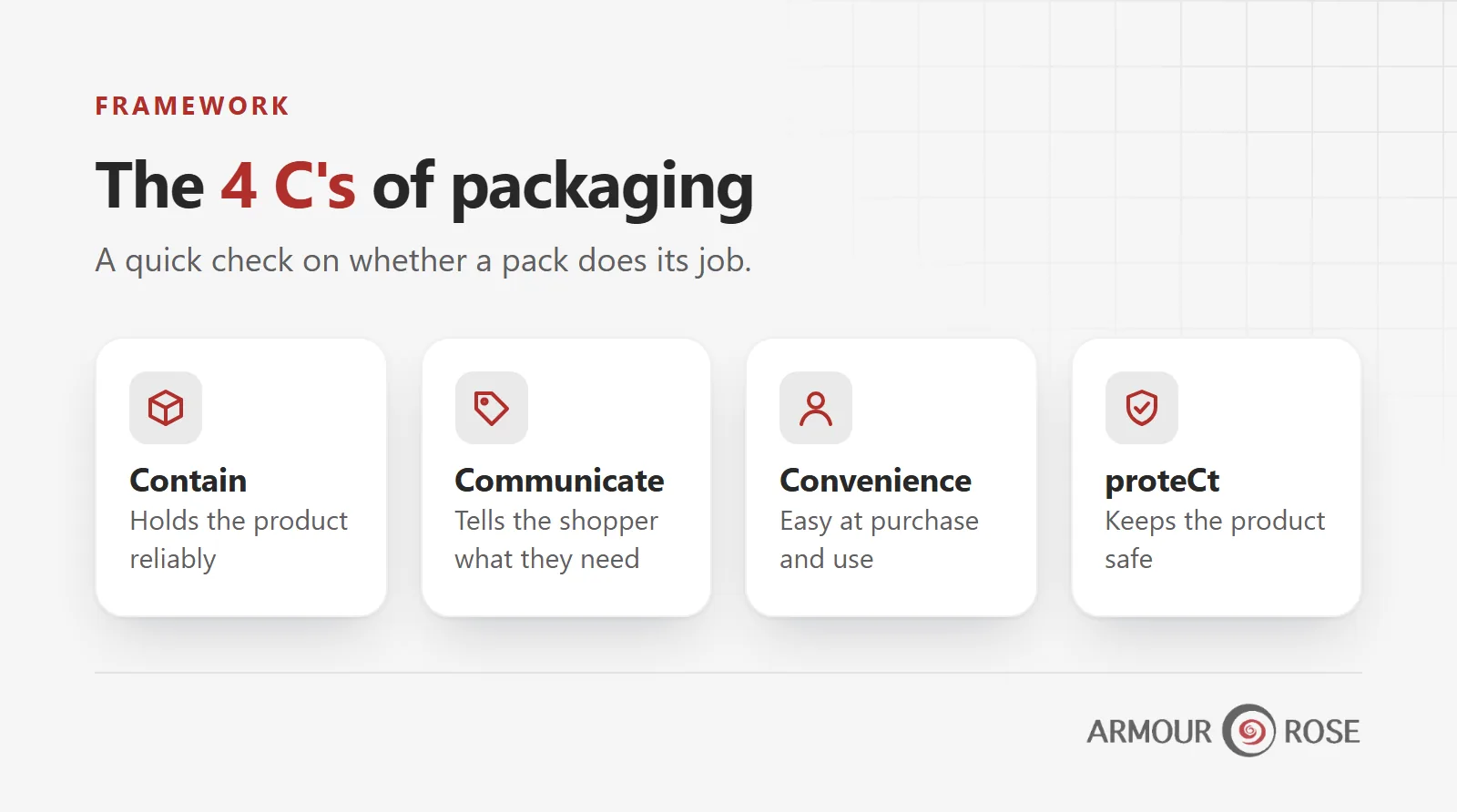
Contain, Communicate, Convenience, and proteCt. Run your current pack against each: does it hold the product reliably, tell the shopper what they need, make life easy at purchase and use, and keep the product safe? A pack failing any of these is either costing too much or delivering too little.
The 5 P’s of packaging
A broader lens: Product, Protection, Price, Presentation, and Placement. Together they connect what is inside, how well it is guarded, what it costs, how it looks on shelf, and where it sells. Use the 5 P’s to spot where you overspend on one P without lifting the others.
Why Total Cost Beats Unit Cost
Chasing the cheapest per-unit price often raises your total cost. A cheaper film that jams the line adds downtime and scrap. A smaller pack can raise freight per product sold. A bargain carton that damages easily drives returns and rework. If you are shrinking pack sizes to protect margin, measure the move against total cost, not the sticker price of the component. Add up material, freight, waste, damage, downtime, and the overhead of juggling vendors, and the “expensive” option can turn out to be the cheaper one.
When to Bring in a Packaging Partner
Many brands leave savings on the table simply because they manage separate suppliers for film, cartons, trays, and pouches. A packaging partner that works across a vetted manufacturing network can look for total-cost savings across all of them and scale with you as you grow.
The single-source advantage
One partner across printed films, folding cartons, corrugated trays and PDQ displays, stand-up pouches, labels and shrink sleeves, and food service containers means one point of contact and aligned lead times, and, where shipments can be combined, consolidated freight. Armour Rose pairs that single-source accountability with a network of vetted manufacturers. Because your program is not tied to one plant, a problem in one place does not have to become a problem for your whole supply.
What the process looks like
The A-R-G Process starts by asking questions, not quoting parts. Ask First: understand your current packaging, your short- and long-term needs, and the challenges specific to your product. Resolve Second: map the gaps and recommend solutions objectively, with transparent pricing so you can see what drives your total cost. Grow Third: stay with you as volumes grow. That is how brands capture the savings this guide describes.
Related readingWhat Is the Total Cost of Packaging? A Food GuideRead the guide →
Frequently asked questions
How can we reduce food packaging?
Start with source reduction: use less material, remove unnecessary layers, and right-size the pack before switching substrates. Using less almost always costs less.
How do I reduce the cost of packaging?
Audit and itemize current spend, right-size every pack, consolidate volume, and judge every change against total cost, not unit price alone.
What are the 4 C's of packaging?
Contain, Communicate, Convenience, and proteCt: a quick checklist for whether a pack does its job.
What are the 5 P's of packaging?
Product, Protection, Price, Presentation, and Placement: a broader lens for balancing cost against value on shelf.
Does reducing packaging mean lower quality?
Not when it is done deliberately. Right-sizing and lightweighting can cut cost while keeping the protection and shelf appeal that matter.
Ready to Lower Your Total Packaging Cost?
Reliable, predictable quality and service from a single accountable partner is how food and beverage brands turn these tactics into lasting savings. Get a Quote or schedule a call to see where your total packaging cost can come down.