



















What Is Flexible Packaging?
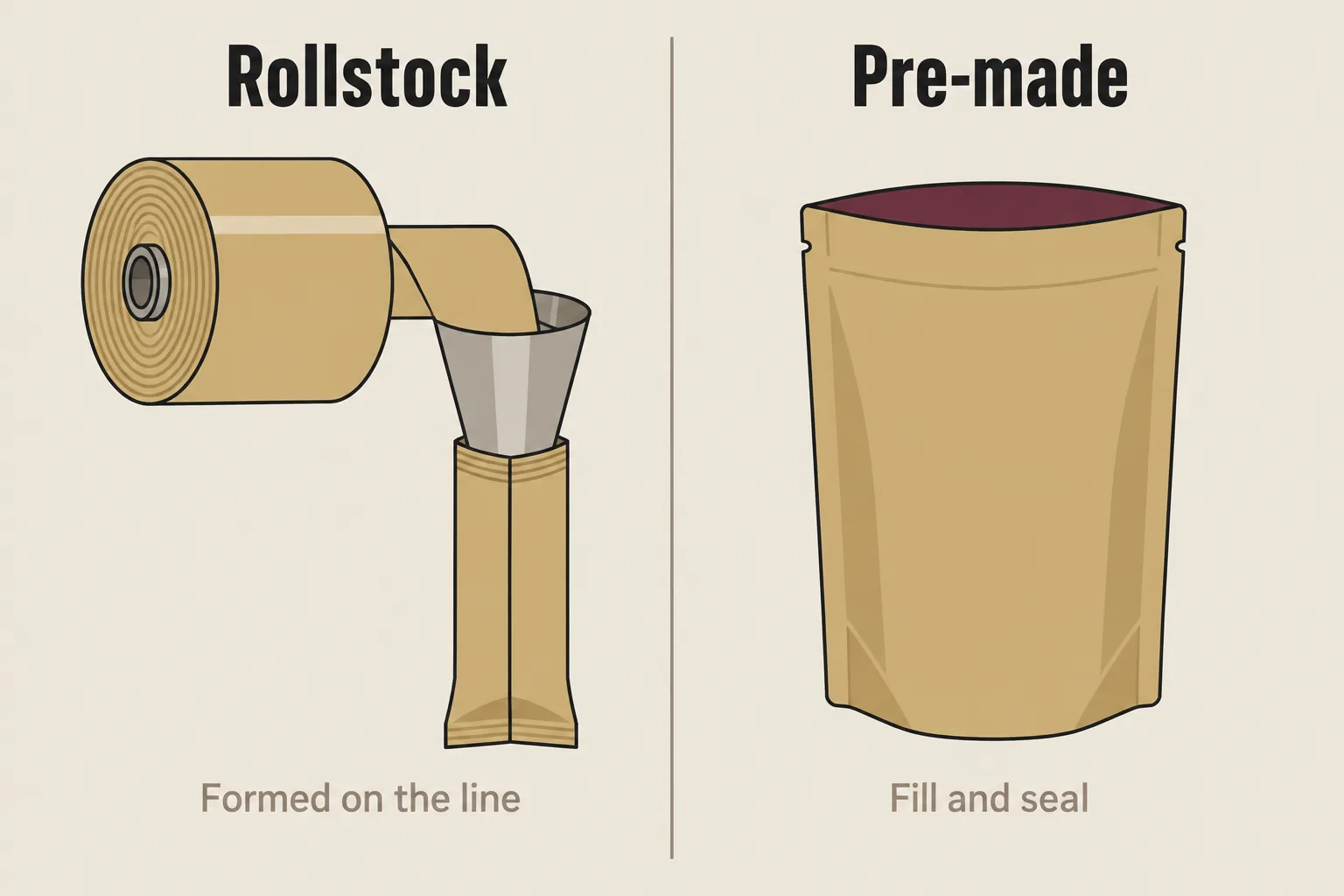
Flexible packaging is made from pliable materials such as plastic film, paper, aluminum foil, or combinations of these materials. It includes bags, pouches, wraps, and rollstock that can bend or change shape during use. A bag of chips, a wrapped protein bar, and a resealable pouch of granola are familiar examples.
Food and beverage brands rely on flexible formats for practical reasons:
- Lightweight formats. Depending on the package design, flexible formats can reduce packaging weight compared with some rigid alternatives.
- Efficient storage. Empty film and flat pouches take up far less warehouse space than empty rigid containers.
- Large print area. Nearly the whole surface can carry branding, nutrition panels, and claims.
- Format range. The same basic materials can become a single-serve stick pack or a family-size pouch.
For many food brands, flexible packaging arrives either as finished bags and pouches that are filled and sealed, or as printed film on a roll that a filling machine shapes into packages on the production line. The distinction affects equipment needs, ordering, and lead times.
We cover the main formats first, then the materials behind them, then a step-by-step way to choose.
Flexible Packaging Formats at a Glance
| Format | How it arrives | Typical food and beverage uses |
|---|---|---|
| Printed rollstock film | Roll, formed on the filling line | Chips, popcorn, cookies, crackers |
| Flow wrap (made from rollstock) | Formed and sealed around each item | Protein bars, breakfast bars, brownies, single cookies |
| Stand-up pouches | Pre-made | Granola, trail mix, jerky, coffee, protein powder |
| Lay flat (pillow) pouches | Pre-made or formed from roll | Single servings, samples, peg-hung snacks |
| Spouted pouches | Pre-made | Juices, smoothies, purees, drink concentrates |
| Sachets and stick packs | Usually roll | Drink mixes, electrolyte powders, sweeteners, sauces |
| Vacuum bags | Pre-made or roll | Jerky, meat snacks, cheese |
| Shrink and stretch film | Roll | Can multi-packs, bundles, pallet wrap |
A quick way to identify a likely starting point:
- Chip, popcorn, and cookie brands running at volume through a co-packer usually use printed rollstock.
- Bar brands usually use flow wrap, often inside a retail carton.
- Premium, multi-serve snack brands often choose stand-up pouches.
- Beverage and wellness brands use stick packs, sachets, spouted pouches, or shrink film for cans.
Printed Rollstock Film
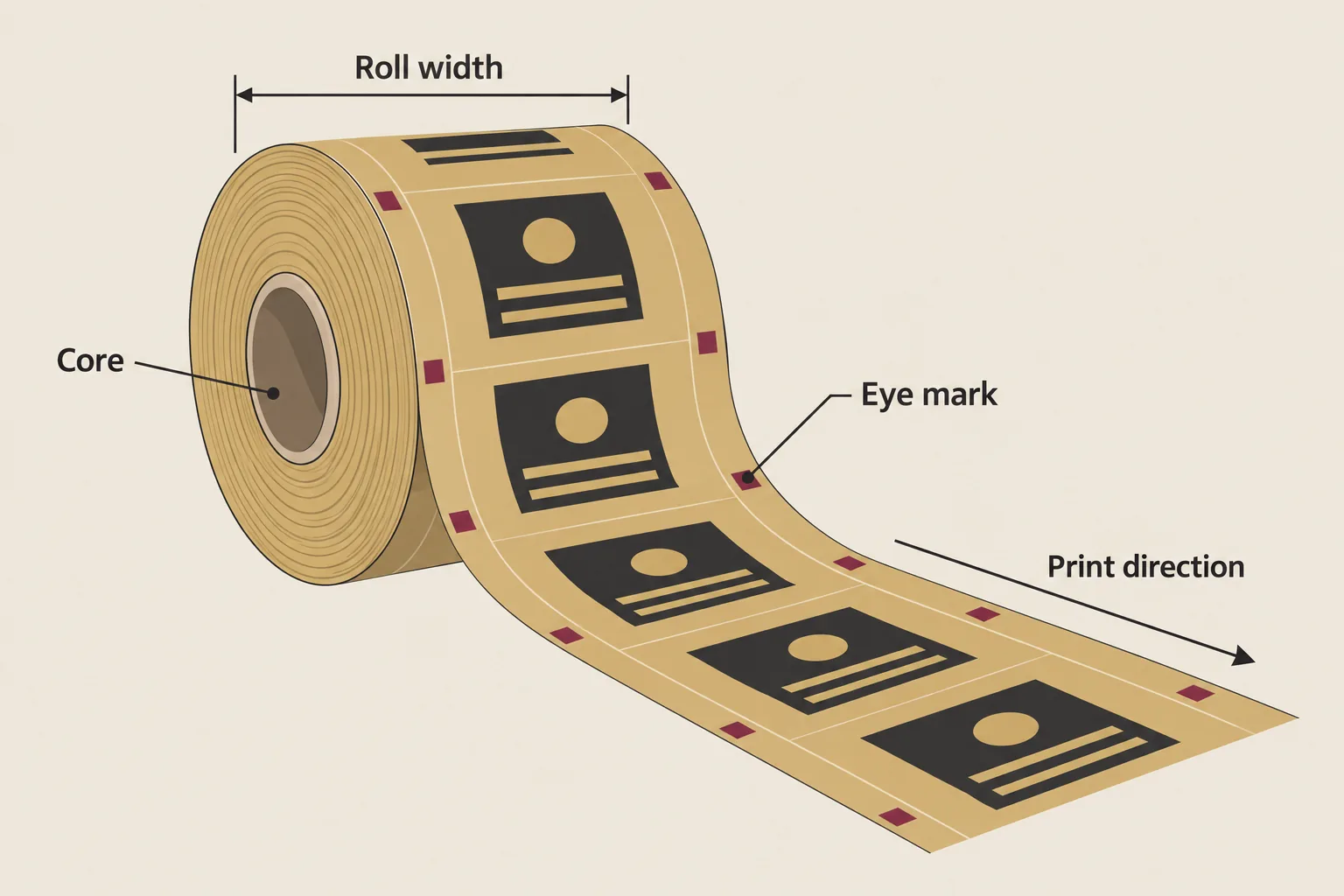
Rollstock is continuous printed film wound onto a core. The filling machine unwinds it, forms it into a bag or wrapper, fills it, and seals it in one continuous process. Many chip and snack bags are made this way. For an example by category, see chips and crisps packaging options.
Rollstock is the workhorse for high-volume snacks because the package is made right on the filling line. It can be economical at sufficient volumes, depending on order quantity, print method, film structure, and equipment.
The catch is that the film has to match the machine. Before a single roll is printed, several details need to be confirmed with the brand or its co-packer:
- Roll width to suit the forming equipment
- Core size that fits the machine
- Roll length or diameter the line can handle
- Print direction (which way the artwork unwinds) so graphics land correctly on every package
- Eye marks, the small printed blocks that tell the machine where to cut
Get one of these wrong and film may jam, go to waste, or produce misaligned graphics. Printed films make up the largest share of Armour Rose’s packaging business. Our team reviews the production requirements upfront and coordinates sourcing through manufacturing partners. Learn more about roll stock film specified to your machine.
Flow Wrap for Bars and Individually Wrapped Items
Flow wrap is a specific use of rollstock. Film wraps around a single item and is sealed along the back and at both ends, creating a snug, pillow-style wrapper.
Typical uses include:
- Protein bars, breakfast bars, and nut bars
- Brownies and single-serve baked goods
- Individually wrapped cookies
- Candy and confectionery
Because bar wrappers are small, graphic decisions matter. Printing needs to line up precisely so logos and nutrition panels sit in the right place on every bar. Some brands add a clear window to show the product, and easy-open features help at the point of eating.
Flow-wrapped bars rarely go to retail on their own. They are often packed into a folding carton for multi-packs or a corrugated display tray for single-bar sales. Planning the wrapper and carton together can help teams check fit before ordering.
Pouches
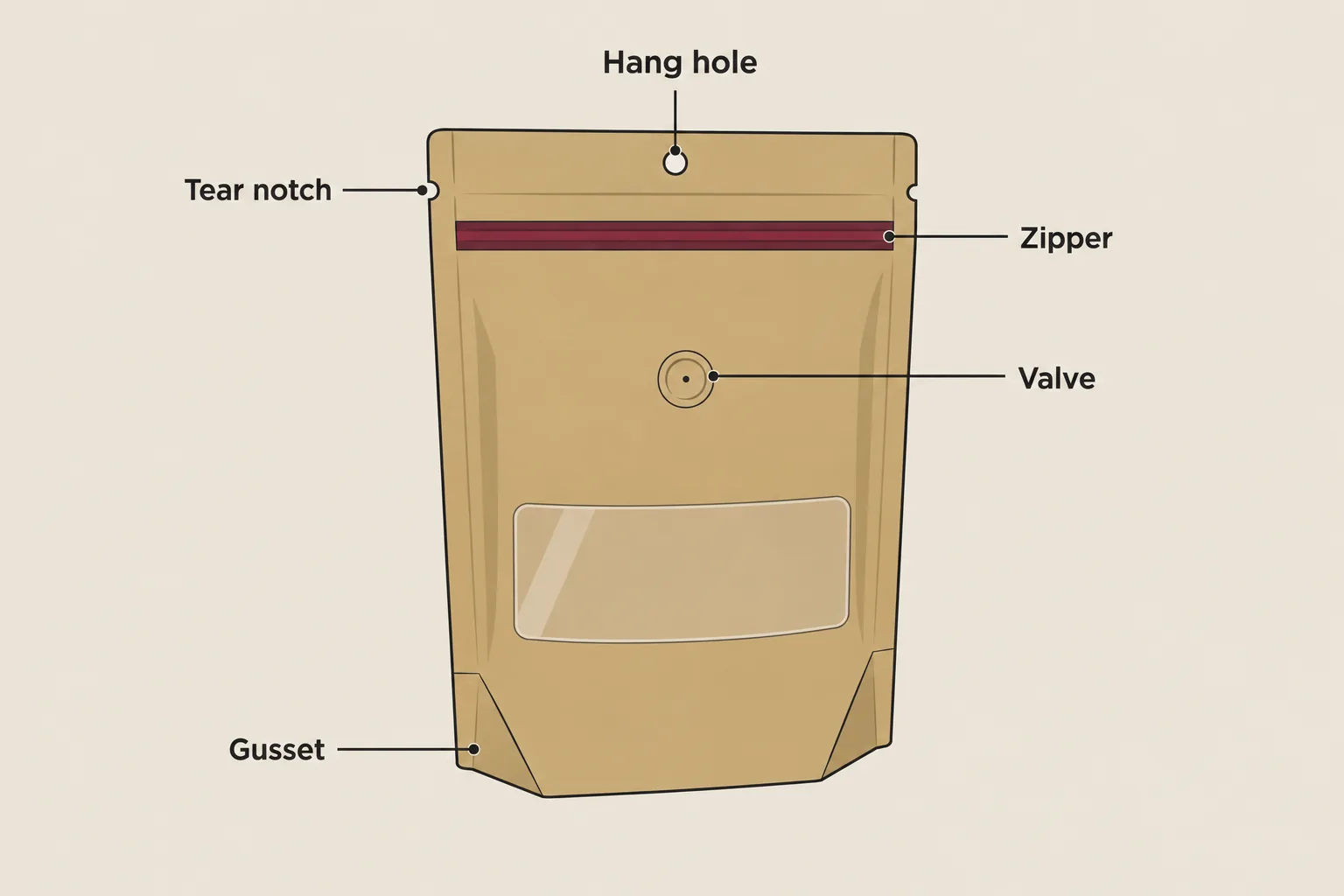
Pre-made pouches arrive with the sides and bottom already sealed, ready to fill and close. They can suit brands without pouch-forming equipment, or those that need features rollstock cannot easily offer. Some pouch formats can also be formed from rollstock.
Common pouch add-ons include:
- Zippers for resealing multi-serve products
- Tear notches so consumers can open the pouch without scissors
- Hang holes for peg displays
- Clear windows to show the product
- One-way valves that let fresh coffee release gas without letting air back in
Stand-Up Pouches
A stand-up pouch has a folded panel at the bottom (called a gusset) that opens when filled, letting the pouch stand upright. On the shelf, it works as its own display.
Stand-up pouches are common for granola, trail mix, jerky, coffee, protein powders, and premium snacks. See custom stand-up pouch options for more details. A resealable zipper supports multi-serve use, which suits better-for-you brands that want to signal quality and freshness.
Lay Flat (Pillow) Pouches
A lay-flat pouch has no gusset. It is sealed on three sides, or with a seam down the back, and lies flat when empty.
Lay-flat pouches have a simple structure and may be an economical option, depending on quantity, material, and filling method. They suit single servings, samples, and products sold on pegs or packed into cartons. The trade-off is display: because they do not stand, shelf visibility depends on hang holes, trays, or an outer box. For brands where that trade-off works, lay-flat pouches may be worth considering.
Spouted Pouches
A spouted pouch combines a flexible body with a rigid plastic spout and cap for pouring and resealing. Uses include juices, smoothies, baby food, purees, and drink concentrates.
For some specialty beverages, spouted pouches can be a lighter alternative to bottles. Filling equipment differs from standard pouch lines, so confirm what your co-packer can run before committing to this format.
Sachets and Stick Packs
Sachets and stick packs are small, single-serve packets. Sachets are square or rectangular. Stick packs are long and narrow, sized to pour neatly into a water bottle or cup.
They are used for:
- Drink mixes and electrolyte powders
- Protein powder samples
- Sweeteners
- Sauces, dressings, and condiments
For better-for-you and beverage brands, these formats can support trial sizes, single servings, and variety packs.
Sachets and stick packs are often supplied as rollstock and formed on the co-packer’s machine, so the film must match the filler’s specifications. Armour Rose sources sachets and stick packs specified to your filler. Since single-serve packets often go to retail in multi-count boxes, we can also plan the folding carton alongside the film.
Vacuum Bags
Vacuum bags are sealed after the air is drawn out, so the bag clings tightly to the product. They are common for jerky, meat snacks, cheese, and some baked goods.
Removing air reduces the oxygen in the package, but the required packaging and storage conditions still depend on the product and its food-safety needs. Vacuum bags are usually made from several layers of film: one for toughness, so edges or dried pieces do not puncture the bag, and others to keep air and moisture out. The right structure depends on the product and the shelf life your brand needs.
Shrink and Stretch Film
Shrink and stretch films are flexible materials used mainly for multipack bundling and shipping, rather than as the primary package holding the food. These two films do different jobs:
- Shrink film tightens around products when heat is applied. It bundles multi-packs, such as four-packs or six-packs of canned drinks, and groups items for club stores.
- Stretch film is wrapped around loaded pallets to hold cases together during shipping.
Craft breweries and alternative canned drink brands often use shrink film to bundle cans. Stretch film protects outbound shipments, working alongside corrugated cases and trays to get product to retailers in good condition.
Common Flexible Packaging Materials
Most flexible packages are made from two or more layers bonded together. Each layer does one job: one takes the print, one adds strength, one blocks air or moisture, and one seals closed. The right combination protects the product without costing more than it needs to.
Here are the materials you will hear about most often, in plain terms. For a broader industry overview of flexible packaging materials and formats, see the Flexible Packaging Association.
Polyethylene (PE)
Polyethylene is a soft, moisture-resistant plastic. In layered packaging, it is often the inside layer that melts and seals the package closed. On its own, it is used for simple bags and liners.
Some polyethylene-only structures are designed with recycling in mind. Whether a specific package is accepted depends on its full design and the collection options where it is sold.
Polypropylene (PP and BOPP)
Polypropylene is a clear, stiff film with a crisp feel and good print quality. A stretched version, often called BOPP, is widely used for snack bags, bar wrappers, and labels. It comes in clear, white, and metallized finishes, which give brands flexibility in look and protection.
Polyester (PET)
Polyester is a strong, heat-resistant film that holds printing well. It is often the printed outer layer of stand-up pouches and layered films, giving graphics a clean, glossy finish.
Aluminum Foil and Metallized Films
Foil is a thin layer of aluminum, used when a product needs strong protection from light, air, and moisture.
Metallized film is plastic with a very thin metal coating. Its weight, cost, and barrier performance depend on the construction; do not assume it performs the same as aluminum foil.
Both are used for coffee, chips, nut mixes, and other products that go stale quickly. The choice comes down to how long the product must stay fresh and how much protection that requires.
Paper-Based and Compostable Options
Paper outer layers give packaging a natural look that appeals to many better-for-you brands. In most cases, the paper is still paired with a film layer on the inside to keep out moisture and grease.
Compostable film options are available, but suitability depends on the product, package structure, and the composting systems available to customers. Confirm the material’s certifications and intended disposal conditions before making an on-pack environmental claim. The FTC’s Green Guides explain how U.S. environmental marketing claims should be qualified.
How to Choose the Right Flexible Packaging: A Step-by-Step Approach
Step 1: Start with the product. Is it oily, crumbly, sharp-edged, powdered, or liquid? Oily chips, sharp jerky, and fine drink powders each need something different from the package.
Step 2: Define the shelf life you need. A product sold within weeks needs less protection than one expected to sit in distribution for months. The longer the shelf life, the more protective the structure usually needs to be.
Step 3: Confirm equipment. Find out what filling machines your team or co-packer runs. That answer often decides between rollstock and pre-made pouches before anything else.
Step 4: Consider how it will sell. Shelf, peg hook, display tray, or club-store case? A lay-flat pouch can work well on a peg; a stand-up pouch can provide upright shelf display.
Step 5: Plan volumes and logistics. Map out quantities, reorder frequency, and delivery locations. Good planning prevents both shortages that stop a line and excess stock that ties up cash and warehouse space.
Step 6: Weigh recyclability goals. Balance sustainability targets against the protection the product needs and the budget available. A package that fails to protect the food creates its own waste.
Step 7: Look at total cost, not just unit price. The lowest per-unit quote is not always the cheapest program. Waste on the filling line, freight, minimum order quantities, and the cost of holding inventory all belong in the comparison.
Before Requesting a Pouch Quote
Gather the product type and fill weight, pouch dimensions, closure or spout needs, target shelf life, planned order quantity, filling equipment, and delivery locations. Ask the co-packer to confirm usable pouch dimensions, filling method, and seal requirements before approving a specification.
Where Flexible Packaging Fits in Your Full Packaging Program
Flexible film rarely travels alone. A typical bar program looks like this: bars are flow wrapped, packed into a folding carton, placed in a corrugated shipping tray, and sometimes loaded onto a PDQ (ready-to-display) unit for the retail floor.
When these pieces come from different vendors, teams may need to coordinate separate timelines, specifications, and purchase orders. A packaging review can check how the components fit together and where ordering or delivery can be streamlined.
Armour Rose coordinates sourcing across manufacturing partners and packaging product lines, giving customers one point of contact for the broader program. Production remains with the manufacturing partners, with specifications and responsibilities confirmed for each order.
If you already buy printed film, cartons, or displays from separate suppliers, reviewing the full program together may reveal opportunities to streamline specifications, ordering, or delivery. Any cost or consistency benefits depend on the products and supplier quotes.
How Armour Rose Helps Food and Beverage Brands Get Flexible Packaging Right
Armour Rose Group is a Toronto-based custom packaging partner serving food and beverage brands across Canada and the U.S. for more than 25 years. We manage sourcing and production through a vetted manufacturing network across printed films, pouches, folding cartons, corrugated trays, and PDQ displays. This gives snack, bar, and beverage brands one point of contact across multiple packaging lines.
Our work follows the A-R-G Process®:
- Ask First. We start by understanding your business: current packaging, co-packer and equipment requirements, purchase frequency, quantities, and delivery locations.
- Resolve Second. We identify gaps in supply or strategy, then present a proposed solution with specification options and pricing estimates, and adjust it with you until it fits.
- Grow Third. We build a long-term partnership that scales alongside you, from start-up runs to national brand volumes.
Armour Rose’s stated focus is consistent, predictable, reliable quality and service across your packaging program. Ask which quality or food-contact documents are available for the specific material and intended use. The FDA explains U.S. requirements for food packaging and food-contact substances. In Canada, Health Canada oversees the safety of food packaging materials.
Armour Rose typically sees a quieter period from February to April. Customers can use that time to review specifications and plan inventory with their team, co-packer, and suppliers.
Ready to review your flexible packaging, or your full program? Schedule a Call with our team or get a Quote to start the conversation.
Related readingRollstock vs Premade Pouches: Which Fits Your LineRead the guide →