


















A club buyer can love your product and still flag packaging that is difficult to merchandise, protect, identify, or receive. For food and beverage suppliers, the packaging plan can include the consumer pack, retail case or display, shipping case, and pallet. The exact requirements depend on the item, channel, country, and current buyer-issued specifications, so use this guide as a planning checklist and verify details with your Costco buyer before ordering materials or approving production.
This guide explains the packaging decisions food and beverage brands should review before a Costco program moves from specification to production.
How Packaging Affects Costco Receiving and Merchandising
Costco’s public packaging guidance describes goals such as reducing packaging waste while maintaining food safety, product quality, and protection from shipping damage. For a specific food or beverage item, the buyer-issued specification determines the applicable pack, case, display, and delivery details.
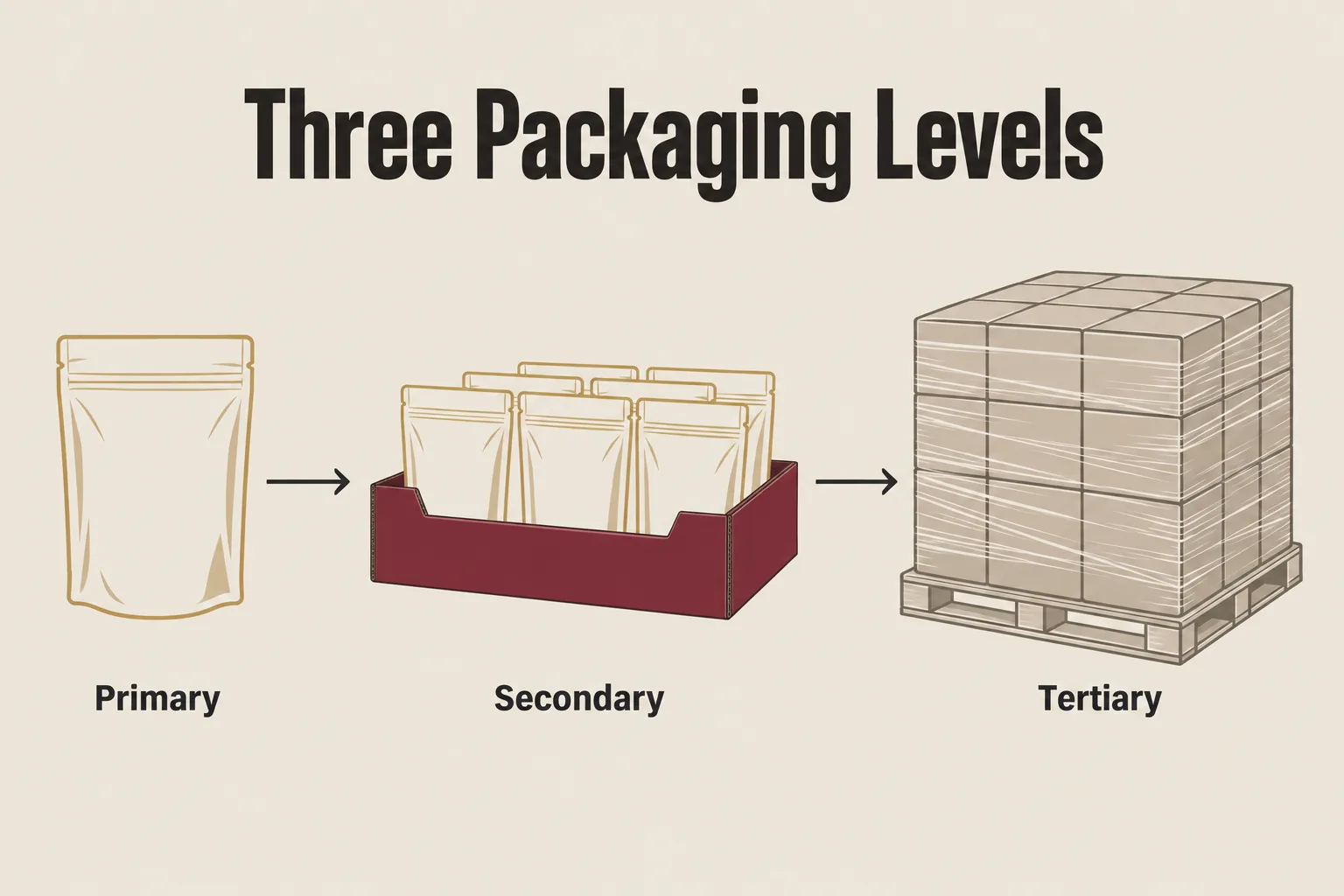
Packaging affects handling, merchandising, product protection, and freight. Review the three connected levels together:
- Primary packaging: what touches the food. Your printed film, pouch, carton, or label.
- Secondary packaging: the case, tray, or display that holds multiple units and, in club retail, usually merchandises them.
- Tertiary packaging: the pallet, the load pattern, the stretch wrap and the labels that let a depot receive you without a phone call.
A coordinated review before artwork, tooling, or print approval can surface conflicts while the specification is still easy to adjust.
Start With the Current Buyer-Issued Specifications
Start with the current Costco buyer or supplier documents for your item, country, and delivery channel. Costco also publishes packaging guidance for particular use cases; for example, its handling-graphics page addresses large or bulky items. Do not apply those large-item rules to food and beverage packs unless Costco confirms they apply to your shipment.
Requirements can differ by channel. Warehouse, depot, and e-commerce handling may create different protection and identification needs. Confirm the channel and ship-to details for your item.
Requirements can differ by country. Canadian consumer-prepackaged foods generally need mandatory information in English and French, subject to exceptions. Confirm the rules for your product and package before finalizing artwork.
Confirm item-specific details. Ask your buyer or designated contact to confirm display format, case count, pallet configuration, label fields, delivery channel, and the current document version.
Before approving artwork, tooling, or production, confirm which current specifications apply to the item, country, and channel.
Retail-Ready and Display-Ready Packaging
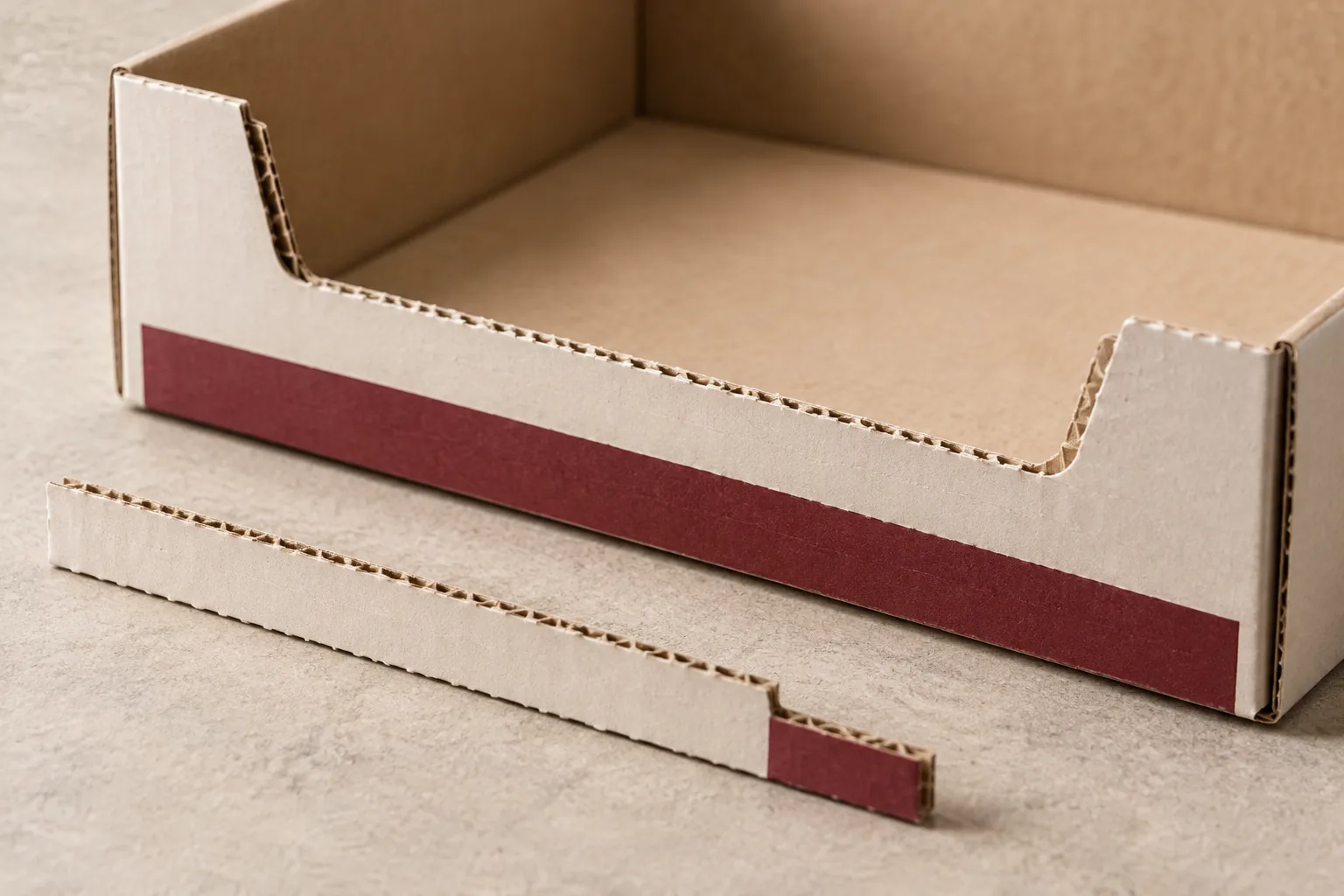
In club retail, secondary packaging may need to protect products in transit and support efficient merchandising on arrival. Confirm whether Costco expects a shelf-ready case, tray, display, or another format for your item. Armour Rose supplies PDQ and counter displays as one option in its broader packaging range.
Potential formats include easy-open cases, tray-and-hood constructions, corrugated trays, and PDQ displays. The suitable format depends on the product, buyer direction, and co-packer handling needs.
A few design rules hold up consistently:
- Perforations have to work every time. An easy-open line that tears raggedly on one case in ten creates a display that looks damaged. Perforation design, board grade and flute direction all affect this.
- The tray is a shopper-facing surface. Print quality, colour consistency and scuff resistance matter on a corrugated tray in a way they never mattered on a hidden shipper. Faded or scuffed graphics read as a tired brand.
- Strength cannot be traded away for openability. The same tray has to survive a pallet stacked above it and still come apart cleanly by hand.
- Check opening instructions with the buyer and run an opening trial with the intended user. The case should open safely and predictably while keeping the product secure.
Club-Pack Sizing, Multipacks and Cube Efficiency
Club formats push larger counts. Club-pack counts may differ from grocery formats. Confirm the planned unit count, case configuration and structural requirements with the buyer and co-packer. Pack weight, stacking pattern and handling conditions inform the material and strength choices.
Cube efficiency describes how well a package uses available case, pallet and trailer space. Small changes to final package dimensions can affect case and pallet patterns. Calculate the pattern using production dimensions and the buyer’s current pallet specification, then compare the delivered cost.
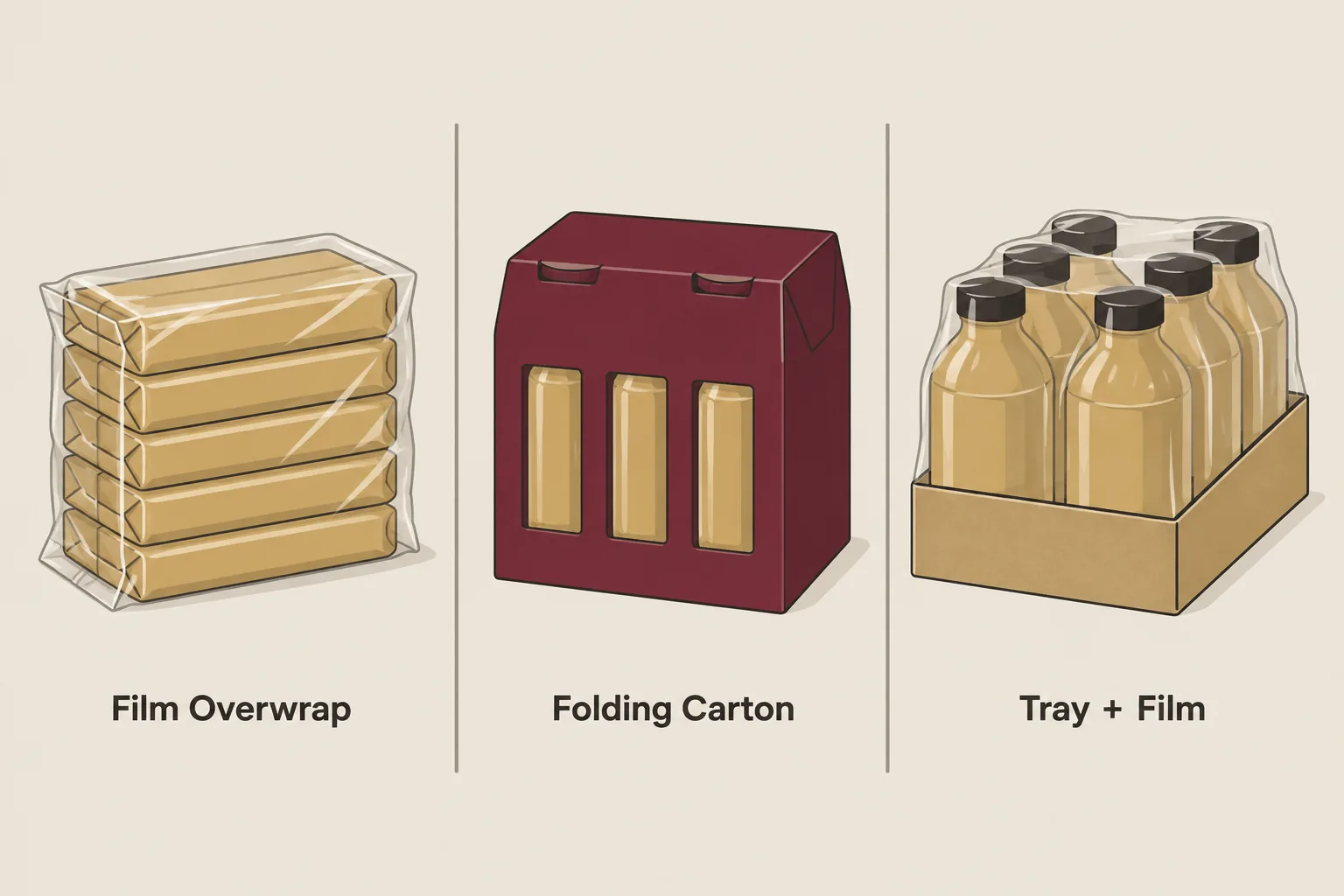
When you build a club multipack, the realistic options are:
| Option | Trade-offs |
|---|---|
| Printed film overwrap or bundling | Lowest material cost, strong graphics area, fast on line, less structural protection. |
| Folding carton multipack | Premium shelf presence, protects fragile formats, more board cost and more cube if the carton sits loose around the contents. |
| Corrugated tray with film | Strong stacking performance and a clean display, good for beverage and bar formats, needs careful attention to tray print quality because it shows. |
The mistake runs in both directions. Under-engineer and you pay in damage and rework. Over-engineer and you ship board weight nobody needed, which is money spent on freight rather than protection.
Primary Packaging and Labelling Requirements
Regulated label content comes first, and it comes with fixed space demands: ingredient statement, nutrition information, allergen declaration, net quantity, and company identity. None of it compresses to fit a design you already love.
For Canadian items, plan panel space for English and French copy from the first layout, and have your regulatory reviewer confirm the current requirements for your category. Planning for both languages early can reduce artwork rework, but the applicable requirements depend on the food and package. Review the current rules with a qualified regulatory reviewer. CFIA bilingual food labelling guidance explains the general framework and exceptions.
Two details get overlooked on flexible packaging in particular.
Barcode survival. A retail barcode has to scan after the film has stretched around a filled pack, after a gusset has folded, or after a carton crease has cut through it. Keep barcodes off gussets, seals, and crease lines, protect the quiet zones (the clear space on either side of the code), and check the printed sample on a scanner rather than on a screen.
Date and lot coding. Your co-packer’s coder needs a surface it can mark legibly. On heavily printed film, that means designing a clear or light window in the right place. A code that smears or disappears into dark artwork is a traceability problem, not a cosmetic one.
Barcodes, Case Marking and Shipping Labels
Three distinct barcode requirements run through a club program, and brands routinely conflate them.
- The retail unit barcode, scanned at the register on the item a member takes home.
- The case-level marking, which identifies what sits inside the shipper and is often printed directly on the corrugated.
- The pallet or shipping container label, the scannable label carrying structured data about the item, quantity, and lot on that load.
GS1 standards provide identification keys for trade items and logistics units, but that does not establish Costco’s required fields, barcode type, or label placement for your shipment. Ask for the current label specification and test the selected stock and adhesive under expected storage conditions. GS1 Canada’s identification keys explain identifiers such as the SSCC used for logistics units.
Confirm required data, barcode type, label size, and placement for your specific channel before printing labels.
Case, Carton and Corrugated Specifications
Depending on the distribution and storage plan, cases may be stacked or exposed to changing humidity. Select board grade and stacking strength based on the expected load, storage duration, and conditions, then confirm any required testing with the buyer and co-packer.
Other specification points that change cost and performance:
- Folding carton caliper and coating. Cross-dock handling scuffs cartons. A varnish or coating that resists scuffing protects the shelf appearance you paid to print.
- Case count, tie, and high. Tie and high is how many cases go on a layer and how many layers go on the pallet. Changing it mid-program is not a small edit. It triggers a new pallet pattern, new load testing, and, often, new pricing.
- Temperature and moisture exposure. Dry ambient, refrigerated, and frozen each demand different board and coating selections. Moisture can reduce corrugated strength, so validate case performance for the actual storage and transport conditions.
- Interior components. Glass beverage and canned formats usually need partitions, pads, or inserts. They add cost per case and cut damage claims, so run the numbers rather than guessing.
Pallets, Unit Loads and Depot Requirements
Treat the pallet as part of the packaging specification, and confirm which supplier or team owns its design, build, and delivery.
The current instructions for your item may specify pallet footprint, entry type, pallet condition, load height, and overhang. Confirm how height is measured and whether any tolerance is allowed before building production loads.
If you need help coordinating delivery alongside packaging supply, Armour Rose also offers logistics and fulfillment support. Confirm the scope needed for your program.
Beyond dimensions, plan for:
- Stretch wrap specification and wrap pattern. Wrap force, overlap, and the number of turns at the base determine whether a tall load arrives square.
- Top sheets, slip sheets, and corner protection. Tall or light loads often need corner boards to keep the wrap from crushing the top layer.
- Label sides and placement as stated in the current shipping instructions, so receiving can identify the load as directed.
- Mixed-SKU versus single-SKU pallets. This choice affects case marking, label content, and how receiving processes your delivery, so decide it before you print anything.
Food-Contact and Manufacturing Documents to Confirm
Ask the buyer and co-packer for the document list that applies to your item and facility. Keep food-contact material records separate from facility food-safety audit or certification requirements.
For food-contact packaging, confirm that the material documentation matches the intended food type, conditions of use, and market. Requirements can differ by material and jurisdiction. Facility audit or certification expectations are separate and should be confirmed with the buyer for the relevant manufacturer. In the United States, FDA guidance explains how food-contact substances are assessed for intended uses: FDA food-contact substance overview.
Sustainability and performance claims should be supported before they appear in artwork. Request evidence relevant to the exact material and claim, and avoid broad recyclability or recycled-content statements unless they can be substantiated for the intended market.
Armour Rose’s consultative packaging review can help identify the materials, components, and supply questions to resolve with manufacturing partners. Confirm who will provide each required document and when, rather than assuming a particular certification or compliance file is included.
Sustainability and Material Choices
Cost, protection, and material use should be reviewed together. Confirm current buyer guidance and market-specific packaging obligations for your category; requirements and producer responsibilities can vary by jurisdiction and business role.
The substitutions that work for food and beverage brands are usually undramatic:
- Review paperboard-forward options where they suit the product, equipment, and protection needs.
- Ask whether a mono-material structure is technically suitable and accepted in the intended recovery system.
- Evaluate board-weight changes against required stacking performance and transport conditions.
Be honest about the limits. A recyclable barrier film still has to hold your shelf life. Oxygen and moisture barrier performance varies between structures, and the reliable answer comes from shelf-life testing on your actual product, not from comparing spec sheets. If selling in Canada, check current provincial or territorial producer-responsibility rules to determine whether they apply to your company and packaging.
Testing, Trials and Pre-Production Approval
Testing the empty case tells you very little. Test the finished unit load: drop, compression, and vibration on a fully built, fully wrapped pallet that matches what will ship.
Then test on the line. A film that performs beautifully in a lab can run poorly at your co-packer because of unwind tension, the sealing temperature window, or the speed at which cartons erect and case-pack. Line trials with production-intent material, not hand samples, surface these problems while they are still cheap.
Build in colour approval. A club item can put your brand colour on film, on a folding carton and on a corrugated tray, printed by three different processes. Without coordinated press proofs and a single colour standard, those three components will not match on the shelf, and shoppers notice the mismatch even when they cannot name it.
Work backwards from the confirmed launch and delivery dates. Include time for artwork review, samples, tooling if required, co-packer trials, buyer approval, and production, using lead times confirmed by each supplier.
Packaging Issues to Verify Before Buyer Approval
- Unstable pallets, overhanging loads, or loads above the height limit.
- Missing, unscannable, or wrongly placed case and pallet labels.
- Cases that cannot be merchandised without cutting or re-handling.
- Label content or language issues for the destination market.
- Cube inefficiency that makes freight cost per unit uncompetitive.
- Differences between approved specifications and production components; confirm the final versions and responsibilities with each supplier.
Total Cost, Not Unit Cost
Club programs make it useful to compare the full cost of a packaging choice, not just the unit quote.
Review material choice, case and pallet patterns, freight, damage risk, rework, and co-packer performance.
A lower unit price does not guarantee a lower total cost; compare actual production and logistics estimates using the same assumptions.
A useful comparison is the estimated cost per case delivered, including packaging, freight, production, and expected handling. Ask suppliers to show the assumptions so alternatives can be compared consistently.
Coordinating Multiple Components for One Club Launch
A club item may combine printed film, pouches, folding cartons, corrugated trays or displays, and labels. When multiple components come from separate manufacturing partners, align specifications, artwork, lead times, and delivery plans. Armour Rose offers flexible packaging options and folding cartons among its product lines.
A packaging partner can help coordinate components and questions across product lines. Confirm the specific scope, supplier roles, approvals, and delivery responsibilities for each program.
Armour Rose’s company overview describes a consultative sourcing model supported by manufacturing relationships across multiple packaging categories. It can help customers review packaging needs and consider coordinated options across product lines; confirm the agreed sourcing and coordination scope for your project.
The process starts with a review of current packaging, co-packer or equipment requirements, order frequency, quantities, and delivery locations. Armour Rose can then discuss potential packaging options and pricing estimates based on those needs.
A Pre-Submission Packaging Checklist
- Confirm the current Costco packaging, labelling and shipping requirements for your channel and country.
- Lock the retail unit, case, tray or display, and pallet specifications together as one system, not as separate purchases.
- Verify all three barcode and label levels, including bilingual copy where it applies.
- Complete unit-load testing and co-packer line trials with production-intent material.
- Confirm which food-contact, material, and claim-support documents apply, who will provide them, and by when.
- Validate the pallet pattern and cube against a real freight quote before tooling is cut.
Frequently Asked Questions
Related readingCustom Stand Up Pouches Specified To Your Fill LineRead the guide →Frequently asked questions
Does Costco specify pallet size and load height?
Does every item need shelf-ready or display-ready packaging?
Do Costco Canada food products need French labelling?
What packaging documentation should a new supplier ask about?
How far ahead should packaging development start?
Can a smaller brand source packaging without owning equipment?
Your Next Step
If a Costco program is on the horizon, start by reviewing your current packaging, co-packer and equipment constraints, order frequency, quantities and delivery locations. Use that review to identify questions for the buyer and compare packaging options before committing to production.
Armour Rose works with food and beverage companies on flexible packaging, folding cartons, corrugated packaging, labels and displays. Discuss your packaging review and request a proposal based on your requirements. Contact us to start a conversation.