





















- Consolidated Volume, One Contact
foodservice and QSR packaging
- The Real Constraint
Reliability at Volume Beats a Better Unit Price
In most categories the packaging specification is the hard part. In foodservice the specification is usually settled and the difficulty moves to supply. A restaurant group ordering containers, wraps, carriers and printed bags across twenty locations at weekly frequency cannot afford a stockout, and a stockout is what happens when a single plant runs behind and there is no alternative qualified. Price still matters, and at these volumes a fraction of a cent is real money. The point is that a marginally cheaper unit bought from a single source with no redundancy is not actually cheaper once a location runs out of clamshells on a Friday.
Many Locations, High Frequency, Thin Margins
Foodservice programs fail on logistics far more often than on materials. Multiple delivery points, frequent reorders and limited storage at each site combine into a distribution problem that most packaging suppliers are not set up to solve.
Where Foodservice Supply Breaks
- A stockout at one location with no qualified alternative plant.
- Minimums that assume one delivery point, not twenty.
- Limited back-of-house storage forcing uneconomic order sizes.
- Branded and stock items bought from unconnected suppliers.
- Grease and heat failures traced back to a substitution nobody flagged.
Our Solutions
- More than one qualified plant on the items you cannot run out of.
- One efficient production quantity released against multiple delivery points.
- Make and hold inventory so storage constraints stop driving order size.
- Branded and stock items consolidated onto one purchase order.
- Specifications documented, so a substitution is a decision rather than a surprise.
- Scope of Supply
Containers, Cartons, Wraps and Corrugated
Takeout and carry-out containers, deli and bakery clear containers, folding cartons, carton sleeves and wraps, printed films, corrugated shipping cartons and labels. We already supply these products, which means a foodservice program is standard work for us rather than a new category.
- Formats
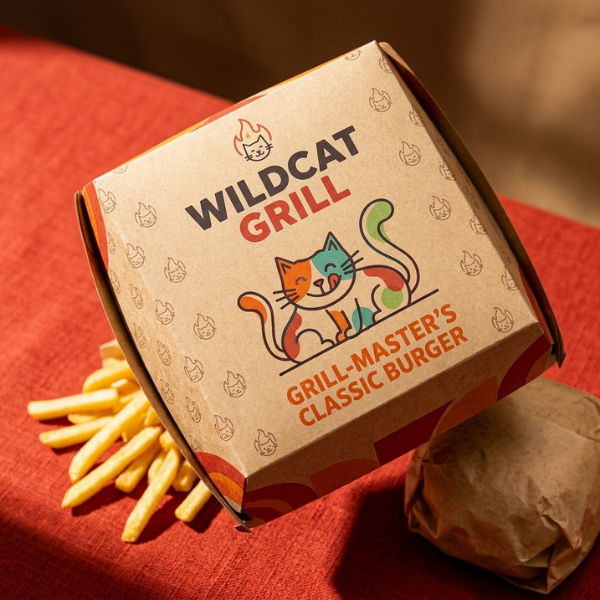
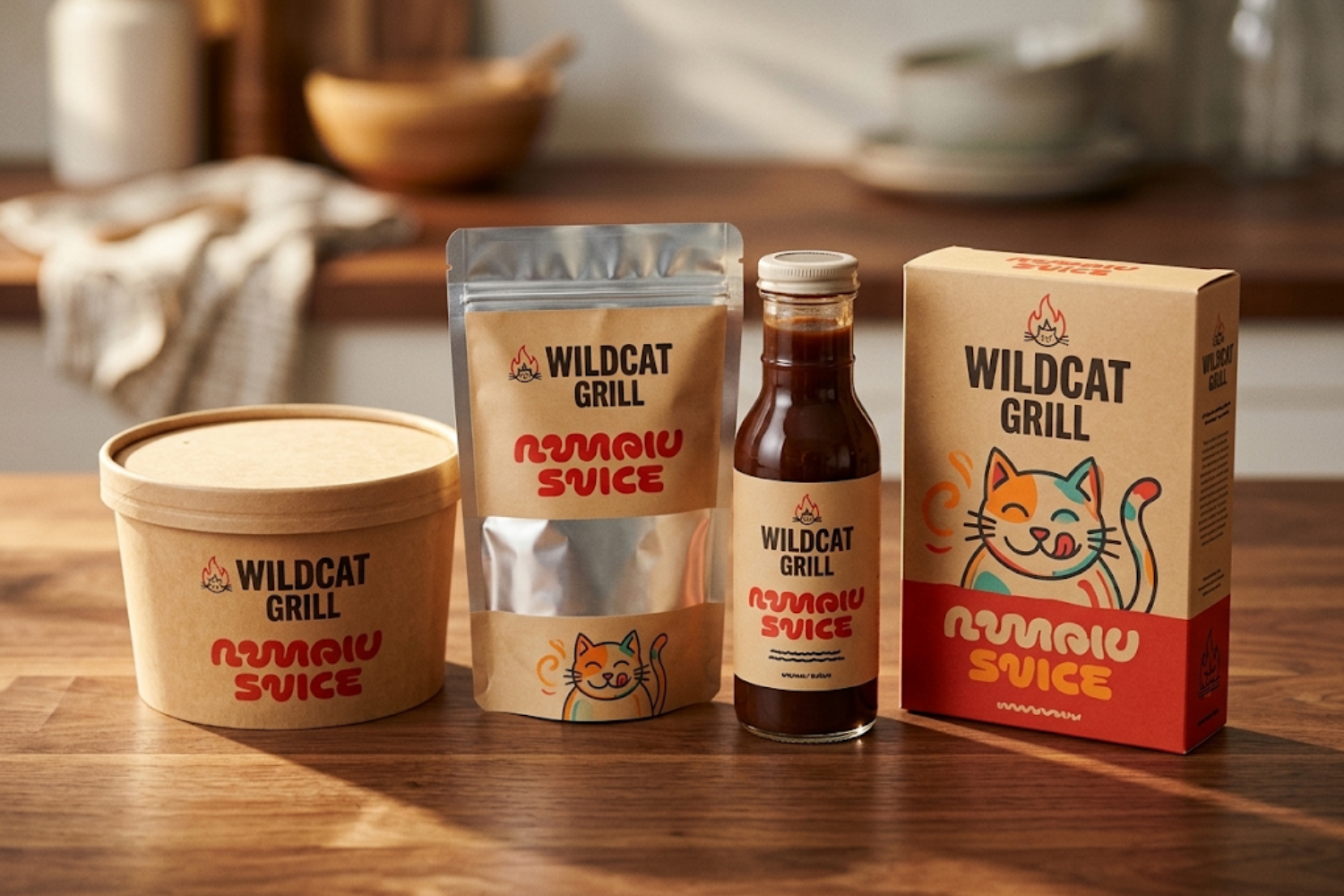
Foodservice and Carry-Out Formats We Source
Most operators buy across four or five of these at once, and buying them separately is where the administrative cost accumulates.
Stand-up pouches
For sauces, ingredients and dry goods needing barrier protection, convenient handling and efficient storage.
Flat bottom / box pouches
For foodservice products requiring a stable footprint, dependable seals and efficient storage and presentation.
Side gusset bags
For bulk ingredients and dry goods needing flexible capacity, strong seals and efficient back-of-house storage.
Pillow pouches / lay-flat
For high-volume foodservice products requiring efficient filling, reliable sealing and lightweight flexible packaging.
Roll stock film
For automated foodservice lines requiring film matched to your equipment, web width, barrier and sealing requirements.
Flow wrap film
For individually packed food items requiring secure seals, consistent machine performance and efficient production.
Sachets & stick packs
For sauces, seasonings and condiments requiring controlled portions, dependable seals and easy dispensing.
Resealable / zipper pouches
For ingredients and foodservice products requiring repeat opening while helping maintain freshness and convenience.
Folding cartons
For prepared foods and multipacks requiring lightweight protection, efficient packing and clear product presentation.
Corrugated shipping boxes
For shipping foodservice products with dependable strength, stacking performance and protection through distribution.
Carton sleeves & wraps
For trays and prepared foods needing branding, product information and a clean finished presentation.
Auto-cartoning ready cartons
For automated foodservice lines requiring consistent carton dimensions, reliable feeding and efficient high-speed packing.
PDQ & counter displays
For grab-and-go and smaller packaged items needing organized, highly visible counter or point-of-sale placement.
Shelf-ready packaging & trays
For foodservice products needing faster stocking, organized presentation and protection throughout handling and distribution.
Takeout & carry-out containers
For prepared meals and takeaway orders requiring durable containers that support secure transport, convenience and presentation.
- Specification Discipline
Grease and Heat Are Where Substitutions Get Caught
Foodservice items look interchangeable and are not. A container rated for a cold salad will soften under a hot entree. Board that handles a dry sandwich will show grease strike-through within minutes on a fried item. A lid that seals well at room temperature can distort under steam if the container has no venting. These differences rarely appear in a product code, which is how an operator ends up with a substitution that saves a fraction of a cent per unit and generates complaints across twenty locations. We document the specification properly, including the temperature range, grease exposure and venting requirement for each item, so that any substitution has to be evaluated against a written standard rather than a similar-looking picture in a catalogue. Where an operator works with a co-manufacturer or commissary, we specify to their handling requirements as well.
Four Things That Decide a Foodservice Program
None of these is about print quality, which is where most packaging conversations start.
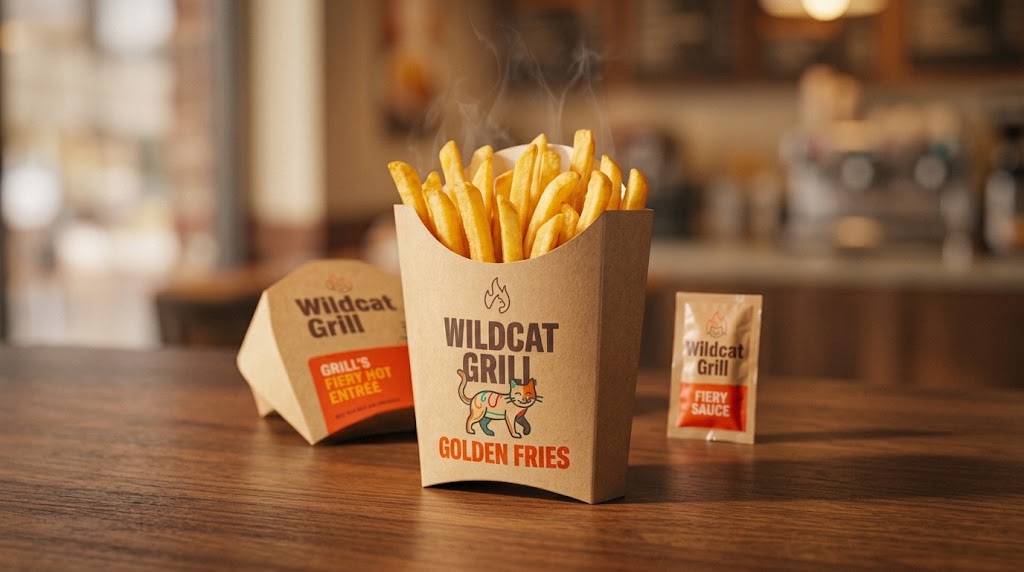
Grease and Temperature
Hot, cold and fried
Board and container selection has to match the actual food and its serving temperature. Grease resistance and heat tolerance are the two specifications most often lost in a substitution.
Delivery Footprint
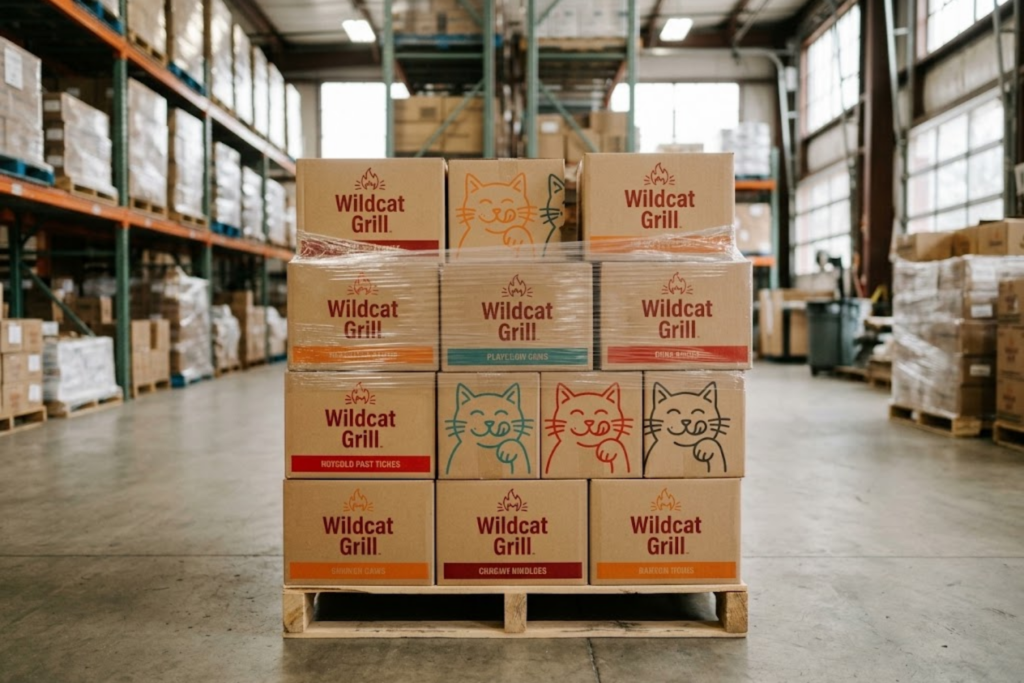
Many sites, limited storage
Multiple locations with little back-of-house space cannot each hold an economic order quantity. That is solved with inventory and release scheduling rather than with a smaller minimum.
Branded Versus Stock
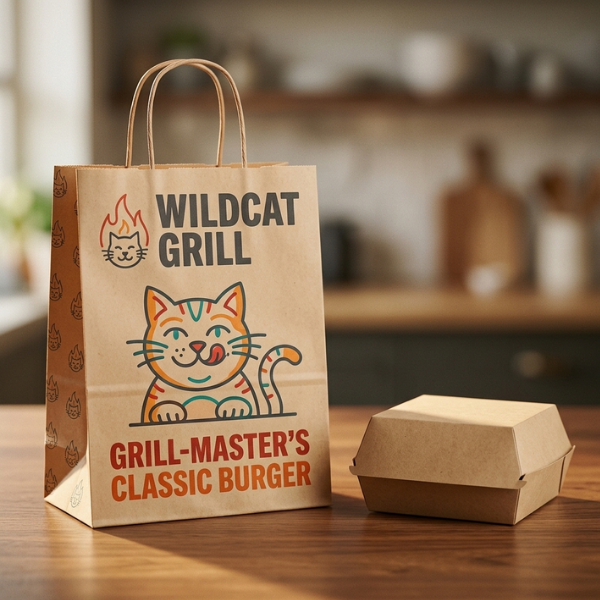
Where print earns its cost
Printing everything is expensive and printing nothing loses brand presence. The useful split is usually customer-facing items branded and back-of-house items stock, decided per item rather than as a policy.
Continuity of Supply
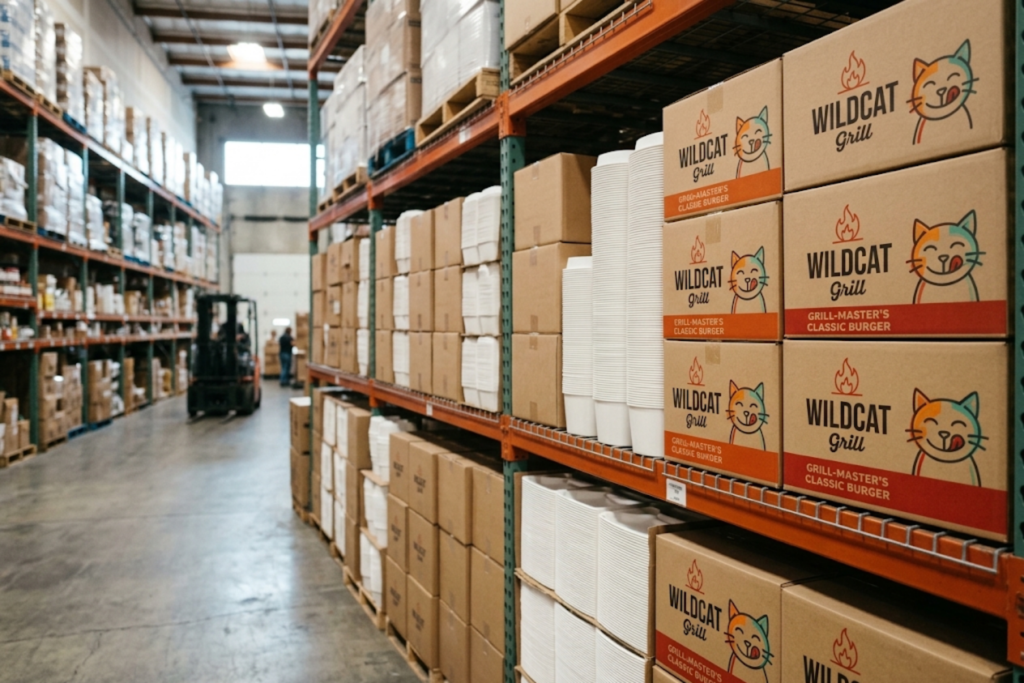
Redundancy on critical items
Some items can wait a week and some cannot. Identifying which is which, then holding a qualified alternative on the second group, is cheaper than carrying blanket safety stock.
- Process
How We Set Up a Foodservice Program
A foodservice and QSR packaging review is as much about purchasing patterns and delivery as it is about the products themselves.
Usage and Purchasing Analysis
We review what each location consumes, how often it reorders, what it can store and where the current supply is fragile or duplicated.
Specify and Consolidate
We document each item properly, identify where branded print earns its cost, then quote the consolidated program through qualified plants.
Hold and Release
We produce an efficient quantity, hold it, and release against each location's schedule with delivery and customs brokerage handled.
A fraction of a cent saved on a container costs more than it returns the first time a location runs out on a Friday night.
- Why Armour Rose
Built Around Purchasing, Not Just Products
We are a sourcing and brokerage partner, so our work includes packaging review, usage and purchasing analysis, inventory programs and delivery rather than only supplying the item.
Make and Hold Inventory
Produce an efficient quantity once, then release against demand, which is how multi-site operators with limited storage buy at a sensible cost.
Consolidated Purchasing
Containers, cartons, wraps, film and corrugated on one purchase order, which reduces administration as much as it improves leverage.
Supply Redundancy
Qualified alternatives on the items you cannot run out of, which is the practical value of buying through a network rather than a single plant.
Cross-Border Delivery
Nationwide supply across Canada and the United States with customs brokerage handled, for operators with locations on both sides.
- Growth Planning
Retail Is Where Foodservice Brands Go Next
Successful foodservice operators tend to extend into packaged retail products, and that transition catches most of them out on packaging. A sauce sold in-house needs a bottle, a label and a shipper. A branded snack developed from a menu item needs barrier film, a carton and a retail shipper, and it has to hold shelf life without a kitchen behind it. Those are different specifications and different plants from anything in a carry-out program. Because we source across every packaging category for food and beverage brands, that move does not require finding a new supply base, and the in-store displays and trays a retail listing demands come from the same program. It also works in the other direction, since brands that start in retail and add foodservice find the container and wrap side already covered.
What Our Clients Are Saying
Reliability that teams can measure.
As a small but growing brand, we struggled to find a packaging supplier who would take us seriously. AR not only welcomed us — they partnered with us. Their work with other startups showed in the quality of our packaging, and Daron went above and beyond, including helping our co-manufacturer optimize their equipment so our pouches came out perfect. We couldn’t ask for a more supportive, solution-focused partner.
ARG is the packaging partner we always needed. They cut through confusion, move fast, and operate like part of our internal team. Their expertise has streamlined our product development, and their above-and-beyond support — like Daron personally delivering samples to our co-manufacturer — is unmatched. We trust them completely.
Armour Rose Group believed in us when other suppliers didn’t. They treated us with the professionalism of a much larger brand and played a real role in helping us scale. Their team is collaborative, reliable, and always willing to solve problems together. Daron’s proactive support and genuine investment in our success stand out above anything we’ve experienced in packaging. Highly recommended.
From day one, the team has been a trusted partner. They provided clear guidance, cost-effective solutions under tight timelines, and the flexibility to scale with a startup. Communication is fast, pricing is transparent, and deliveries are consistently on time and high quality. Support is always there when needed, which makes a real difference. The entire experience makes you feel safe and in good hands— we absolutely recommend Armour Rose Group.
Specialty Water Company
Foodservice and QSR Packaging Questions
What foodservice and QSR packaging items can you supply?
Takeout and carry-out containers, deli and bakery clear containers, folding cartons, carton sleeves and wraps, printed films, corrugated shipping cartons and labels. We already supply these products to food and beverage customers, so a carry-out program is standard work rather than a new category for us. The advantage of sourcing them together is administrative as much as commercial, because one purchase order and one point of contact across five item families removes a meaningful amount of work from whoever manages ordering at your locations.
Are you a distributor or a manufacturer?
Neither exactly. We are a broker. We purchase custom packaging consumables from manufacturing partners and sell them to our customers, and our service includes packaging review, usage and purchasing analysis, inventory programs, logistics and customs brokerage. The distinction that matters in foodservice is that we are not limited to one plant’s catalogue or capacity. When you cannot afford a stockout on a critical item, having more than one qualified source for it is worth more than a slightly lower unit price from a single one.
We have locations with almost no storage. How does that work?
Through inventory make and hold programs, which exist precisely for this problem. The tension is that economic production quantities are large and back-of-house storage is small, so ordering to fit the storage means paying setup costs repeatedly. Instead we produce an efficient quantity once, hold it, and release against each location’s schedule. That decouples what you buy from what you have to store. For operators with locations in both Canada and the United States we handle the customs brokerage on those releases as well, so the border does not become a separate planning exercise.
How do you decide which items should be branded and which should be stock?
Item by item, based on whether a customer sees it. Printing everything is expensive, and printing nothing gives up brand presence at exactly the moment a customer is carrying your food through a public space. The useful split is usually customer-facing items branded, meaning bags, sleeves, wraps and cups, with back-of-house and secondary items on stock product. Print process matters too, since digital carries lower setup cost and suits multiple SKUs or seasonal items while conventional rewards volume on a core item. We work that through against your actual volumes rather than applying a rule.
Can you supply sustainable foodservice packaging?
On the paperboard and corrugated side, which is most of a foodservice program, the options are genuine. Recycled content and FSC-certified board are both available for cartons, sleeves, wraps and shipping cases. On film the realistic option is material containing a percentage of post-consumer recycled content. We are deliberately careful with broader claims, because terms like compostable carry specific substantiation requirements and vary by jurisdiction, and a municipal or franchise procurement team will ask for documentation. We would rather tell you what a partner can evidence than repeat a claim you would have to defend.
We buy from a broadline distributor already. What would change?
For stock items in a single location, possibly not much. The difference shows up on custom printed items, on multi-site delivery and on continuity. A broadline catalogue is built around what is in stock, so a substitution can happen without the specification being checked, which is how grease and heat failures appear. It also treats each delivery point as a separate order rather than releasing from one held quantity. We would suggest a usage and purchasing analysis before changing anything, since it will show clearly which items are worth moving and which are already well served.
Get Your Foodservice Program Reviewed Across Every Item
Send us your item list, your location count and your reorder frequency. We will come back with a consolidated specification, qualified plant options and an inventory plan. Request a purchasing review.