





















- One Partner, Every Component
meal kit and ready meal packaging
- The Component Count
Five Components, Five Suppliers, One Ship Date
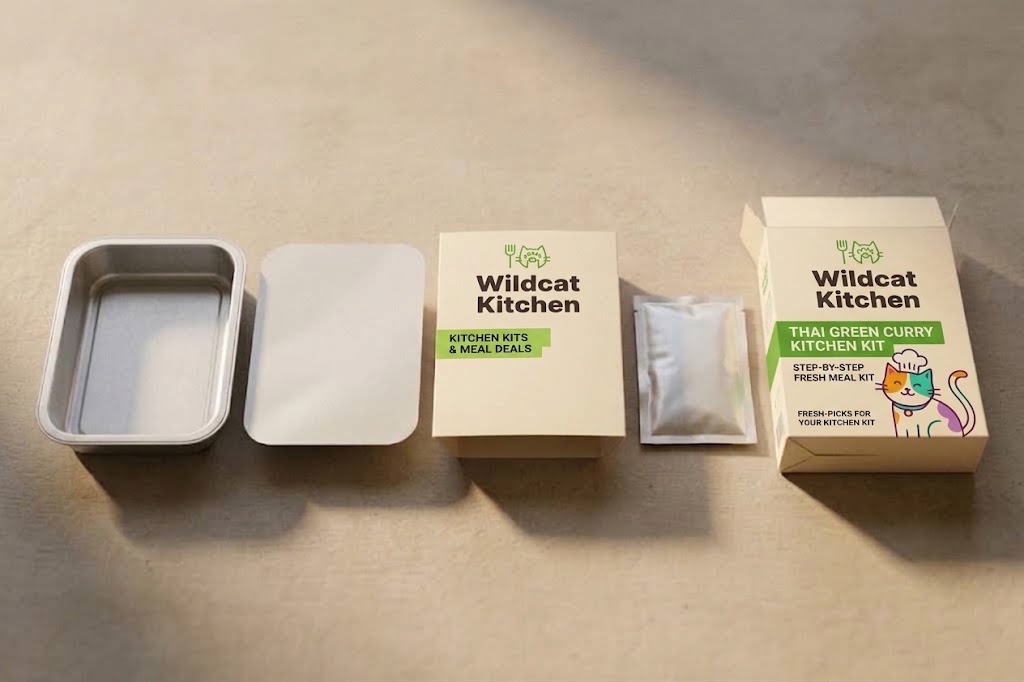
Most food categories buy one or two packaging formats. This one buys five, and each comes from a different industry. The tray is thermoformed, the lidding film comes from a flexible converter, the sleeve and carton come from a paperboard printer, the sauce sachet comes from a different flexible line again, and the shipper comes from a corrugated plant. Each holds its own artwork version, lead time and minimum. When one slips, the whole meal cannot be assembled, and the brand is left project managing a supply chain it never set out to run. That coordination burden is the actual cost in this category, and it rarely appears on any quote.
Cold Chain Adds a Second Set of Constraints
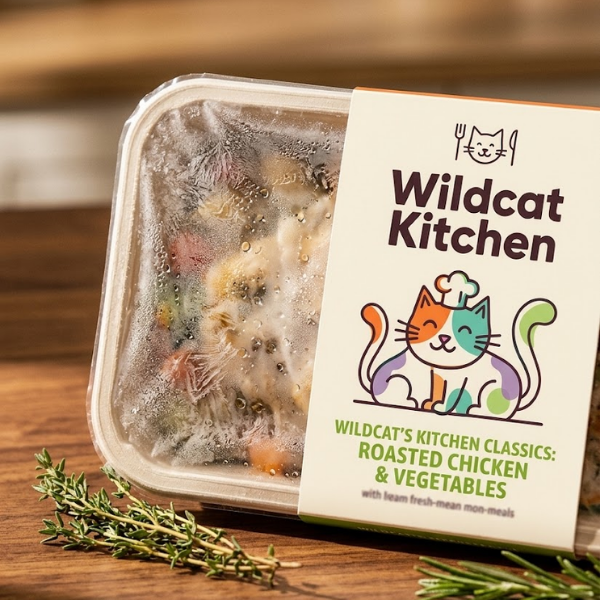
Refrigerated and frozen distribution changes what materials can do. Films stiffen and seal differently at low temperature, condensation forms on surfaces that were dry when they were sealed, and paperboard has to resist moisture it would never see at ambient.
Where Ready Meal Packaging Fails
- Lidding film seals that hold at ambient and fail after freezing.
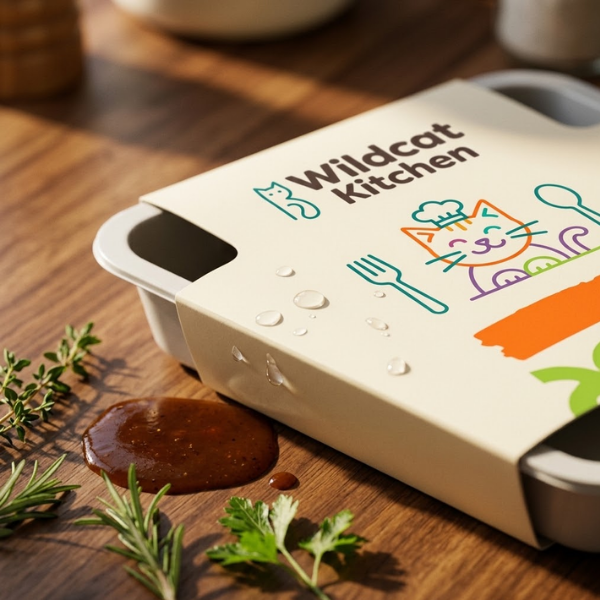
- Condensation softening sleeves and lifting printed surfaces.
- Sleeve and tray dimensioned separately, then not fitting.
- Board with no grease or moisture resistance staining in chill.
- One late component holding an entire assembled SKU.
Our Solutions
- Seal performance specified at the temperature the pack actually sees.
- Board and coating chosen for chill or frozen conditions, not ambient.
- Sleeve, tray and lidding dimensioned as one set before tooling.
- Grease and moisture resistance specified from the actual recipe.
- Every component scheduled backward from one assembly date.
- Scope of Supply
Sleeves, Cartons, Lidding, Sachets and Shippers
Carton sleeves and wraps, folding cartons, lidding and flexible films, portion sachets and stick packs, corrugated shipping cartons and labels. This is the category our sourcing model was built for, because almost nobody else can quote all of it.
- Formats
Components in a Meal Kit or Ready Meal Program
Each component answers to a different constraint, and they only work as a set if they were specified as one.
Stand-up pouches
For meal components, ingredients and add-ons needing dependable barrier protection, convenient handling and compact storage.
Roll stock film
For automated meal packaging and tray applications requiring film matched to your equipment, seal requirements and temperature conditions.
Flow wrap film
For individually packed meal components requiring secure seals, consistent machine performance and efficient production.
Resealable / zipper pouches
For ingredients and meal components requiring repeated opening while helping maintain freshness and convenience.
Folding cartons
For meal kits and multi-component meals requiring retail-ready cartons sized around trays, contents and case counts.
Corrugated shipping boxes
For shipping meal kits with dependable protection, stacking strength and efficient handling throughout distribution.
Carton sleeves & wraps
For prepared meal trays needing printed branding, product information and materials suited to chilled or frozen conditions.
Auto-cartoning ready cartons
For automated meal packing lines requiring consistent carton dimensions, reliable feeding and efficient production.
Takeout & carry-out containers
For prepared meals requiring durable, food-ready containers that support secure transport, convenience and presentation.
- Machine Fit
Tray Sealing Is Where Specifications Get Tested
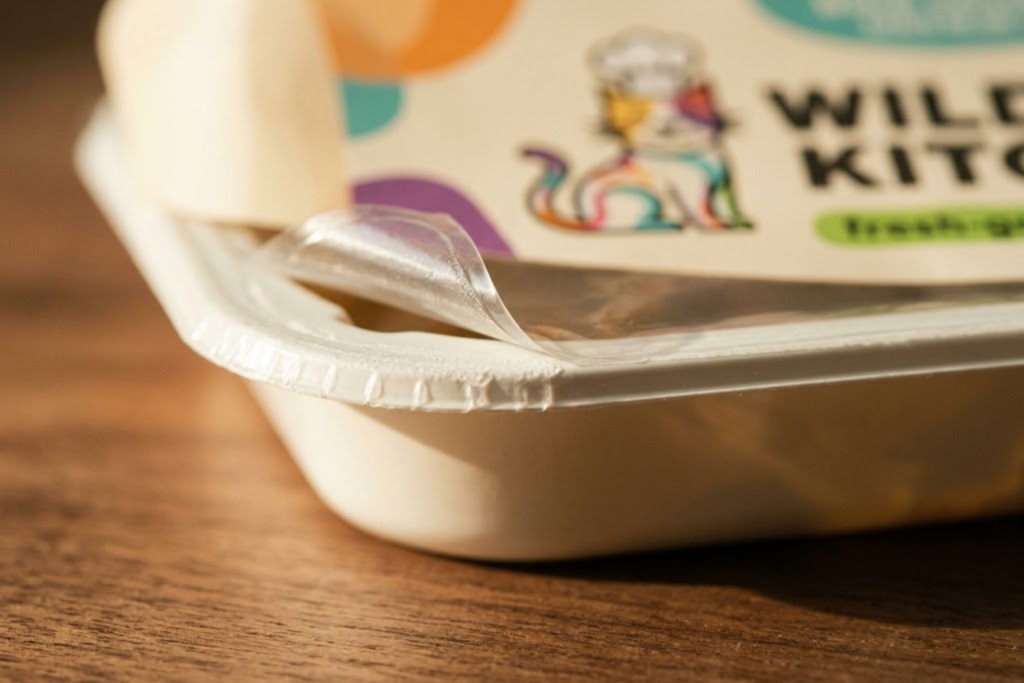
Lidding film has a narrower tolerance than most flexible applications, because it has to seal to a flange rather than to itself. Flange width, tray material and the sealing tool profile all determine what film will work, and a film that seals well to one tray resin will not necessarily seal to another. Temperature makes it harder again, since seal strength measured at ambient tells you very little about how a pack behaves after it has been through a blast freezer and a chilled truck. Web width, core diameter and repeat length have to match the sealer, and for sachets the pitch tolerance is tighter still. We work from your equipment specification, or from the requirements of the co-manufacturer assembling the meal, and we put those numbers to the plant before it quotes rather than after a first run peels open.
What Sets the Specification
Four decisions carry the risk in meal kit and ready meal packaging, and the fifth is scheduling, which is really a sourcing problem.
Temperature
Chill, frozen and reheat
Materials behave differently at each stage. A pack that is sealed at ambient, frozen, thawed and then reheated has to perform at every one of those points, and each stage narrows the material options further.
Seal Compatibility
Film to tray flange
Lidding seals to a flange rather than to itself, so tray resin, flange width and tool profile decide the film. Changing the tray supplier can invalidate a lidding specification entirely.
Grease and Moisture
Board in a wet environment
Sauces, oils and condensation all attack uncoated board. Sleeve and carton stock has to be specified from the recipe and the distribution temperature, not from the graphic requirement.
Component Alignment
Dimensions and dates
Five components have to fit each other and arrive together. That is a dimensioning problem before tooling and a scheduling problem afterward, and both are easier with one point of contact.
- Process
How a Multi-Component Program Comes Together
We start by mapping every component you currently buy and who supplies it, because that map usually explains where the delays come from.
Component Review
We list every packaging component, its supplier, lead time, minimum and delivery point, then identify the gaps and the duplication across them.
Specify as a Set
We dimension the sleeve, tray, lidding and shipper against each other, then quote through qualified plants and present options with the trade-offs stated.
Schedule and Supply
We sequence every component backward from your assembly date, coordinate delivery and customs brokerage, and can hold inventory against your release schedule.
In this category the packaging rarely fails. The schedule does, because five suppliers were never working to the same date.
- Why Armour Rose
The Category Our Model Was Built For
We purchase from manufacturing partners across flexible, paperboard and corrugated and sell to you as one program. No single converter in any of those industries can quote a full meal kit.
Every Component, One PO
Sleeve, carton, lidding film, sachet and shipper consolidated instead of split across five suppliers with five schedules.
One Artwork Release
A single approved release managed against every component, which removes the version control problem that multi-vendor programs create.
Scheduled to Assembly
Lead times sequenced backward from the date you assemble the meal, so components arrive together rather than in the order they were ordered.
Qualified Alternatives
More than one vetted plant in the formats we supply most, so one booked press does not hold an entire assembled SKU.
- Channel Reality
Subscription and Retail Need Different Packs
Meal kit brands usually sell through two channels that make opposite demands. A subscription box ships alone through a parcel network, so it faces drop, crush and cold chain duration that a retail pack never sees, and it needs an insulated or corrugated outer built for that journey. A retail ready meal sits on a chilled planogram, where facing, sleeve print quality and case count matter and the outer is a shipper rather than a shipping container. Brands that specify one and then extend it to the other tend to over-engineer the retail pack or under-engineer the direct one. Because we source across paperboard, flexible and corrugated, we can specify both channels in the same review and reuse the components that genuinely carry across, which is usually the sleeve and the sachet rather than the outer. Where a co-manufacturer handles assembly, we work to their equipment and handling requirements rather than around them.
What Our Clients Are Saying
Reliability that teams can measure.
As a small but growing brand, we struggled to find a packaging supplier who would take us seriously. AR not only welcomed us — they partnered with us. Their work with other startups showed in the quality of our packaging, and Daron went above and beyond, including helping our co-manufacturer optimize their equipment so our pouches came out perfect. We couldn’t ask for a more supportive, solution-focused partner.
ARG is the packaging partner we always needed. They cut through confusion, move fast, and operate like part of our internal team. Their expertise has streamlined our product development, and their above-and-beyond support — like Daron personally delivering samples to our co-manufacturer — is unmatched. We trust them completely.
Armour Rose Group believed in us when other suppliers didn’t. They treated us with the professionalism of a much larger brand and played a real role in helping us scale. Their team is collaborative, reliable, and always willing to solve problems together. Daron’s proactive support and genuine investment in our success stand out above anything we’ve experienced in packaging. Highly recommended.
From day one, the team has been a trusted partner. They provided clear guidance, cost-effective solutions under tight timelines, and the flexibility to scale with a startup. Communication is fast, pricing is transparent, and deliveries are consistently on time and high quality. Support is always there when needed, which makes a real difference. The entire experience makes you feel safe and in good hands— we absolutely recommend Armour Rose Group.
Specialty Water Company
Meal Kit and Ready Meal Packaging Questions
Which components of meal kit and ready meal packaging can you supply?
Carton sleeves and wraps, folding cartons, lidding and flexible films, portion sachets and stick packs, corrugated shipping cartons and labels. That covers most of what an assembled meal needs, and it is the reason brands in this category come to us. A flexible converter can supply your lidding and sachets but not your sleeves. A paperboard printer can supply the sleeves and cartons but not the film. We purchase across all of those industries and sell to you as one program, which means one specification set and one schedule instead of five.
Do you manufacture any of these components yourselves?
No. Armour Rose purchases custom packaging consumables from manufacturing partners and sells them to customers. In a multi-component category that model is the point rather than a caveat, because no manufacturer exists that makes thermoformed trays, lidding film, printed sleeves, sachets and corrugated shippers under one roof. Working through a qualified partner network lets us specify the right process for each component and hold the whole set to a single date. It also means if one plant’s capacity tightens, that component moves rather than the program stopping.
How do you handle packaging that has to survive freezing and reheating?
By specifying against every stage rather than the average one. A pack that is sealed at ambient, frozen, distributed cold, thawed and then reheated faces different demands at each point, and each stage narrows the material options. Seal strength measured at ambient tells you little about performance after a blast freezer. Condensation during thaw attacks board that was fine when it was sealed. If the meal is reheated in its pack, venting and board or film temperature tolerance become requirements rather than preferences. We ask about the full journey and the reheat method before recommending a structure.
Our tray supplier is changing. Does that affect the lidding film?
Almost certainly, and this is one of the most common surprises in the category. Lidding film seals to the tray flange rather than to itself, so the tray’s resin, flange width and surface all determine which film will seal reliably. A change of tray resin can invalidate a lidding specification even when the tray dimensions are identical. Because we source the lidding film and the sleeve and can dimension against whatever tray you use, we would rather review the lidding specification alongside a tray change than discover the mismatch on a production line.
What sustainable options are available in this category?
The paperboard side is where the real ground is, and fortunately this category is paperboard heavy. Sleeves, cartons and corrugated shippers are available in recycled content and FSC-certified board, and since those components make up most of the pack by weight and by visible surface, that is where a substantiated claim is easiest to make. On lidding film and sachets the option is material with a percentage of post-consumer recycled content, and feasibility depends on the seal and barrier performance the cold chain requires. We will tell you which claims a partner can actually document.
We already buy sleeves from a printer we like. Can you supply just the film?
Yes, and that is a reasonable place to start. Many of our relationships begin with a single component while existing suppliers continue elsewhere. The value in this category builds faster than most, because the coordination burden is the real cost and it falls as components consolidate. We would suggest reviewing the whole component list even if you only move one line, since the review typically shows where two suppliers are duplicating a minimum or where a dimension mismatch is slowing assembly. Moving the rest is a decision you can make later on evidence.
Get Every Component Specified as One Set
Send us your component list, your tray details, your cold chain and your assembly date. We will come back with one specification, qualified plant options and a single schedule. Start with a component review.