













Flexible films and pouches designed for freshness, durability, and shelf appeal.

Custom boxes and sleeves built for protection, display, and a premium presentation.

High-quality labels and shrink sleeves that elevate your product and ensure compliance.

Displays and trays designed to capture attention and boost conversions.

Food-safe containers and takeout bags built for freshness, durability, and on-the-go convenience.

Corrugated boxes are the workhorse of the packaging world and your number-one choice for safely delivering products to your customers.



Packaging designed to keep coffee fresh, protected, and shelf-ready.
Flexible packaging solutions that preserve aroma, freshness, and quality.
Durable, eye-catching packaging built for snack brands of every size.
Protective packaging that helps maintain crunch, freshness, and shelf appeal.
Custom packaging made to keep popcorn fresh, crisp, and ready to stand out.
Reliable packaging that protects texture, freshness, and product presentation.
Packaging solutions designed to protect baked goods and enhance presentation.
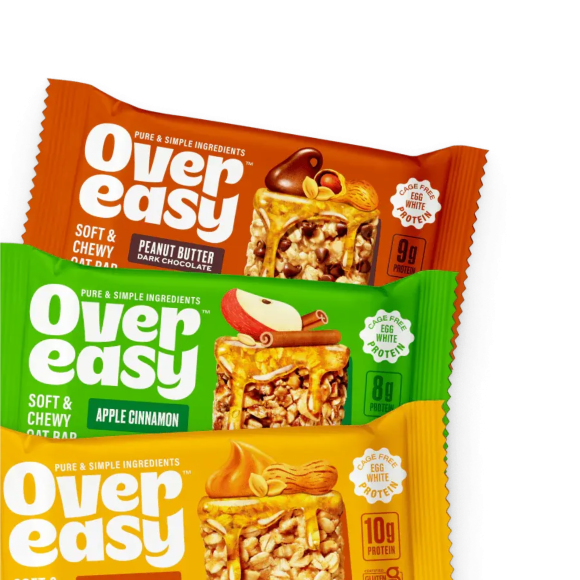
High-performance packaging for bars that need freshness, durability, and impact.
Vibrant packaging designed to protect and showcase confectionery products.
Secure, professional packaging built for supplements and wellness products.
Freshness-focused packaging for dried fruits, nuts, and healthy snacks.
Durable packaging designed to preserve crunch, freshness, and quality.
Protective packaging made for freshness, shelf life, and convenient storage.
Reliable packaging designed for pet food, treats, and specialty products.
Practical packaging solutions for prepared meals, kits, and convenience foods.
Functional packaging built for restaurants, takeout, delivery, and foodservice.
Premium packaging designed to protect products and strengthen brand presentation.

Specialized packaging solutions focused on protection, presentation, and compliance.
A dry snack that goes stale is a quality complaint. A shelf-stable meat product that loses barrier integrity is a different category of problem, and the tolerance is much tighter. Oxygen drives rancidity in the fat, colour change in the surface and loss of the flavour profile customers bought the brand for. Water activity has to stay inside a narrow band, so the film has to control moisture in both directions rather than simply keeping the product dry. Most brands in this category also run an oxygen absorber inside the pack, which only works if the film around it actually holds. That combination is why jerky specifications sit several steps above a standard snack film.
Barrier gets the attention and the seal causes the failures. Fat, salt and spice residue reach the seal area during filling and create narrow channels that pass a visual inspection and fail a shelf-life test weeks later, long after the run has shipped.
High barrier films and pouches, roll stock, folding carton multipacks, corrugated shipping cartons, PDQ and counter displays and labels. Meat snacks sell heavily at checkout and on clip strips, so the display is part of the specification rather than an afterthought.
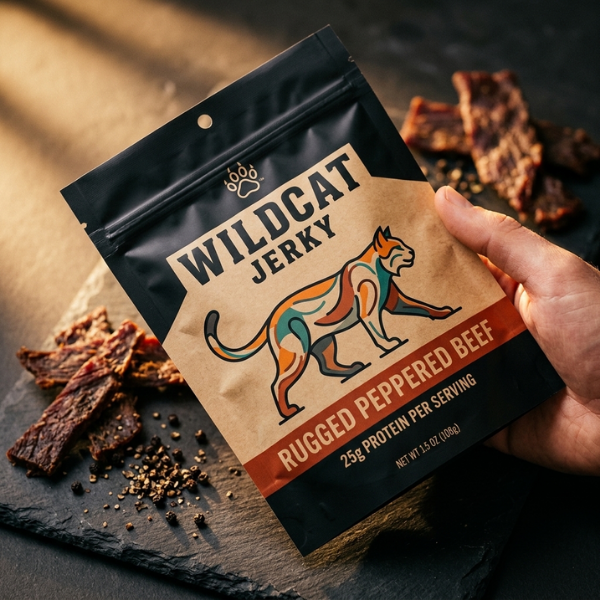
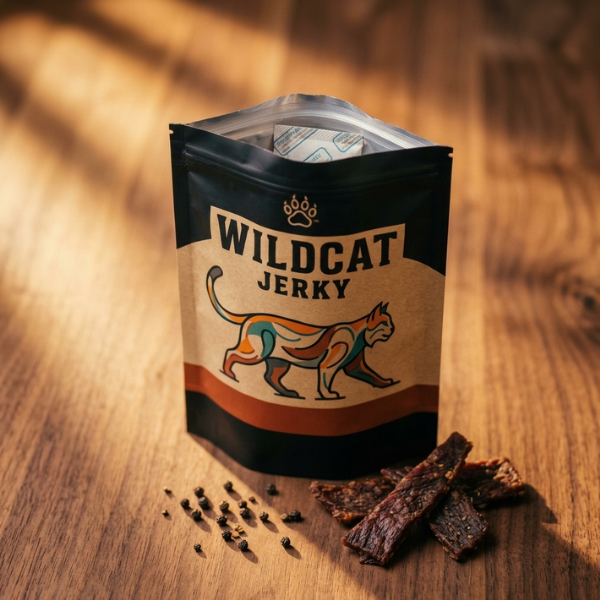
Format follows serving size and placement. A single stick at a till and a family pouch in a grocery aisle are two different engineering problems.
For multi-serve jerky and meat snacks needing high barrier protection, strong seals and convenient shelf-ready presentation.
For premium meat snacks requiring a stable footprint, dependable barriers and multiple printable panels for branding.
For automated meat snack lines requiring film slit to your equipment with barrier and sealant suited to fatty products.
For individually wrapped sticks and meat bites requiring secure seals, consistent machine performance and compact presentation.
For multi-serve jerky requiring repeated opening while helping maintain freshness, product quality and convenience.
For shipping jerky and meat snacks with dependable protection, stacking strength and efficient distribution handling.
For individual sticks and smaller packs needing highly visible, retailer-ready placement at counters and checkout areas.
For larger meat snack promotions requiring durable branded displays, strong visibility and store-ready placement.
For jerky and meat snacks needing faster stocking, organized shelf presentation and protection through distribution.
A film that seals cleanly on a dry product can fail on a fatty one at the same settings. Fat and oil migrate to the seal area during filling, and once they are between two film layers the bond is compromised regardless of how good the barrier is. The controllable variables are the sealant layer, the seal jaw pressure and the dwell time available at your line speed, and dwell time is exactly what gets cut when a line runs faster. We ask what machine the product runs on, what your target speed is, what fat content you are handling, and whether the fill happens at your plant or at a co-manufacturer with its own equipment requirements. Web width, core diameter, unwind direction and cut-off go into the specification alongside those numbers. If a target speed and a reliable seal are incompatible at your chosen gauge, that is far cheaper to establish before plates are cut.
Four variables carry the risk in jerky and meat snack packaging, and three of them are invisible on a quote sheet.
Fat oxidizes and surface colour shifts on oxygen exposure, and higher fat content shortens the window. The barrier target comes from the shelf-life claim you have to hold, not from a house structure.
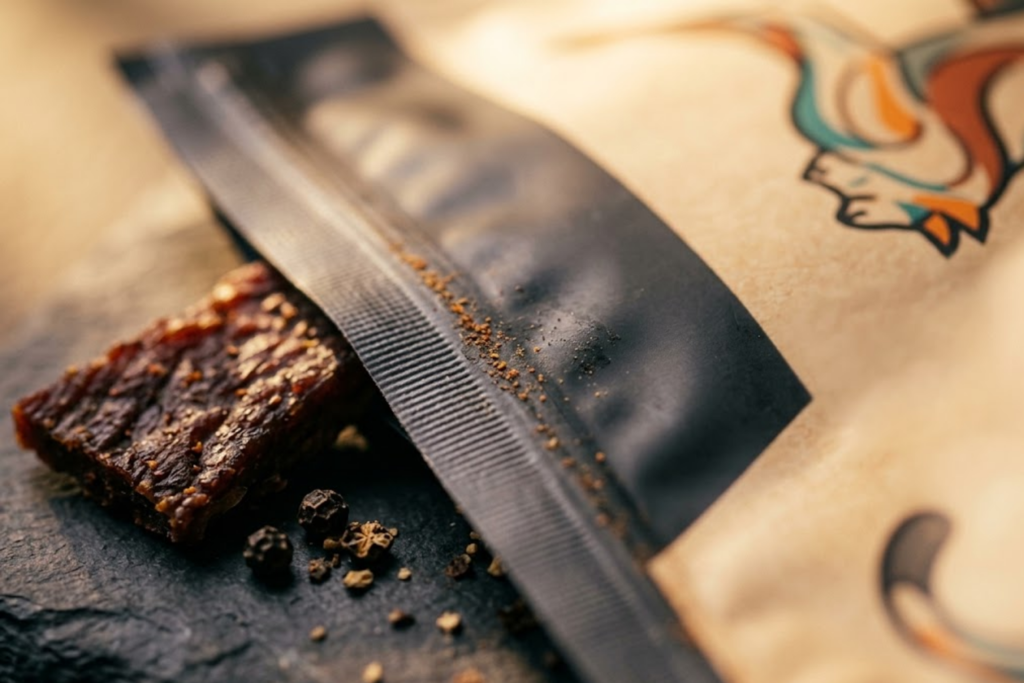
Residue in the seal area creates channel leaks that pass inspection and fail testing. Sealant selection and jaw configuration have to assume a contaminated seal rather than a clean one.
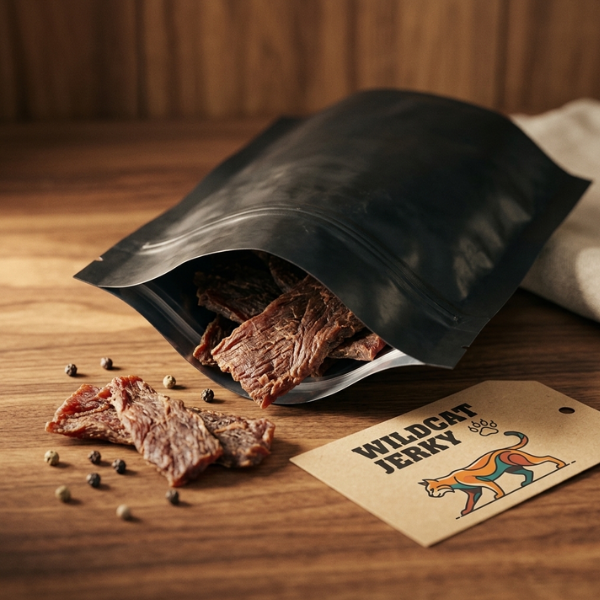
Shelf-stable meat sits inside a narrow water activity band. The film has to stop the product drying out and stop moisture getting in, which is a tighter requirement than a dry snack faces.
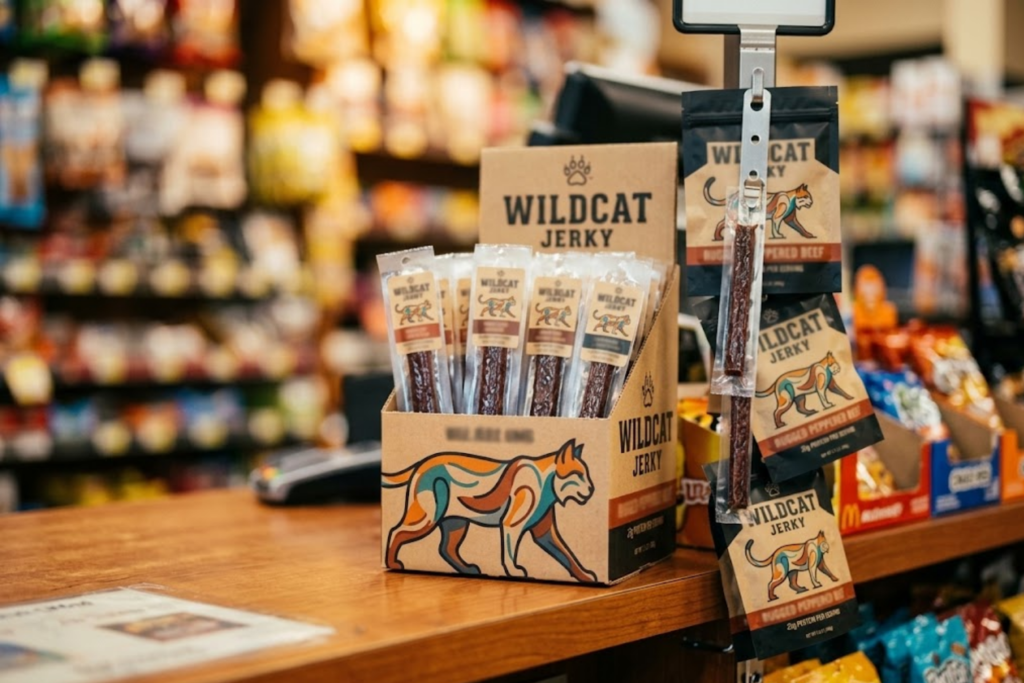
A high value impulse product placed at a till needs a different pack, hang feature and display than the same product on a planogram. Placement decides pack size as often as the reverse.
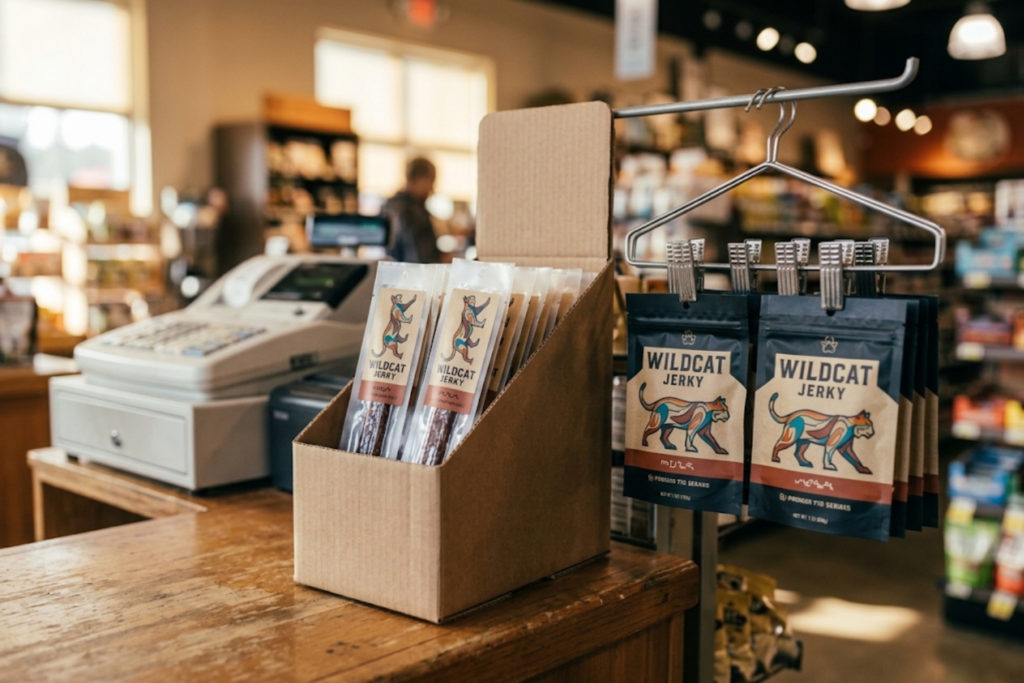
The review comes first, because in this category the problem is usually a specification carrying more risk than the brand realizes.
We assess formats, fat content, shelf-life claims, purchase frequency, delivery points and equipment requirements, then identify where the specification is exposed.
We build the film, absorber compatibility, carton and display into one specification, quote it through qualified plants and present the cost and performance trade-offs openly.
We manage the run, handle delivery and customs brokerage across both markets, and can hold inventory for release against your schedule.
We are a sourcing and brokerage partner. We buy from our manufacturing partners and sell to you, so a high barrier recommendation is driven by your shelf-life claim rather than by what one plant can run this month.
We start from fat content, water activity and shelf-life claim, then choose the process, rather than fitting your product to available capacity.
Pouch, carton, counter display and shipper sourced together, so counts and footprints reconcile before any tooling is committed.
High barrier structures run on a narrower set of presses, which makes holding more than one qualified option genuinely useful when capacity tightens.
We supply brands across Canada and the United States and handle customs brokerage, so a border crossing is a scheduled step rather than a surprise.
Meat snacks do a disproportionate share of their volume at the till, on clip strips and in counter displays rather than on a conventional shelf. That changes the brief completely. A buyer works from a footprint and a case count, and the pack has to fall in behind those numbers rather than the other way round. High unit value also makes shrink a live concern, which affects how a display presents the product and how many facings it exposes. The recurring problem is that the film supplier and the corrugated supplier have never spoken, so a brand receives a counter display or tray that does not match the case the pouches ship in. Because we source both, the count is agreed once and applied across every format. Brands moving into adjacent snack categories later find the same structural work carries over.
Reliability that teams can measure.
As a small but growing brand, we struggled to find a packaging supplier who would take us seriously. AR not only welcomed us — they partnered with us. Their work with other startups showed in the quality of our packaging, and Daron went above and beyond, including helping our co-manufacturer optimize their equipment so our pouches came out perfect. We couldn’t ask for a more supportive, solution-focused partner.
ARG is the packaging partner we always needed. They cut through confusion, move fast, and operate like part of our internal team. Their expertise has streamlined our product development, and their above-and-beyond support — like Daron personally delivering samples to our co-manufacturer — is unmatched. We trust them completely.
Armour Rose Group believed in us when other suppliers didn’t. They treated us with the professionalism of a much larger brand and played a real role in helping us scale. Their team is collaborative, reliable, and always willing to solve problems together. Daron’s proactive support and genuine investment in our success stand out above anything we’ve experienced in packaging. Highly recommended.
From day one, the team has been a trusted partner. They provided clear guidance, cost-effective solutions under tight timelines, and the flexibility to scale with a startup. Communication is fast, pricing is transparent, and deliveries are consistently on time and high quality. Support is always there when needed, which makes a real difference. The entire experience makes you feel safe and in good hands— we absolutely recommend Armour Rose Group.
Higher than most snack categories, and the exact target comes from your product rather than a catalogue. The drivers are fat content, the water activity band you have to hold and the shelf life you need to state. Higher fat shortens the oxidation window, so the oxygen barrier has to be stronger. The film also has to control moisture in both directions, since drying out and moisture ingress are both failures here. If you run an oxygen absorber inside the pack, the film and the absorber have to be specified as one system, because an absorber cannot compensate for a structure that leaks.
No. We purchase from manufacturing partners and sell to our customers, which is a deliberate model. High barrier structures run on a narrower set of equipment than standard snack film, so capacity matters more in this category than in most. A converter that owns one plant can offer you what that plant runs and nothing else, and if the press is booked your launch waits. Working through qualified partners means we specify the structure your shelf-life claim needs and can move a run when capacity tightens rather than passing the delay to you.
In this category it is usually contamination rather than barrier. Fat, salt and spice residue reaches the seal area during filling and sits between the two film layers, creating narrow channels that look perfectly sealed and fail under testing. The variables you can control are the sealant layer, jaw pressure and the dwell time available at your line speed. Dwell is often the culprit, because it is the first thing sacrificed when a line is pushed faster. We specify assuming a contaminated seal area and confirm the structure against your actual speed rather than a laboratory setting.
Yes, and they should be specified together. A hang hole on a heavy multi-serve pouch needs reinforcement and adequate gauge or it tears at retail, which is a film decision. The counter display or clip strip is a corrugated decision, and it has to match the case count the pouches ship in. Those two things coming from unconnected suppliers is the most common reason a brand ends up with displays that do not fit its cases. We source film, cartons, corrugated and displays, so the case count is agreed once and every format is built to it.
This is the category where we are most cautious, and it is worth being direct about why. High barrier performance and recycled content pull against each other, so the post-consumer recycled options that work on a lower barrier snack film are often not feasible where a shelf-stable meat claim is at stake. Where a percentage of PCR content can be used without compromising the barrier, we will specify it. On the carton, corrugated and display side the position is much stronger, with recycled content and FSC-certified board available. We would rather explain the constraint than repeat a claim a quality team will ask us to document.
Longer than a standard snack film, and the reason is capacity rather than complexity. High barrier structures run on fewer presses, and the print process matters too, since digital carries lower minimums and no plate cost while conventional rewards volume. Rather than quote a number that would not survive contact with your program, we sequence backwards from your production date so film, cartons and displays arrive together, and we flag early where a minimum does not suit your volume so an inventory make-and-hold arrangement can absorb it instead.
Send us your fat content, water activity target, shelf-life claim and line details. We will return a specification, qualified plant options and pricing across film, carton and display. Request a packaging review.