













Flexible films and pouches designed for freshness, durability, and shelf appeal.

Custom boxes and sleeves built for protection, display, and a premium presentation.

High-quality labels and shrink sleeves that elevate your product and ensure compliance.

Displays and trays designed to capture attention and boost conversions.

Food-safe containers and takeout bags built for freshness, durability, and on-the-go convenience.

Corrugated boxes are the workhorse of the packaging world and your number-one choice for safely delivering products to your customers.



Packaging designed to keep coffee fresh, protected, and shelf-ready.
Flexible packaging solutions that preserve aroma, freshness, and quality.
Durable, eye-catching packaging built for snack brands of every size.
Protective packaging that helps maintain crunch, freshness, and shelf appeal.
Custom packaging made to keep popcorn fresh, crisp, and ready to stand out.
Reliable packaging that protects texture, freshness, and product presentation.
Packaging solutions designed to protect baked goods and enhance presentation.
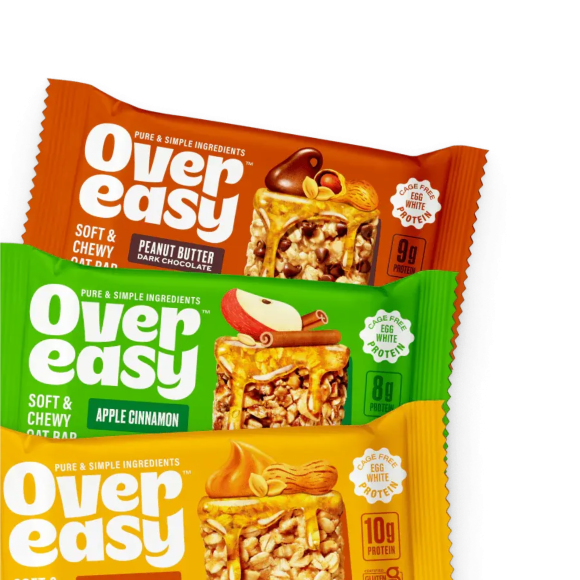
High-performance packaging for bars that need freshness, durability, and impact.
Vibrant packaging designed to protect and showcase confectionery products.
Secure, professional packaging built for supplements and wellness products.
Freshness-focused packaging for dried fruits, nuts, and healthy snacks.
Durable packaging designed to preserve crunch, freshness, and quality.
Protective packaging made for freshness, shelf life, and convenient storage.
Reliable packaging designed for pet food, treats, and specialty products.
Practical packaging solutions for prepared meals, kits, and convenience foods.
Functional packaging built for restaurants, takeout, delivery, and foodservice.
Premium packaging designed to protect products and strengthen brand presentation.

Specialized packaging solutions focused on protection, presentation, and compliance.
Most dried fruit and nut packaging problems trace to one of three causes. Nut oils oxidise when oxygen and light reach them, so a pack with a weak barrier tastes stale well inside its stated shelf life. Shell fragments and hard edges puncture thin film during filling and transit, which turns a barrier calculation into a leak. And a two-pound nut pouch is heavy in a way a chip bag never is, so the bottom seal and the gusset carry real load through drop and stacking. A film that satisfies the barrier requirement can still fail on the other two, which is why we specify against all three together.
Nut and dried fruit programs are unusually easy to under-specify, because the failures appear late. A gauge reduction saves money per unit and shows up months later as punctures, leaking seals and product that tastes older than it is.
Printed films and pouches, corrugated shipping cartons, floor and pallet displays, shelf-ready trays, clear containers and labels. Nut and dried fruit brands sell heavily through club and bulk channels, where the display and the shipper matter as much as the pack itself.
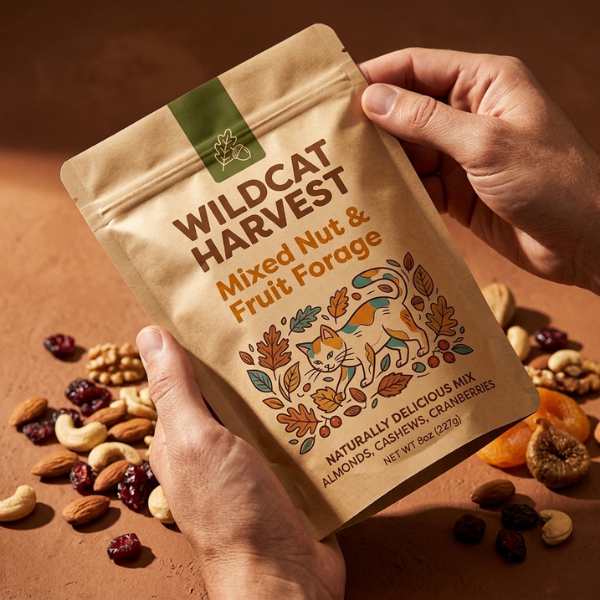
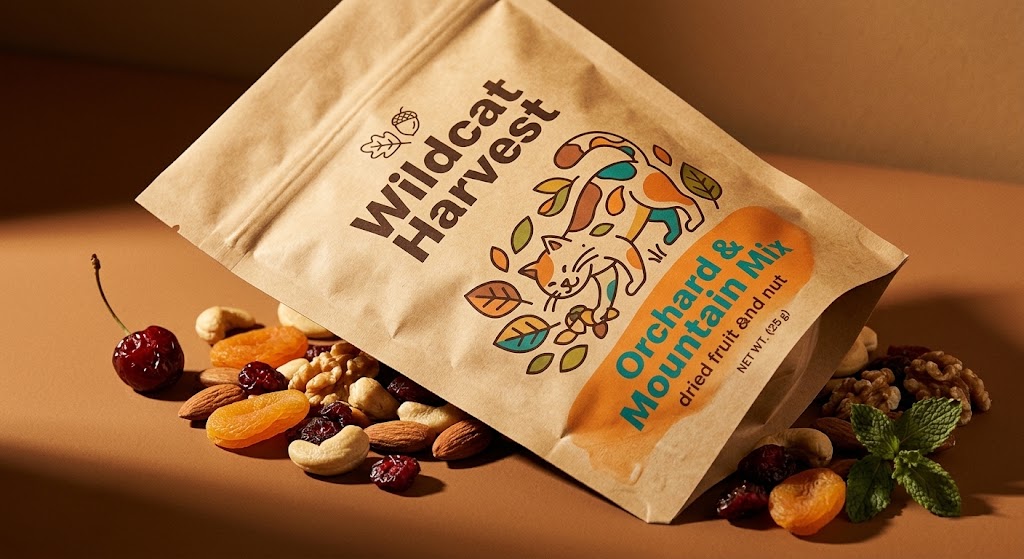
Fill weight and channel drive the dried fruit and nut packaging format choice. A single-serve travel pack and a club-size resealable pouch pull the specification in opposite directions.
For nuts, dried fruit and trail mix needing barrier protection, convenient resealing and strong shelf presence.
For larger fill weights requiring a stable footprint, dependable seals and more printable space for branding.
For bulk nuts and dried fruit needing flexible capacity, efficient filling and dependable product protection.
For single-serve and high-volume packs requiring efficient filling, reliable seals and lightweight flexible packaging.
For form-fill-seal lines requiring film slit and wound to your machine, web width and production requirements.
For individually portioned products requiring smooth machine performance, secure seals and consistent printed presentation.
For multi-serve nuts and trail mix requiring a zipper and film gauge suited to pack weight and repeat opening.
For retail packs and multipacks needing lightweight protection, efficient packing and polished printed presentation.
For shipping dense dried fruit and nut products with dependable strength, stacking performance and product protection.
For adding branding and product information around trays, tubs and multipacks while maintaining efficient packaging.
For smaller packs needing organized, highly visible placement at counters and retail shelves.
For bulk and club-store placement requiring durable displays engineered to carry heavier products without slumping.
For faster stocking and organized retail presentation while protecting products through shipping and handling.
Dense product is unforgiving on a vertical form-fill-seal line. Drop energy at the fill point is higher, so seal dwell has to be long enough to form a full bond before the next cycle pulls on it, and that competes directly with the speed you need. Push the line faster and the bottom seal is the first thing to give. Web width, core diameter, unwind direction and film stiffness all have to suit the forming tube, and a film that tracks well at a light fill weight can wander at a heavy one. We ask what the line runs and at what weight, or work from your co-manufacturer’s equipment requirements where the fill happens elsewhere, then specify to those numbers. If a target speed and a target gauge are incompatible, we would rather say so before the plate charge than after the first run.
Four variables carry most of the risk in dried fruit and nut packaging. Each one is cheap to get right at the specification stage and expensive to discover in the field.
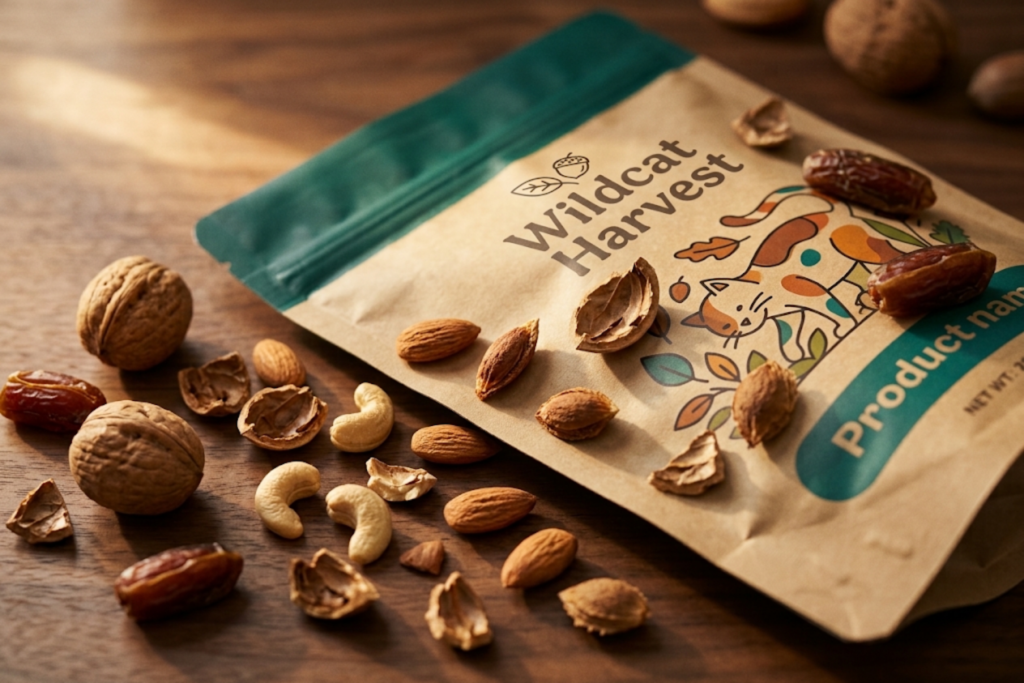
Nut oils oxidise on exposure to oxygen and light, and higher oil content shortens the window. Metallized structures and opaque films address different parts of that, and the shelf-life claim you need decides how far to go.
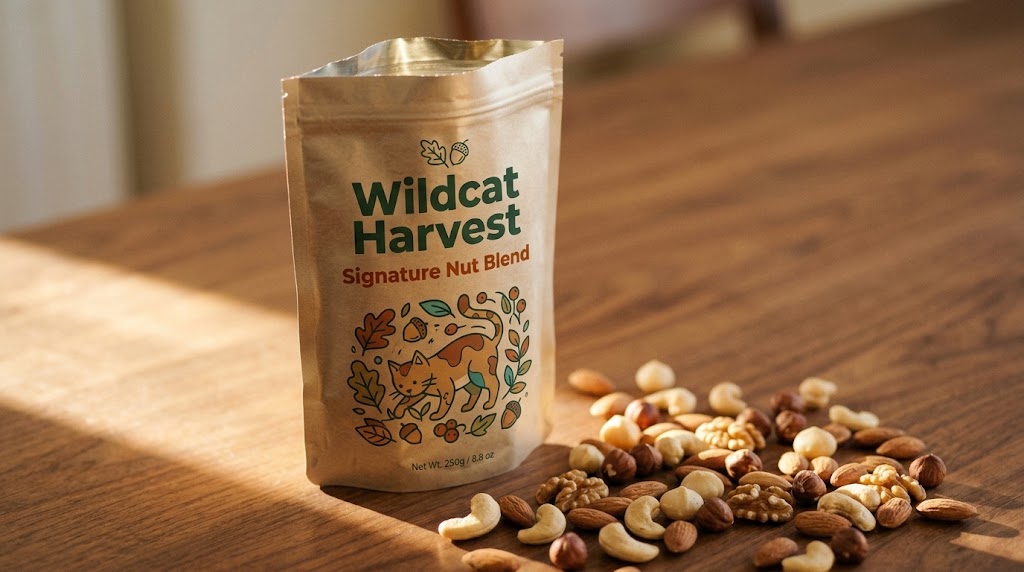
Shells, pits and hard pieces damage film during filling and transit. Gauge and laminate construction have to be specified for the sharpest product in the mix, not the average one.
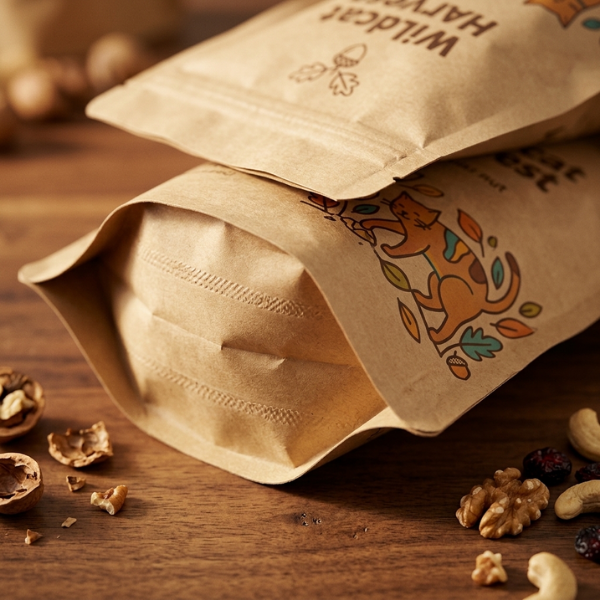
A heavy pouch loads its own bottom seal every time it is handled. Seal width, sealant choice and gusset construction have to be validated against your fill weight and your stack height.
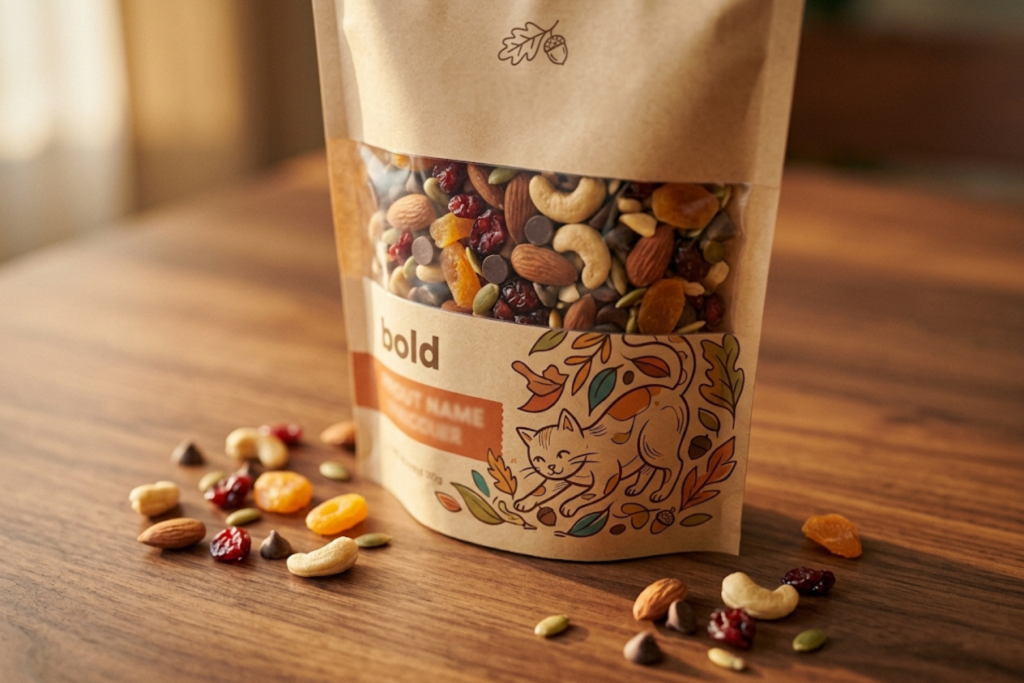
Mixed products segregate in transit, and fines collect at the bottom. Where a window sits, or whether the pack has one at all, is a decision about what the customer sees after shipping.
A dried fruit and nut packaging review comes first, because the problem is almost always in the current specification rather than the current price.
We assess current formats, fill weights, purchase frequency, delivery locations and equipment requirements, then flag where the specification is carrying risk.
We build the specification around oil content, fill weight and channel, quote it through qualified plants and present the trade-offs between cost and performance openly.
We manage the run, handle delivery and customs brokerage across Canada and the United States, and can hold inventory for release against your schedule.
We buy from our manufacturing partners and sell to you. Nothing in our model rewards steering a nut program toward the format we happen to run, because we do not run one.
We start from oil content, fill weight and shelf-life target, then choose the process, rather than fitting the product to available capacity.
The pouch, the shipper and the display or tray come from one program, so counts and dimensions reconcile before tooling.
Qualified alternatives in the formats we supply most, so a booked press moves your run rather than delaying your set.
Make-and-hold arrangements let you buy an efficient quantity and release it as you need it, which suits seasonal bulk demand.
Nut and dried fruit brands sell disproportionately through club, bulk and grocery bulk channels, and those buyers work from a different brief than a standard grocery planogram. The conversation starts with case count, pallet pattern, display footprint and how the unit presents when the shrink comes off, and the pouch specification has to fall in behind those numbers. That is a problem when the pouch supplier and the corrugated supplier have never spoken to each other, which is the normal situation. Getting a display order that does not match the case your pouches ship in is a common and entirely avoidable outcome. Because we source film, corrugated and displays through the same program, the count is reconciled once and applied across every format. Brands selling into the same channels often extend this into broader snack formats over time, and the structural work carries across.
Reliability that teams can measure.
As a small but growing brand, we struggled to find a packaging supplier who would take us seriously. AR not only welcomed us — they partnered with us. Their work with other startups showed in the quality of our packaging, and Daron went above and beyond, including helping our co-manufacturer optimize their equipment so our pouches came out perfect. We couldn’t ask for a more supportive, solution-focused partner.
ARG is the packaging partner we always needed. They cut through confusion, move fast, and operate like part of our internal team. Their expertise has streamlined our product development, and their above-and-beyond support — like Daron personally delivering samples to our co-manufacturer — is unmatched. We trust them completely.
Armour Rose Group believed in us when other suppliers didn’t. They treated us with the professionalism of a much larger brand and played a real role in helping us scale. Their team is collaborative, reliable, and always willing to solve problems together. Daron’s proactive support and genuine investment in our success stand out above anything we’ve experienced in packaging. Highly recommended.
From day one, the team has been a trusted partner. They provided clear guidance, cost-effective solutions under tight timelines, and the flexibility to scale with a startup. Communication is fast, pricing is transparent, and deliveries are consistently on time and high quality. Support is always there when needed, which makes a real difference. The entire experience makes you feel safe and in good hands— we absolutely recommend Armour Rose Group.
There is no single answer, because the three requirements pull differently. High oil content pushes toward a stronger oxygen and light barrier, typically a metallized or opaque structure. Shell fragments and hard pieces push toward a heavier gauge and a tougher laminate for puncture resistance. Heavy fill weights push toward greater seal strength and a gusset that can carry load. We work from your oil content, fill weight, shelf-life target and distribution conditions, then specify a structure that holds all three, and we say clearly where a cost target would compromise one of them.
We source it. Armour Rose purchases from manufacturing partners and sells to customers, which is how we can quote a flexible pouch, a corrugated shipper and a pallet display in the same conversation. A single plant cannot do that, and a plant that could would still be limited to its own capacity and schedule. Working through qualified partners means the recommendation follows the product requirement, and it means capacity constraints at one supplier do not become your delay.
Segregation is a physical certainty in a mixed product, so the work is in managing what the customer sees rather than preventing settling entirely. Format matters, since a flat bottom pouch presents differently from a pillow pouch after transit. Window placement matters more, because a window low on the front panel will show fines and dust while one placed higher shows the product. Some brands choose no window at all and use printed graphics instead. Fill level and headspace also affect how much movement happens in transit, and that is a decision to make with the filler rather than after the film is ordered.
Yes, and that channel usually drives the whole specification. Club and bulk buyers work from case count, pallet pattern and display footprint, and they often expect a retail-ready unit rather than loose cases. We source the pouch or film, the corrugated shipper and the floor or pallet display through one program, so the case count is agreed once and applied to every format. Dense product also makes display engineering matter, because a corrugated display sized for chips will slump under nuts, and that is a structural calculation rather than a print decision.
We keep this honest because the category is often oversold. For flexible film, the available option today is material containing a percentage of post-consumer recycled content, and feasibility depends on whether that structure can still deliver the oxygen barrier and puncture resistance the product needs. High oil content makes that tension real rather than theoretical. On the corrugated and paperboard side the ground is firmer, with recycled content and FSC-certified board both available for shippers, trays and displays. We will tell you which of those a partner can document.
Yes, and we specify to the machine rather than to a standard. We need the web width, core diameter, unwind direction, film gauge and the sealing temperature range your jaws can hold at your target speed. Dense product raises the stakes here, because drop energy at the fill point is higher and the bottom seal needs adequate dwell to form before the next cycle loads it. If your target line speed and your target gauge are not compatible, we would rather establish that during specification than after you have paid for plates and a first run.
Send us your fill weights, oil content and channel. We will return a specification, qualified plant options and pricing across the pouch, the shipper and the display. Request a packaging review.