


















How long does custom packaging take? There is no single timeline that applies to every format or order. A supplier may quote production only, or include artwork approval and delivery.
Compare estimates only after confirming when the clock starts and what the quoted lead time covers.
This guide explains the stages that affect packaging timelines for food and beverage products, the differences between a reorder and a new item, and how to plan backward from a launch or retailer date.
Direct Answer: What Counts in a Packaging Lead Time?
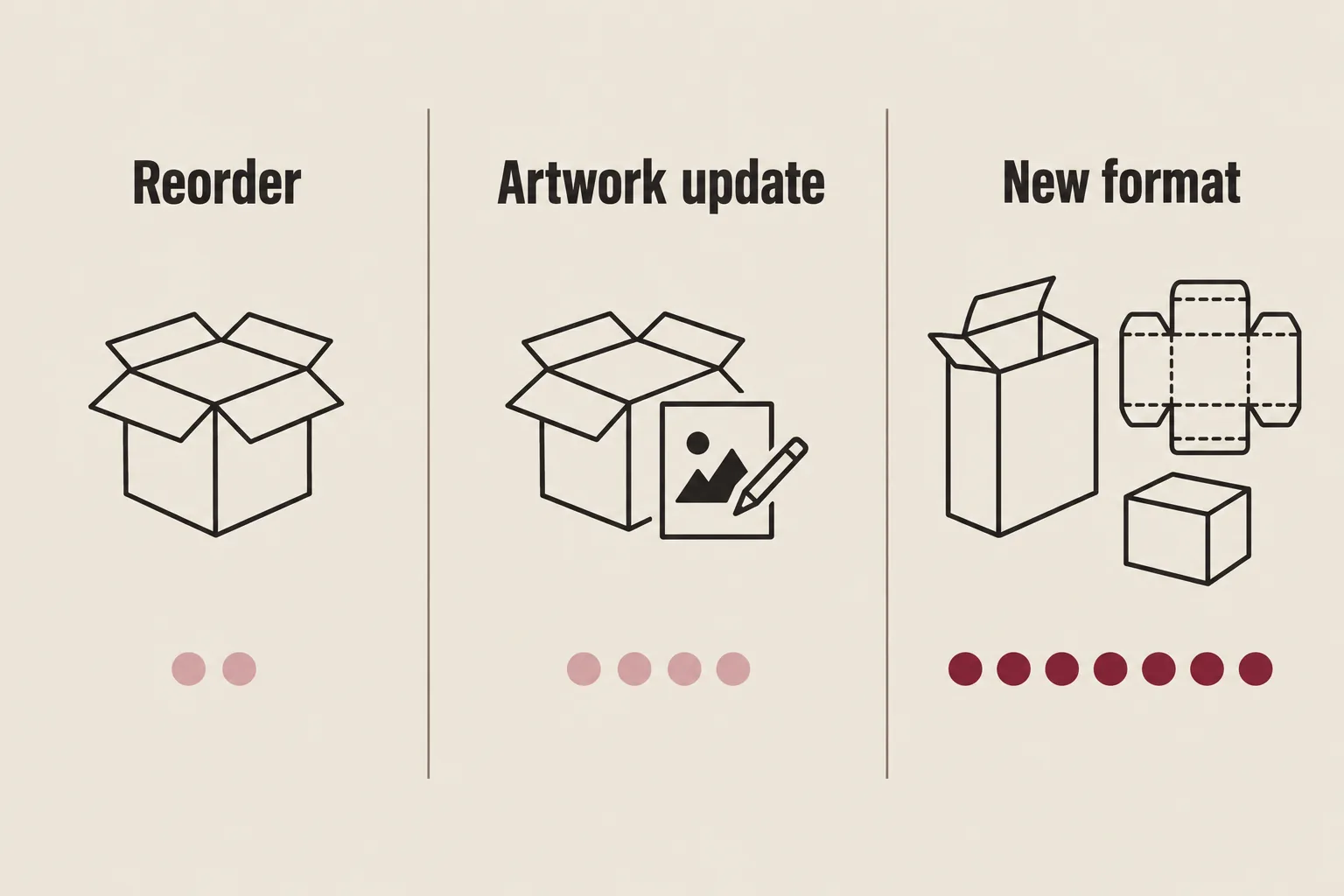
A useful estimate separates the work into three order types. These are planning categories, not guaranteed durations; ask the supplier for current dates based on your specification and order quantity.
A reorder often needs fewer setup steps when the specification, approved artwork, and tooling remain unchanged. Confirm material availability, production slot, quality checks, and freight.
An artwork update on existing packaging may require revised proofs and printing setup, even if the structure and cutting die stay the same. Confirm whether the change affects tooling, material, or line approval.
A new format or structure may involve specification development, samples, new printing or cutting tooling, proof approval, and a co-packer line trial before production. The steps depend on the package and supplier.
Before comparing quotes, ask whether the quoted period begins at purchase order, artwork approval, or specification sign-off, and whether it ends at production completion, dispatch, or delivery to your co-packer or warehouse. Add freight, customs processing, receiving windows, and any customer-side approvals if they are excluded.
Production time vs. delivered lead time
Production time usually covers manufacturing steps after the supplier is ready to begin. Delivered lead time may also include artwork approval, material sourcing, tooling, scheduling, quality checks, freight, customs, and receiving. Quotes can use different start and end points, so request milestone dates for your order rather than comparing one number without its scope.
With the custom box vendor we use, we have to wait a week or a few for the box to come in and we don’t store the items for the customerRead on Reddit ↗
What Affects a Custom Packaging Timeline?
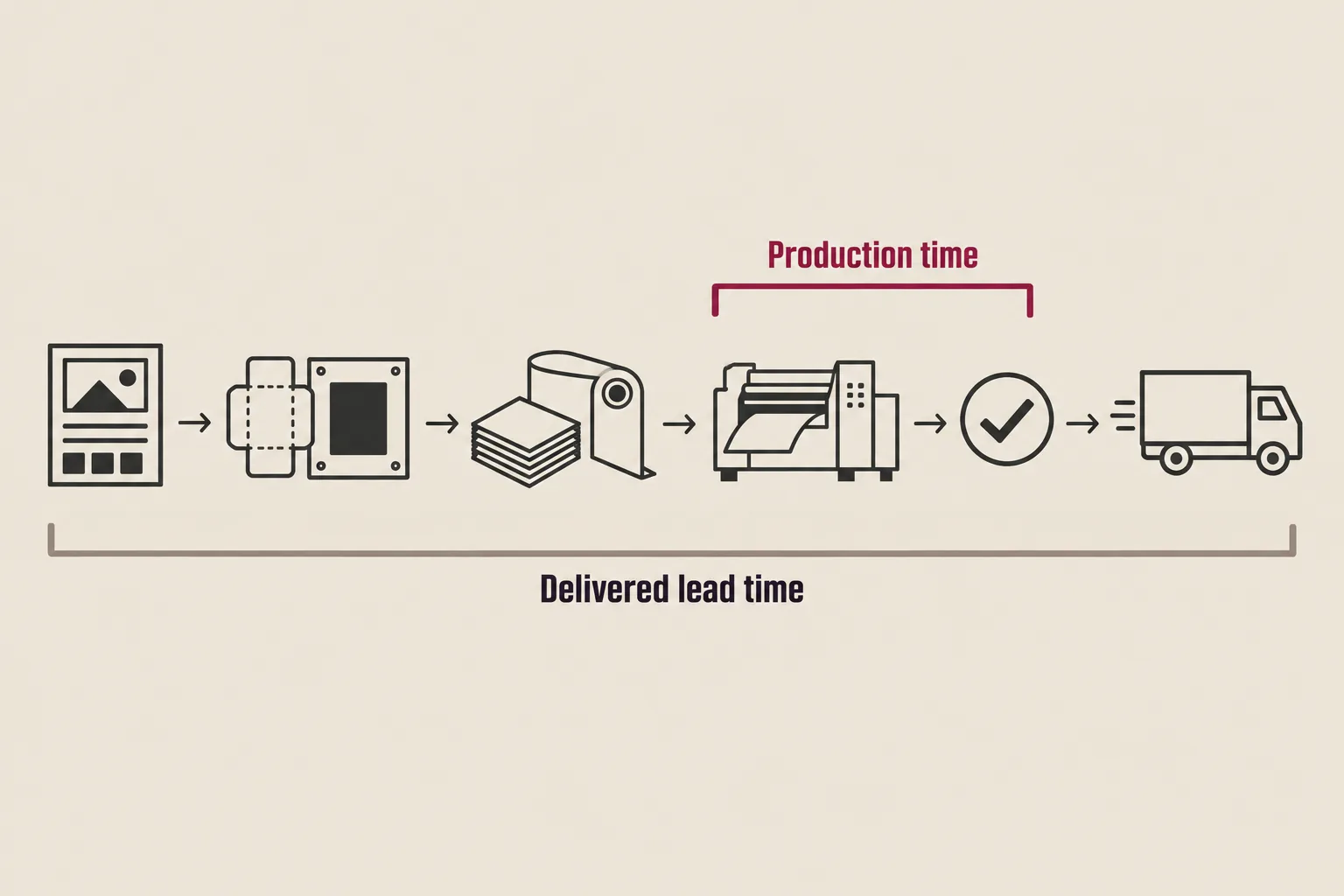
A packaging timeline can include customer approvals, supplier setup, materials, production scheduling, quality checks, and delivery. Which stage takes longest depends on the format and project. Artwork readiness and consolidated feedback can help prevent avoidable approval delays.
Artwork, Dielines, and Proof Approval
Before a supplier can prepare a print job, it may need artwork built to its dieline and file requirements, including colour separations, bleeds, fonts, and image resolution. Ask the supplier which specifications and file checks apply to your printing process.
Confirm the dieline against the product, fill method, closure, shipping case, and shelf presentation before approving structure or tooling. Armour Rose’s co-manufacturer partnership service can be discussed when line requirements need to inform packaging choices.
Depending on the supplier and print process, you may review a digital proof for copy and layout and a colour or press proof for appearance on the chosen material. Confirm which proof stages are included and who must approve them. Colours can reproduce differently across films, paperboard, and other substrates.
Unapproved label copy can hold up artwork. For food products, coordinate nutrition, ingredient, allergen, claims, and bilingual copy reviews early, and confirm when the supplier needs final files.
A practical way to reduce approval handoffs is to appoint one person to collect feedback and provide final approval. The time saved will depend on the review process and project.
Tooling: Plates, Cylinders, and Cutting Dies
Tooling is the physical setup used to print or cut a packaging design. The type required depends on the format and production method.
Printing tooling carries the image. Flexographic printing uses plates, one set per colour. Rotogravure printing uses engraved cylinders; flexographic printing uses plates. Cylinder or plate preparation can affect cost and schedule, so ask suppliers to specify the process and setup time in the quote.
Cutting tooling shapes the material. A cutting die turns a printed sheet of board into a carton blank with the right creases, tabs, and windows. Trays and display components need the same thing.
Some tooling can be reused, but confirm storage, ownership, condition, and reuse terms with the supplier. A repeat order may avoid new tooling if the structure and artwork remain compatible.
A structural revision after tooling is made may require a new or modified tool. Confirm the structure and supplier specifications before authorizing tooling or final artwork.
Material Availability and Substrate Choice
Material availability varies by supplier, specification, order size, and current stock. Specialty laminations, metallized layers, recyclable mono-material films, and compostable structures may require additional sourcing or production time. Ask for availability and timing for the exact specification.
If timing is tight, ask whether an available board or film option could meet the product and line requirements. Any material change should be reviewed for performance and approved before artwork or production is finalized.
Minimum order quantities can affect scheduling, but the effect varies by supplier, format, and order size. A smaller run does not always mean a shorter wait; ask whether the quoted quantity fits a current production slot or requires a different setup.
Press Scheduling and Plant Capacity
Suppliers schedule production according to available capacity. If approvals miss a planned slot, work may move to the next opening, which could affect the delivery date. Ask when capacity is reserved and what approvals are needed to hold the slot.
Supplier capacity, equipment availability, and other scheduled work can affect the production slot. If an alternate production site is important, ask whether it can run the same specification and what review or qualification would be needed; do not assume a job can be moved without changes.
Freight, Customs, and Delivery to the Right Door
Transit estimates depend on route, carrier, shipment size, and receiving schedule. For cross-border shipments between Canada and the United States, include customs documentation and clearance in the delivery plan. The CBSA importing commercial goods guide outlines Canadian import steps, and U.S. Customs and Border Protection importer guidance provides U.S. entry information. Armour Rose lists logistics and fulfillment among its services; confirm the arrangements and dates for your project.
If a project uses overseas suppliers, allow for production, ocean or air transit, customs processing, and inland delivery. The route and terms determine which party handles each step, so confirm responsibilities and estimated dates in the quote.
Delivery arrangements can affect both schedule and cost. Plan for multiple destinations, limited co-packer receiving days, warehouse dock capacity, and staged releases against the production schedule.
Lead Times by Packaging Format
The formats below reflect packaging categories relevant to Armour Rose’s food and beverage customers. They are not a ranking of a typical customer’s packaging spend. Timing depends on the final specification, quantity, supplier capacity, and delivery route.
Printed Films and Rollstock
This is the wrapper on a protein bar, the bag on a chip or popcorn line, and anything running on a vertical or horizontal form-fill-seal machine.
Printed flexible packaging can require several converting steps. Depending on the structure, the material may be printed, laminated, cured, slit to width, and wound onto cores. Ask the supplier which stages apply and how curing or other process requirements affect the quoted schedule.
Confirm machine compatibility with the co-packer before ordering. Where appropriate, discuss a test roll or line trial; whether one is needed, and its timing, depends on the film and equipment. Armour Rose’s roll stock film options can be reviewed against those production details.
Confirm roll details such as width, core size, unwind direction, repeat length, and eye-mark placement with the co-packer and supplier before production. These requirements depend on the filling equipment and film specification; later changes may require revised artwork, setup, or testing.
A repeat order may need fewer setup steps when the approved film specification, artwork, and equipment remain unchanged. Confirm whether the supplier requires updated proofs, testing, or other approvals.
Folding Carton Boxes and Sleeves
Cartons cover multipacks, bar cartons, cookie and brownie boxes, and beverage sleeves.
A new folding carton may require structural review or samples, a cutting die, and printing plates. Ask the supplier which steps apply; repeat production still depends on material availability and press scheduling. See folding carton options when reviewing carton formats.
Carton finishes such as coatings, foil, embossing, and spot varnish can add production steps. Confirm the selected finish before requesting a schedule, since the process and timing vary by supplier.
Confirm that the glue pattern and carton erection method suit the co-packer’s line. A carton that assembles by hand may need adjustment before it can run reliably on automated equipment.
For a repeat run, confirm that the existing tooling and board specification remain suitable and ask for the current production slot.
Corrugated Trays and PDQ Displays
Retail-ready trays and PDQ displays may need structural review and retailer approval, so include those steps when working toward a fixed reset or launch date. Confirm the retailer’s specifications and approval schedule early. Armour Rose’s PDQ and counter display options can be reviewed as part of a multi-format program.
A sample or prototype can help check fit and presentation. If the retailer or distribution route requires transport testing, agree on the test method and pass criteria before finalizing the design. ISTA publishes packaged-product test procedures, but the applicable procedure depends on the shipment and test objective.
For a multi-component display, the overall schedule may depend on the component with the longest production or approval path. Ask suppliers to identify that component and provide milestone dates for each part.
Where retailer review is required, include its submission and approval window in the calendar; the timing is set by the retailer’s process.
Flat and Stand-Up Pouches
A key decision is whether to use premade pouches or rollstock formed on the filling line. The right option depends on equipment, run size, fill process, and supplier availability; compare both timing and total cost. See stand-up pouch options when reviewing flexible formats.
Optional features such as zippers, spouts, degassing valves, tear notches, or laser scoring can affect sourcing and production. Confirm availability and timing for the selected construction with the supplier.
Digital printing may reduce the need for print plates or cylinders and can suit some launch quantities or multi-SKU programs. Availability, finishing, material compatibility, and order size vary by supplier. The Flexographic Technical Association discusses digital printing for flexible packaging; confirm options with the manufacturer for your specification.
Barrier requirements constrain the whole conversation. A target shelf life narrows which structures are even eligible, and that narrowing happens before any timeline discussion is meaningful.
Labels and Secondary Components
Labels and shrink sleeves may have a different production schedule from the primary package. Confirm applicator compatibility, liner, roll direction, core size, and current availability before coordinating delivery.
Sequence orders around confirmed supplier dates. Ordering every component at once can leave shorter-lead items waiting in storage; ordering later can also risk a delay. Compare stock, storage, and delivery plans before setting release dates.
How First Orders and Reorders Differ
A first order may involve specification development, structural review, new tooling, proof approval, or a co-packer line trial. A reorder may avoid some of those steps when the approved specification, artwork, tooling, and production conditions remain current. Material availability, supplier capacity, quality checks, and freight can still affect either order. Confirm the steps that apply to the specific project.
An artwork update sits between those cases: the structure may stay the same, but revised files, print setup, or proof approval could be needed. Ask the supplier what must be repeated before assuming it follows the reorder schedule.
Keep an up-to-date specification record for each item, including structure, dimensions, tooling location, colour reference, and approved supplier. A clear record helps the supplier identify what has changed and estimate the next order.
Where Timelines Actually Slip
Potential causes of delay include:
- Late or incomplete art files, or files supplied in a format the plant cannot use.
- Artwork or structural changes after tooling is committed, which may require revised tooling or setup.
- No confirmed co-packer machine specification, so film or cartons are built to an assumption and validated too late.
- Quantity changes late in planning, which may affect the production method, supplier, or available slot.
- A launch sourced from several vendors without a clear schedule owner, which can make handoffs and date changes harder to coordinate.
- Colour disputes at proof stage with no agreed standard to measure against, turning a technical question into an opinion.
- Limited approved production alternatives, which may reduce options if a supplier’s capacity changes.
Many timeline risks begin during planning and coordination. Some can be reduced through early approvals and clear ownership, while supplier capacity, material availability, and transport conditions may remain outside the brand’s control.
Ways to Reduce Avoidable Timeline Delays
When a date is tight, ask the supplier which of these options could help for your specification and schedule:
Ask whether tooling work can begin after the structure is approved, while artwork is being finalized. This depends on the supplier, format, and risk of later structural changes.
Ask whether an established stock structure or board grade can meet the product and equipment requirements. This may reduce development work, though availability and suitability need supplier and co-packer confirmation.
Ask whether digital printing is suitable for the launch quantity or number of SKUs. It may avoid some print tooling, but format, materials, finishing, capacity, and unit economics vary by supplier.
Coordinate artwork, retailer, and regulatory reviews in parallel only where the parties and file dependencies allow it. Confirm which approvals must be complete before the supplier can proceed.
Ask whether staged production or delivery is available. It may help align packaging arrivals with co-packer runs, but depends on supplier capacity, order terms, and storage arrangements.
Compare expedited freight only after confirming the production completion date, route, and carrier options. It may shorten transit, but it cannot resolve artwork, material, or production delays.
If a retailer or co-packer requires supplier documents, ask early which records are available for the specific material and manufacturing partner. Armour Rose can help coordinate supplier information where available; the buyer should confirm what is required and complete the final compliance review.
Build the Calendar Backward From Your On-Shelf Date
For a bar or snack launch, work backward from the retailer’s required date and confirm each milestone with the responsible partner:
1. On-shelf date. The date the retailer expects product available to consumers. 2. Retailer ship date. When product must leave your warehouse or distribution centre to make that shelf date. 3. Co-pack run date. When the filling line is booked. This date may be difficult to move, depending on co-packer capacity and other commitments. 4. Packaging delivery date. When packaging must physically be at the co-packer, with a buffer before the run, not the morning of it. 5. Production start. Working back through the production window for the slowest format in the program. 6. Tooling start. Working back from production through tooling fabrication. 7. Artwork lock. The date beyond which no changes are accepted without moving everything downstream.
Include time for additional proof or approval rounds if changes are possible. Ask each approver how long review typically takes and set a clear feedback deadline.
Keep separate calendars for the long-lead item and the short-lead item so nothing sits waiting on the wrong thing. Your display program and your labels should not be managed as one deadline.
Two planning practices may help improve visibility and align supply with demand:
A rolling forecast. Sharing expected demand may help suppliers assess material availability and production capacity earlier. Confirm whether any inventory positioning or capacity reservation is available and what terms apply.
A blanket order with scheduled releases. For suitable products, this can align production quantities with planned deliveries. Confirm minimum quantities, storage, release dates, ownership, and commercial terms with the supplier.
Seasonality: When the Calendar Works in Your Favour
Packaging demand and supplier capacity can vary through the year. Retail resets, holiday programs, and seasonal launches may create busier periods, but timing differs by format and supplier. Confirm current capacity rather than assuming a market-wide lead-time pattern.
Armour Rose has identified February through April as a slower period for its business. It can be a useful time to discuss a new structure, line trial, or artwork refresh, but supplier capacity varies by format and project. Confirm availability before scheduling work.
For a peak-season program, request a schedule early and confirm artwork, quantities, retailer approvals, and delivery dates with each partner. Earlier planning can provide more time to address issues, but it does not guarantee a particular delivery date.
Co-Packer and Equipment Requirements That Change Your Timeline
Packaging specifications should be checked against the filling and cartoning equipment before an order is placed. If a mismatch is found after production, it may require a revised specification, testing, or replacement packaging.
Ask your co-packer which of these details the packaging supplier needs before finalizing the order:
- Machine make and model for filling and cartoning
- Film width and gauge range the equipment will accept
- Sealing parameters, including temperature and dwell tolerance
- Core size, unwind direction, and maximum roll diameter
- Carton erection method and glue pattern requirements
- Case configuration, pallet pattern, and any retailer shipper requirements
If a line trial is required, coordinate its date with the co-packer and supplier before committing to a launch schedule.
If you use multiple co-packers or fill sites, confirm whether each location has the same equipment requirements. A shared specification may be possible, but test or approval needs can differ by site.
How a Packaging Partner Can Coordinate Multiple Formats
A launch may combine printed film for a bar wrapper, cartons for a multipack, and a PDQ display for retail. When different suppliers provide each format, the brand may need to coordinate separate schedules, proofs, specifications, and delivery windows against one launch date. Define who owns the combined timeline and how supplier updates will be shared.
Armour Rose is a custom packaging sourcing and brokerage partner. Depending on the project scope, it can coordinate packaging requirements across manufacturing partners and formats. Confirm who is responsible for each supplier schedule, approval, and delivery milestone before placing the order. Learn more about sourcing and brokering.
A single point of coordination can simplify communication across suppliers. It does not guarantee that another plant can run an identical specification; ask whether alternatives are approved and what additional validation, cost, or time they may require.
Armour Rose describes a consultative discovery process that reviews current packaging, co-packer and equipment requirements, purchase frequency, quantities, and delivery locations before proposing a solution. Reviewing these details early can help surface open questions before a production date is close.
Compare the full project cost, including packaging, freight, storage, possible expedite charges, and the commercial impact of a delay. The relative cost of these items depends on the project; request a quote that makes inclusions and exclusions clear.
Armour Rose’s website states that the company has 25+ years of industry experience. Its partner network can support sourcing and coordination; whether a project can be changed or rerouted depends on the supplier, approved specification, and available capacity.
If you already source one packaging format through Armour Rose, a packaging review can identify whether cartons, trays, pouches, or labels could be coordinated with the same project plan. Timing and delivery alignment depend on the specifications and supplier schedules.
Frequently asked questions
How fast can custom packaging be rushed?
Can I get custom packaging in two weeks?
Does a reorder need a new proof?
Why do plates and dies take so long?
How far ahead should I order for a holiday or retailer reset program?
What happens if my sales forecast changes during production?
Get a Project-Specific Packaging Timeline
What to share when requesting an estimate
Prepare the product and format, current packaging specification or sample, target quantity, artwork status, co-packer equipment requirements, required delivery date, and delivery locations. Note whether the estimate should include samples, tooling, freight, customs brokerage, or inventory storage. These details help the supplier identify open questions before confirming dates.
A project-specific timeline depends on the packaging formats, approved specifications, co-packer requirements, quantities, purchase frequency, and delivery locations. Armour Rose’s discovery process reviews those details before presenting solution options and pricing estimates.
Armour Rose serves food and beverage companies across Canada and the United States. Contact us to discuss a project-specific timeline and quote.