



















Both formats are flexible pouches, and both can be specified for different products. Product protection and shelf life depend on the film structure, seals, filling conditions, and the product itself. The right format also depends on fill weight, shelf needs, co-packer equipment, and order volume.
Here is how the formats compare and which project details can help you choose between them.
Quick Comparison: When Each Pouch Format May Fit
A stand-up pouch may suit a project when its size, cost, and available filling equipment fit the product and order. Flat-bottom pouches may suit products that benefit from a squared display or more printable panels. Compare the specific construction, fill weight, run size, equipment, and delivered cost before choosing.
Some brands use different formats across SKUs, but that choice depends on product needs and project economics; it is not a standard outcome for every brand.
What follows covers construction, shelf presence, capacity, cost, filling equipment, barrier, sustainability, minimum quantities, and a decision checklist you can run against a real product.
How a Stand-Up Pouch Is Built
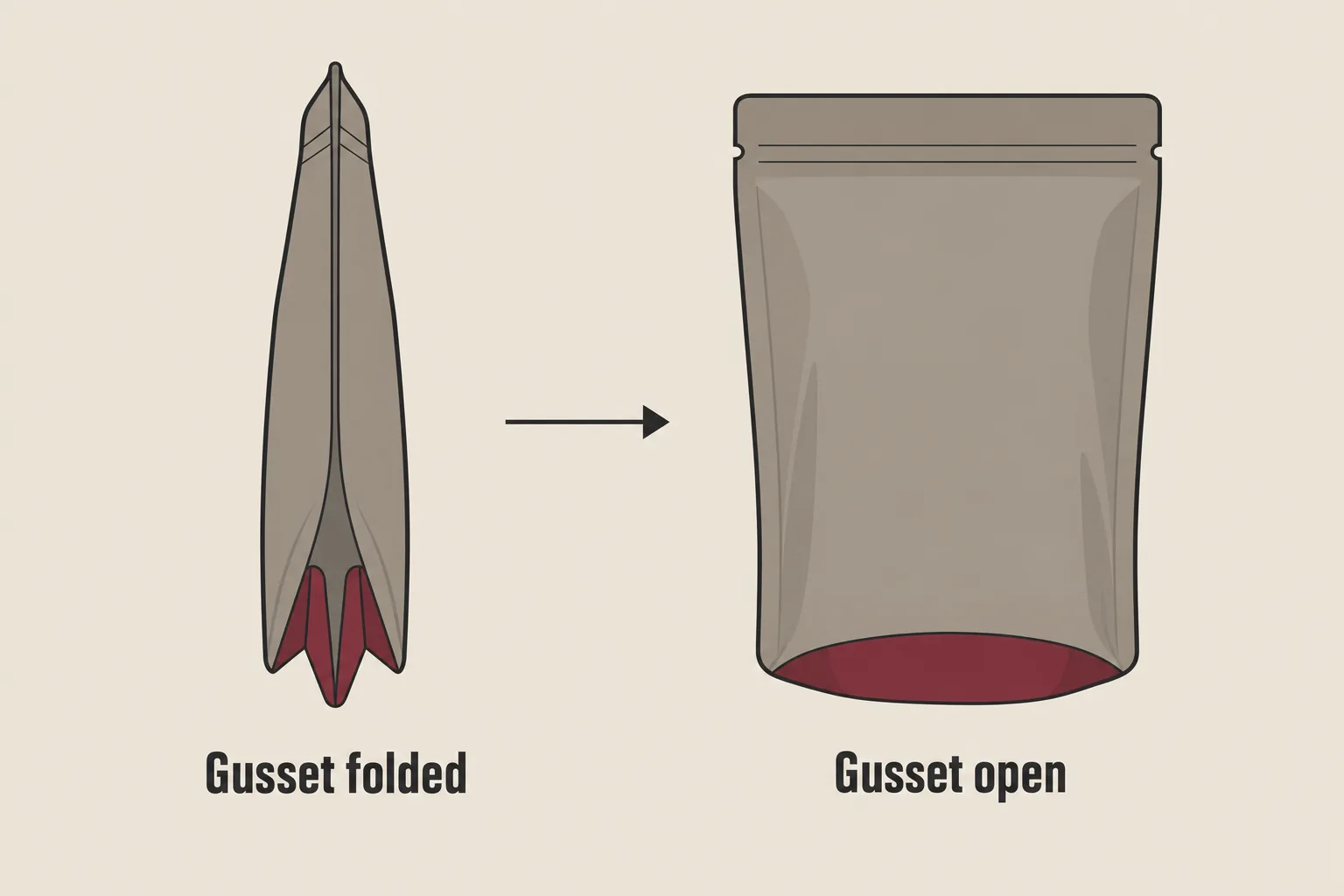
A stand-up pouch has front and back panels with a folded bottom gusset. When the pouch is filled, the gusset opens to form a base that helps it stand upright.
Common features include a press-to-close zipper, a tear notch for easy opening, a hang hole for peg display, a spout for liquids and powders, and a one-way degassing valve for freshly roasted coffee.
Stand-up pouches are available in a range of sizes and may be supplied premade or formed from rollstock, depending on the format and filling process. Co-packer capabilities, supported sizes, equipment availability, and lead times vary. Confirm line compatibility before selecting the pouch. Armour Rose’s stand-up pouch options can be reviewed alongside the project requirements.
Some suppliers use “doypack” to refer to a stand-up pouch; confirm the construction and specifications when requesting a quote.
How a Flat-Bottom Pouch Is Built
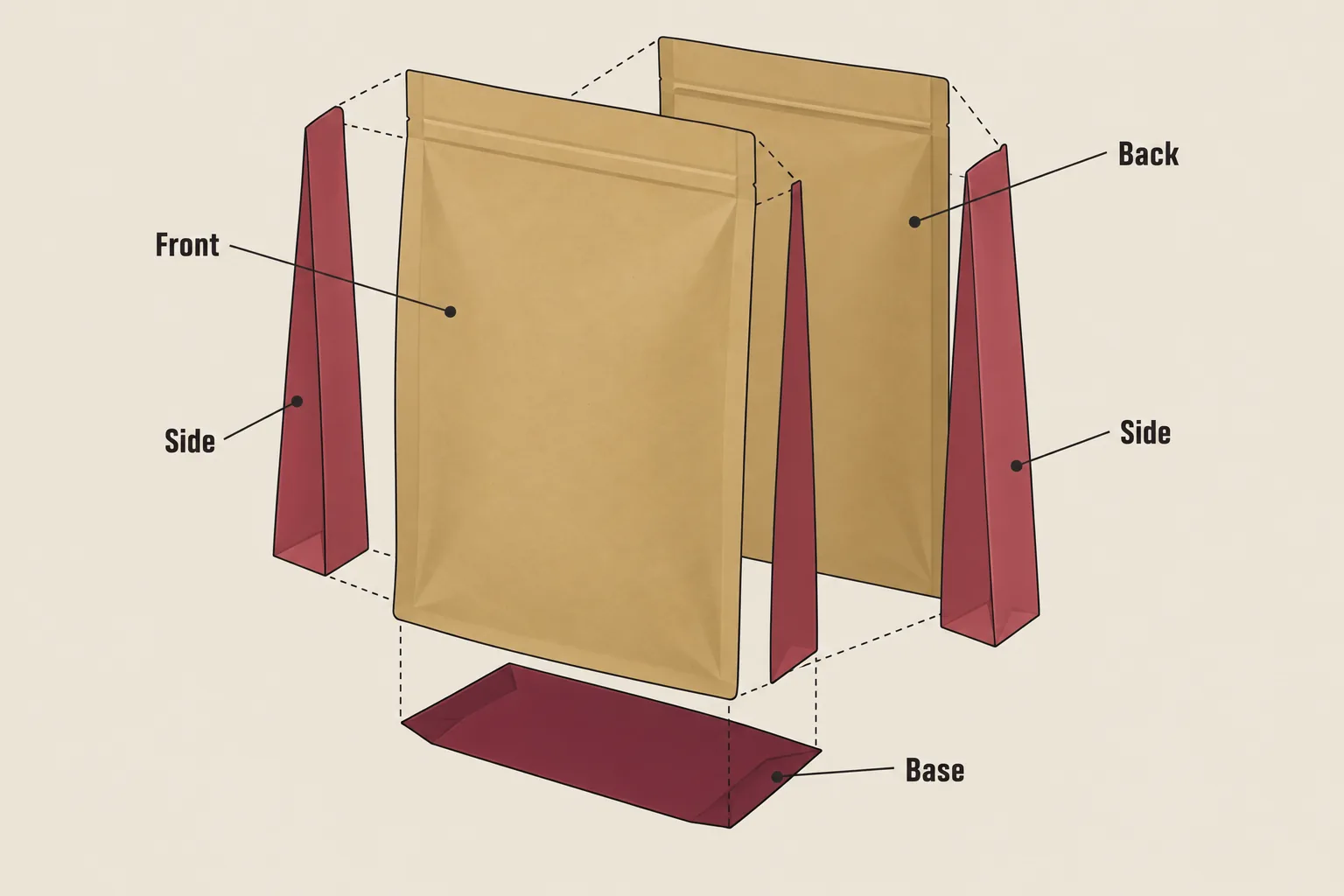
A flat-bottom pouch is commonly designed with a front, back, side panels, and a flat base. The exact panel and seam construction can vary by supplier. When the dimensions suit the fill weight, the pouch can create a squared shelf block; if underfilled, it may lose that shape. See Armour Rose’s five-panel flat-bottom pouch overview for the company’s format details.
The front, back, side panels, and base may provide additional print area, depending on the supplier’s dieline. Side panels can carry nutrition and ingredient information, approved marks, or brand copy where the available area and labeling requirements allow.
Suppliers may use terms such as box pouch, block-bottom bag, and quad-seal pouch differently. Confirm the seam layout, panel dimensions, and finished construction in the specification instead of relying on the format name alone. These details affect printable area and artwork layout.
Head-to-head: the five differences that decide the job
Related readingApplications for Stand Up Pouch PackagingRead the guide →| Factor | Stand up pouch | Flat bottom bag |
|---|---|---|
| Construction | Three panels plus a folded bottom gusset | Five panels: front, back, two side gussets, flat base |
| Print faces | Front and back | Front, back, two sides, plus the base |
| Capacity per shelf footprint | Depends on dimensions and fill weight | Depends on dimensions and fill weight |
| Shelf stability | Depends on pouch dimensions, base, and fill | Can create a squared block when dimensions suit the fill; underfilling may affect shape |
| Relative unit cost | Often lower for comparable specifications; confirm by quote | May be higher due to construction and setup; confirm by quote |
| Filling speed and setup | Depends on equipment, pouch size, and line setup | May require format-specific setup; confirm with the co-packer |
| Features | May include zipper, spout, valve, tear notch, or hang hole | May include zipper, valve, tin tie, or tear notch |
Shelf presence and print area
A flat-bottom pouch may keep a more squared presentation when its dimensions fit the fill weight. An underfilled pouch can lose that shape, so size and target weight should be considered together. A stand-up pouch can also lean or slump depending on its dimensions, base, and fill. Review a filled sample on the shelf before approving the format.
Side panels can provide space for ingredients, nutrition information, and other required or approved copy, leaving more of the front panel for the brand. The printable area depends on the exact pouch construction and supplier dieline.
Capacity, fill efficiency, and shelf footprint
A squared base and a folded gusset use shelf space differently, but a flat-bottom pouch does not automatically hold more product in every footprint. Compare the outside dimensions, target fill weight, shelf depth, and required facing with a sample pack and the retailer’s planogram.
Product bulk density and target fill weight affect how full a pouch appears. Dense products such as granola, nuts, coffee, kibble, and dried fruit may need different pouch dimensions from lighter, bulkier foods such as popcorn or chips. Review a filled sample against its net weight, required headspace, and shelf presentation.
As a starting point, assess whether the filled pouch looks appropriately sized for the product and target weight. The supplier and co-packer can help check dimensions and line fit before artwork is finalized.
Cost per unit and what actually drives it
A flat-bottom pouch can involve more material or converting setup than a comparable stand-up pouch, which may increase its cost. The difference depends on dimensions, structure, print method, features, run quantity, and supplier quote.
Factors that may affect the quote include:
- Film structure and thickness. Material type and gauge affect material use, package performance, and shipment weight.
- Print method and artwork. Conventional printing may involve plate or cylinder costs; confirm charges for the selected process.
- Tooling and setup charges. Ask whether these are one-time, reusable, or specific to the design and supplier.
- Run length. Larger quantities may spread setup costs across more units, but the effect depends on the quote and production plan.
- Features. Zippers, spouts, valves, tin ties, and hang holes may affect material, setup, or unit pricing.
- Finish. Coatings and specialty finishes can affect the quote and production steps.
Digital printing may reduce or avoid plate and cylinder charges for some short runs, trials, and multi-SKU launches. Conventional printing may be more cost-effective at some volumes. Ask suppliers to quote suitable print methods for the same specifications and quantities; the crossover depends on the project.
Total cost is the more useful frame. Unit price is one line item. Freight (which tracks weight and cubic volume), changeover time at the co-packer, film waste at startup, obsolescence when artwork changes, and cash tied up in inventory all belong in the same calculation. A lower unit price may not mean a lower total cost if the pouch affects line efficiency, case packing, freight, or inventory. Compare those factors using project-specific figures.
Before assuming a premium format is required, price against the baseline. A lay-flat pillow pouch may be a lower-cost option for some high-volume, low-weight products. Compare it with the required shelf presentation, equipment, and quote.
What to Compare in a Side-by-Side Pouch Quote
Ask suppliers to price comparable specifications. Include pouch dimensions, film structure, print method, closure or valve, target fill weight, quantity by SKU, setup or tooling charges, case pack, carton dimensions, and delivery destination. If the two formats use different specifications, label those differences so the quote comparison is clear.
Filling, Equipment, and Co-Packer Requirements
Two common ways to fill a pouch are using premade bags or forming the pouch from rollstock on a form-fill-seal line. The suitable method depends on the co-packer’s equipment and the pouch specification.
Premade pouches arrive finished, and a rotary filling machine picks them up, opens, fills, and seals them. Form-fill-seal starts from a roll of printed film and forms the bag on the line immediately before filling.
Filling capability varies by pouch construction, machine, size, and co-packer. Premade pouches and roll-fed form-fill-seal formats also use different processes. A flat-bottom pouch may need specific change parts or setup, but confirm the requirements and expected line performance for the exact machine and pouch.
Before approving artwork or a dieline, confirm the co-packer’s machine model, supported pouch dimensions, closure and notch placement, registration requirements, and any change parts or line trial needed. This can help identify fit issues before production; the supplier and co-packer should confirm timing and cost implications.
Barrier, shelf life, and product protection
Barrier performance depends on the full film structure and seal design, not pouch shape alone.
Either format may be specified for a product’s oxygen and moisture requirements, but confirm that the complete package meets the product’s shelf-life needs through appropriate testing.
The usual options:
- Clear high-barrier laminates when you want the product visible and still need protection.
- Metallized layers for strong barrier at moderate cost, with an opaque or reflective look.
- Foil-based structures may provide high barrier protection for some products, but suitability, cost, and end-of-life options depend on the full package specification.
Products can have different sensitivities to oxygen, moisture, light, and aroma loss. Identify the product’s shelf-life target and confirm the film structure and seal requirements with the supplier. Some freshly roasted coffee packages use a one-way degassing valve; whether either pouch format suits the product depends on valve placement, fill weight, equipment, and presentation. See Armour Rose’s coffee packaging options when comparing formats.
Ask which food-contact documents are available for the selected material and manufacturing partner. Confirm that the information meets the requirements for your product and sales markets; Health Canada’s packaging materials guidance explains Canadian requirements and responsibilities.
Sustainability and recyclability
Recyclability depends on the full package design and the collection programs available where the product is sold. A mono-material structure may be designed for a recycling stream, but the material name alone does not establish that a finished pouch is recyclable. The Association of Plastic Recyclers’ PE flexible packaging design guidance explains why package features need to be assessed together.
Three practical cautions:
- A material change can affect production. A new film structure may require adjustments to sealing or line settings and can change barrier performance. Ask the supplier and co-packer what testing or production trial is needed before making the change.
- Collection and claim rules vary by market. Check local acceptance for the finished pouch and qualify claims as needed. The FTC Green Guides summary provides U.S. guidance, while the Competition Bureau of Canada’s environmental-claims guidance covers Canadian claims.
- Do not make a claim the structure cannot support. Label claims carry legal and reputational risk. Specify the structure first, then write the claim.
A flexible pouch may use less packaging material by weight than some rigid alternatives, but compare packages that protect and contain the same amount of product. Right-size the pouch to its fill and validate any material reduction against performance, shipping, and product-protection requirements.
Which format fits which product category
- Coffee and tea. A flat-bottom pouch may suit products that benefit from a squared display, valve placement, or additional panel space. Stand-up and side-gusset formats may also fit; compare the fill, equipment, and retail needs.
- Granola, cereal, dried fruit, and nuts. Compare pouch stability at the target fill weight, shelf presentation, reseal needs, and cost across the required sizes.
- Chips, popcorn, and puffed snacks. Stand-up and lay-flat pouches are possible options. Product protection, fill volume, line compatibility, and cost help determine the fit.
- Protein bars and bar-format multipacks. Individual bars may use printed film, while folding cartons or trays can package multipacks. Pouch formats may suit bite-size products; confirm dimensions and co-packer requirements.
- Pet treats and supplements. Either format may fit depending on fill weight, reseal needs, product protection, and presentation.
- Specialty beverages and powdered drink mixes. A spouted stand-up pouch may suit some liquids; powders may use either format depending on fill, dispensing, barrier, and equipment requirements.
Minimum order quantities, tooling, and lead times
Minimum quantities and tooling charges depend on pouch construction, print method, number of SKUs, and supplier. A more complex format may involve additional setup, but request project-specific minimums and charges rather than assuming one format always has a higher minimum.
Lead time may include artwork approval, proofing, tooling, printing, converting, and transit. Ask suppliers which stages their estimate includes and confirm the start and end points before comparing quotes.
Two planning points to discuss with suppliers:
Ask about current capacity. Armour Rose identifies February through April as a slower period for its business. Supplier schedules still vary by format and project, so confirm availability before planning a redesign, trial, or format change.
Plan across SKUs where specifications allow. Ask whether compatible designs can share a structure or be grouped in a production plan. Any setup, cost, or inventory benefit depends on the artwork, quantities, supplier, and order terms.
A practical decision checklist
Work through these six questions in order:
- How dense is the product? Review a filled sample at the target weight. If the package looks underfilled or unstable, compare dimensions and formats with the co-packer.
- What retail price tier are you targeting? Consider whether the shelf presentation, package features, and cost support the intended price point.
- What do the retailer and planogram require? Shelf height, facing width, and units per facing may decide it for you.
- What can your co-packer run? Confirm supported pouch dimensions, change parts, line availability, and any trial requirements for each format.
- What is your annual volume by SKU? Ask suppliers to compare relevant print methods, minimum quantities, setup charges, and run-size pricing.
- What sustainability commitments have you made? Confirm whether the complete package structure and local collection options support the intended claim.
Use the answers to compare formats with your co-packer and supplier. A brand may choose one format across its range or use different formats for different SKUs; the decision depends on the specifications, volumes, and commercial goals.
Use the quote checklist above to request pricing for each format that meets your product, retail, and equipment requirements.
How Armour Rose Helps Brands Compare Pouch Formats
Armour Rose is a Toronto-based custom packaging partner serving food and beverage companies across Canada and the United States. It manages sourcing and production through a vetted manufacturing network across multiple packaging categories. The manufacturing location and available equipment depend on the project. Learn more about Armour Rose’s end-to-end sourcing and production management service.
The A-R-G Process (Ask First, Resolve Second, Grow Third) reviews current packaging, product, and co-packer requirements, purchase frequency, quantities, and delivery locations. It can then present solution options and pricing estimates for discussion and adjustment.
A project may include multiple packaging categories, such as pouches, folding cartons, corrugated trays, displays, and labels. Armour Rose’s single-source model can help coordinate requirements across manufacturing partners. Confirm in the proposal who is responsible for supplier schedules, quality checks, documentation, and delivery milestones. The company’s About page states it has 25+ years of industry experience.
If you are comparing a flat-bottom pouch and a stand-up pouch, schedule a call or request a quote with your product, fill weight, volume, and co-packer requirements. Armour Rose can review options for your project.