



















A stand-up pouch is a flexible package with a bottom gusset that helps it stand when filled. Applications for stand up pouch packaging range from snacks, coffee, and drink mixes to pet treats, household products, and personal care. Armour Rose primarily serves food and beverage brands; the other categories below illustrate broader market uses, with fit depending on product requirements and available specifications.
Why So Many Products Use Stand Up Pouches
The format can suit products and retail plans for several practical reasons:
- It can stand on the shelf. A bottom gusset forms a base when the pouch is filled, although stability depends on pouch design, dimensions, and fill weight.
- Empty pouches can be stored compactly. Pre-made pouches take less space than filled packages, though storage and shipping needs depend on the order and format.
- It offers printable panels. Front and back panels can carry product information and brand graphics; usable print areas depend on seals, closures, and any clear window.
- The structure can be selected for the product. Laminated films can combine layers for print, seal, and barrier needs. The right structure depends on the product, shelf-life target, and filling process.
Food Applications
Food uses include snacks, coffee, tea, powders, and other products where a flexible pack, resealable opening, or selected barrier properties suit the product. Armour Rose’s primary food and beverage audience includes snack and bar brands.
Snacks include chips, popcorn, cookies, brownie bites, granola, trail mix, nuts and dried fruit.
Resealable zippers can make multi-serve and family-size snack packs easier to close between uses. A zipper does not replace the barrier structure or prove that a product will stay crisp after opening.
Better-for-you and bar brands use pouches for multipacks of individually wrapped protein, breakfast and nut bars, and for bite-size bars sold loose in a bag.
Coffee, tea, protein powder, flour and baking mixes may need structures selected for aroma or moisture protection. Some coffee pouches use a one-way degassing valve; the format and valve should be selected for the coffee and filling process.
A clear window lets shoppers view the product. Because a window changes the package structure, confirm that the full pouch still provides the required protection for the product.
Explore custom stand-up pouches for food products, and Armour Rose’s snack packaging options for related formats.
Beverage and Liquid Applications
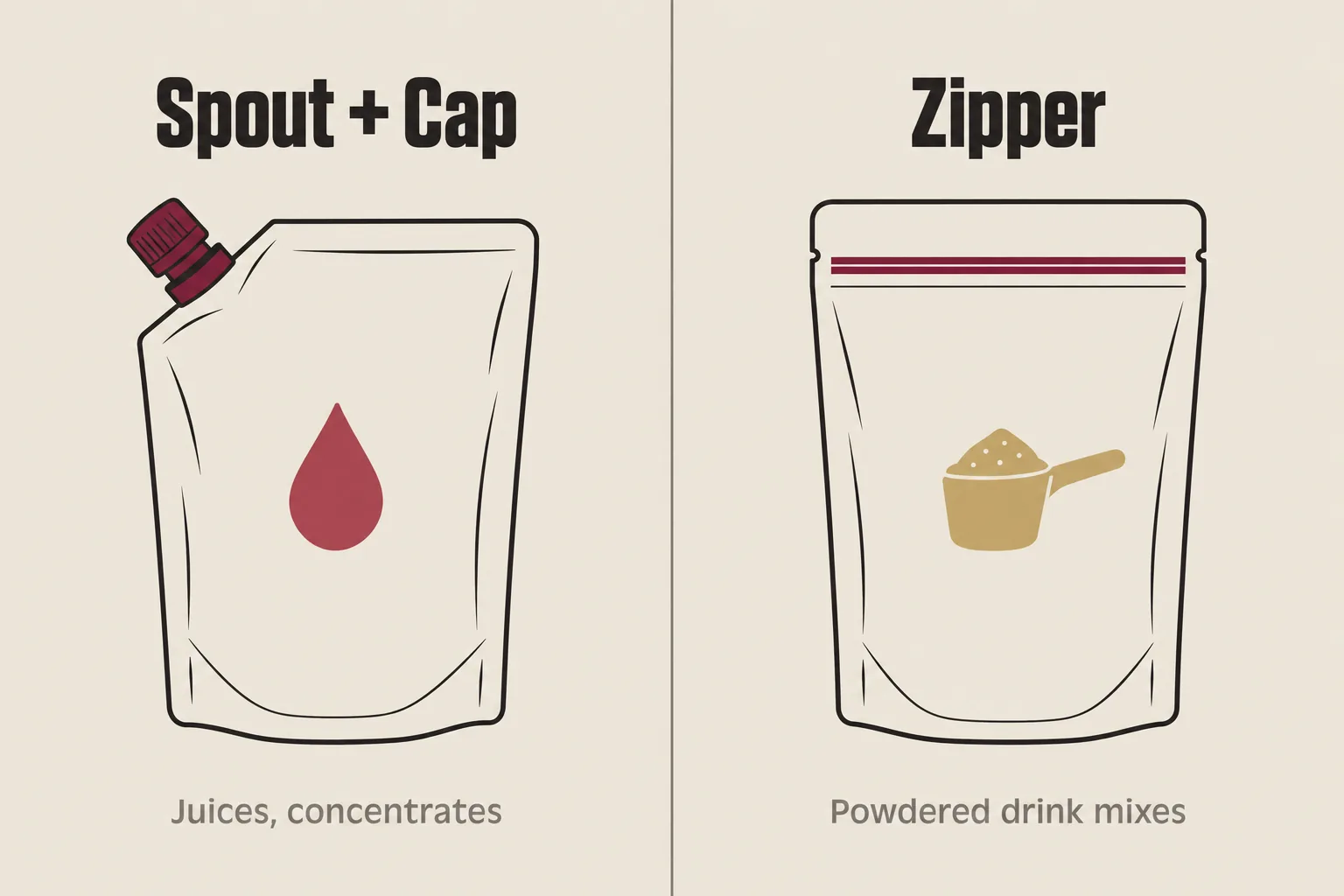
Specialty beverage brands use pouches in two main ways:
- Spouted pouches with screw caps for juices, smoothies, and drink concentrates.
- Zippered pouches for powdered drink mixes and electrolyte blends, where customers scoop a serving and close the bag between uses.
Sauces, dressings, syrups, jams, and some baby foods may use spouts or tear-open tops for pouring or dispensing. For liquids, assess the product, spout and cap, seal design, filling process and distribution conditions. Run trials on the intended line before approving a production order; no pouch should be assumed leak-proof without testing.
Related readingFlat Bottom Bag vs Stand Up Pouch: How to ChooseRead the guide →Run trials on the intended line before approving a production order; no pouch should be assumed leak-proof without testing.
Pet Food and Treats
Dry kibble, jerky, chews and training treats may fit this format. Hard or sharp pieces can increase puncture risk, so discuss the product, fill weight, film structure, and package testing with the supplier. A zipper supports repeat opening, but it does not guarantee odor control or freshness after opening. Larger bags may use wider bases or handles, if supported by the package design and fill weight.
See Armour Rose’s pet food and treat packaging options for other formats that may suit different fill sizes.
Household, Cleaning, Garden and Agriculture Products
These are broader market examples; the right package depends on product compatibility, storage, handling and destination-market requirements.
- Refill pouches for hand soap, dish soap and laundry detergent, using spouts and sturdy seals.
- Dishwasher and laundry pods may use resealable pouches, subject to product-specific safety, closure and labeling requirements.
- Seeds, fertilizer, plant food and soil additives may use pouches selected for moisture exposure, product weight and shipping conditions.
- Hang holes may support peg display when the pouch structure and loaded weight can safely support the pack.
Cosmetics and Personal Care
Bath salts, body scrubs, face masks, and soap or lotion refills may use stand-up pouches. Matte or gloss finishes, tear notches, and smaller formats can support different presentation and use needs. Select materials and seals for the formulation and intended use rather than relying on appearance alone. Armour Rose also serves the health and beauty category; see its health and beauty packaging solutions.
Matching Pouch Features to Your Product
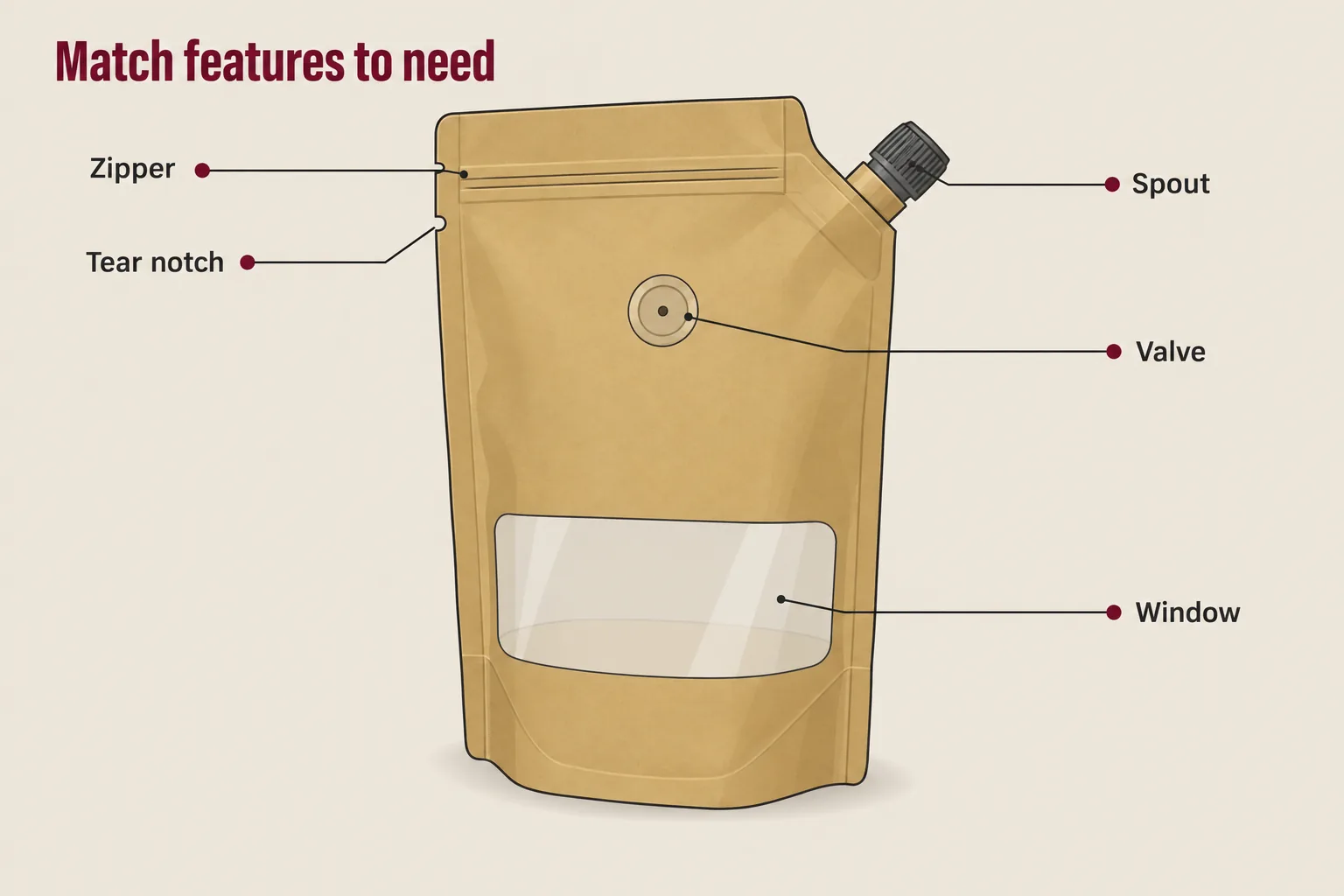
Start with four questions:
1. Is the product dry, oily, liquid, powdered, or sharp?
2. How long must it meet its quality requirements before and after opening?
3. Where will it be displayed: on a shelf, on a peg, or inside a carton?
4. How will it be filled: by hand, on your own line, or at a co-packer?
Then consider features that solve a real use or production need:
| Feature | Purpose |
|---|---|
| Zipper | Recloses after opening |
| Tear notch | Easy first opening |
| Spout and cap | Support controlled dispensing for suitable liquids or pastes. |
| Window | Shows the product, subject to barrier and product-protection needs. |
| Degassing valve | Can release gas from freshly roasted coffee; confirm it fits the product and pack design. |
| Hang hole | Supports peg display if the pouch can carry its filled weight. |
| Barrier layers | Selected for product-specific oxygen, moisture, light, or aroma requirements. |
Confirm Pouch Size and Co-Packer Fit
Before approving pouch dimensions, confirm the filled width, height, and base, usable capacity, headspace, seal area, zipper position, and opening and filling equipment. Seals and closures reduce usable space. Ask the co-packer to review the dimensions and line requirements, and test samples using the intended product and process.
For food products sold in the United States, confirm that packaging materials are suitable for their intended food-contact use. The FDA’s food ingredients and packaging guidance describes its food-contact-substance framework. Confirm applicable requirements for other markets with qualified suppliers or regulatory professionals. In Canada, Health Canada oversees the safety of food packaging materials.
Some suppliers offer mono-material or other structures designed with recycling in mind, but acceptance depends on the package and local collection and processing systems. Substantiate environmental claims for the markets where the product is sold; the FTC Green Guides explain U.S. guidance for environmental marketing claims.
| Format | Description |
|---|---|
| Stand-up pouch | A general upright pouch format with a bottom gusset; the base shape, stability, and usable volume vary by design. |
| Flat-bottom pouch | An upright format with a more box-like base and printable panels; it is a format within the wider stand-up pouch family. |
| Flat pouch | A pouch without a standing base, often used for single servings, samples, or products packed inside an outer carton. |
A pouch is not always the answer. Products that need crush protection may be better in a folding carton, and many bars are better served by printed film wrappers. Compare the folding carton option when the product needs a more rigid retail pack or a multipack format.
Pouches Are One Part of a Complete Packaging Program
Few brands buy pouches alone. A typical snack or bar brand also buys printed film for wrapped bars, folding cartons for multi-packs, and corrugated trays or ready-to-ship retail displays.
Armour Rose is based in Toronto and serves customers across Canada and the United States. It manages sourcing and production through a vetted manufacturing network and coordinates options across product lines such as printed films, folding cartons, corrugated trays, displays, and pouches. That gives customers one point of coordination across categories; the manufacturing partner, specifications, and responsibilities should be confirmed for each order.
The goal is to consider total cost and service requirements alongside unit price. Reviewing specifications, purchasing patterns, delivery needs, and related packaging lines may identify opportunities to streamline a program, but any savings depend on the customer’s actual requirements and quotes.
The A-R-G Process® keeps the work structured:
- Ask First: we review your current packaging, co-packer, and equipment requirements, order frequency, and delivery locations.
- Resolve Second: we identify supply or strategy gaps and propose options with pricing estimates.
- Grow Third: we work with customers over time as packaging requirements change.
If you already buy film or cartons elsewhere, a pouch project can be an opportunity to review your wider packaging program. Contact Armour Rose to discuss your packaging requirements.