









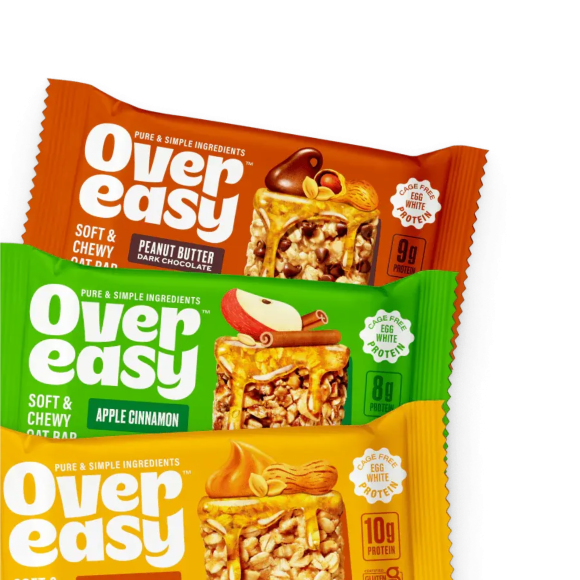
















A stick pack is a narrow, single-serve flexible package used for powders, granules, and selected liquid products. It may look simple, but film width, pack length, barrier level, seal design, filling equipment, and secondary packaging all affect whether the format works from pilot run to retail launch.
This comprehensive guide to stick pack packaging explains how the format is built, which dimensions are useful as starting points, how stick packs compare with sachets, how they are filled, and what a food or beverage brand should confirm before ordering film or tooling.
Stick Pack Packaging at a Glance
| Question | Practical answer |
|---|---|
| What is it? | A narrow tube-shaped pack formed from printed rollstock and sealed around a measured serving. |
| What products can use it? | Common examples include drink powders, granules, seasonings, selected liquids, and other products that suit the fill system and barrier structure. |
| What controls the size? | The target fill weight or volume, bulk density, finished pack width and length, film structure, and the filling line. |
| What else may be required? | A folding carton, corrugated case, retail-ready tray, or display may be needed for retail, shipping, or merchandising. |
| What should happen before a full order? | The product, film, artwork, filling line, seal performance, and secondary packaging should be reviewed and trialled before final approval. |
What Is Stick-Pack Packaging?
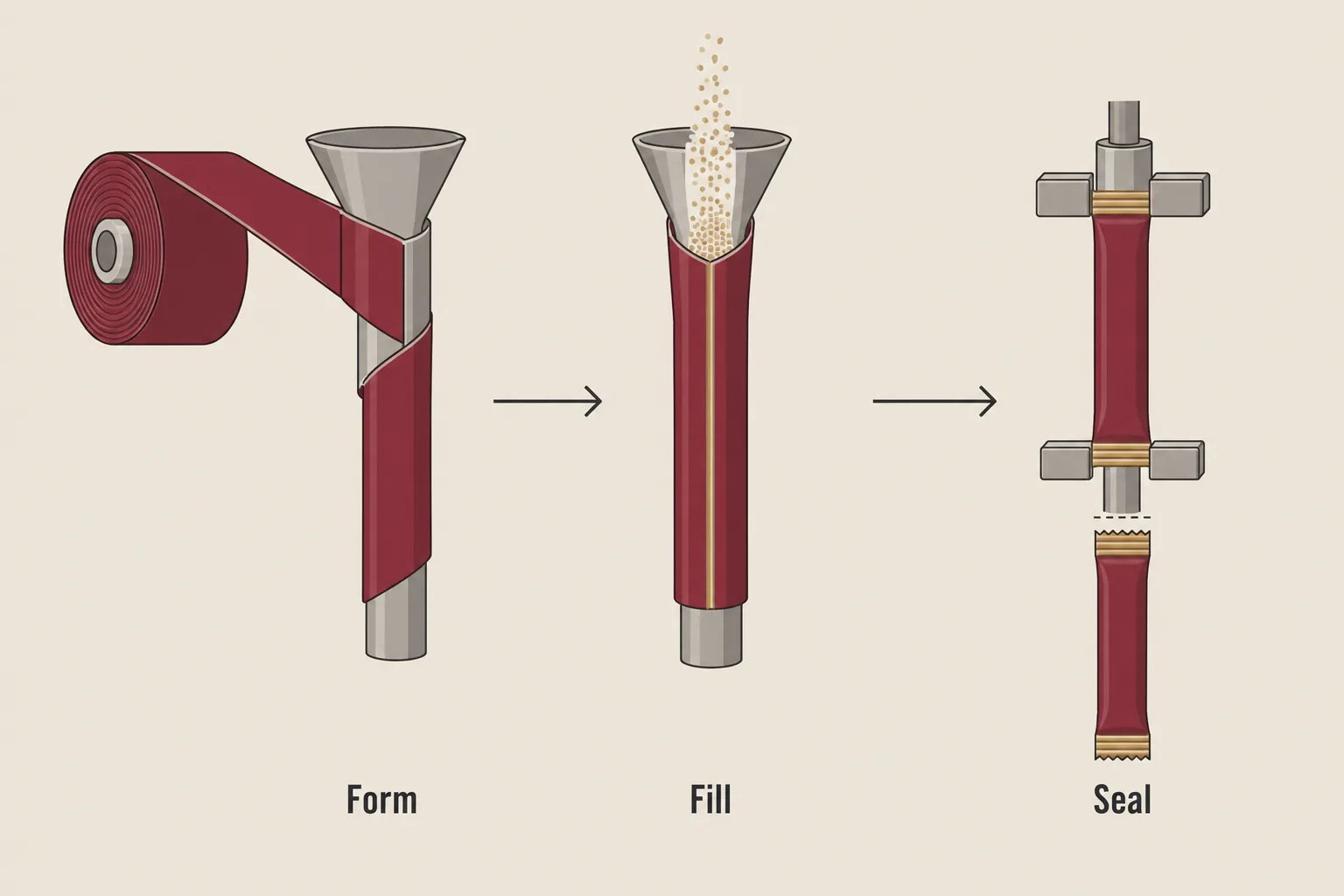
A stick pack is usually a slim, tube-shaped, single-serve pouch formed from a continuous web of printed film on form-fill-seal equipment. The film wraps around a forming tube, its edges meet and seal along the back, and the pack is sealed across both ends.
The finished pack holds a measured dose and is opened by tearing or cutting one end. Its narrow opening may support controlled pouring into a bottle, cup, or shaker, depending on the tear feature, product flow, and opening size.
Common food and beverage applications include hydration and electrolyte powders, protein or collagen servings, greens blends, instant coffee or matcha, seasoning portions, honey or syrup, and selected liquid shots. Final suitability depends on the product, fill equipment, shelf-life target, and packaging structure.
For a brand, a single-serve format can support portion control, sampling, subscription boxes, foodservice, hospitality, travel, or an additional SKU. Those benefits should be weighed against the film specification, minimum run, filling-line requirements, and total landed cost.
Because stick packs are a printed-film application, they should be planned alongside the rest of the flexible packaging program rather than treated as an isolated artwork project.
How a Stick Pack Is Built: Anatomy and Materials
The back seal
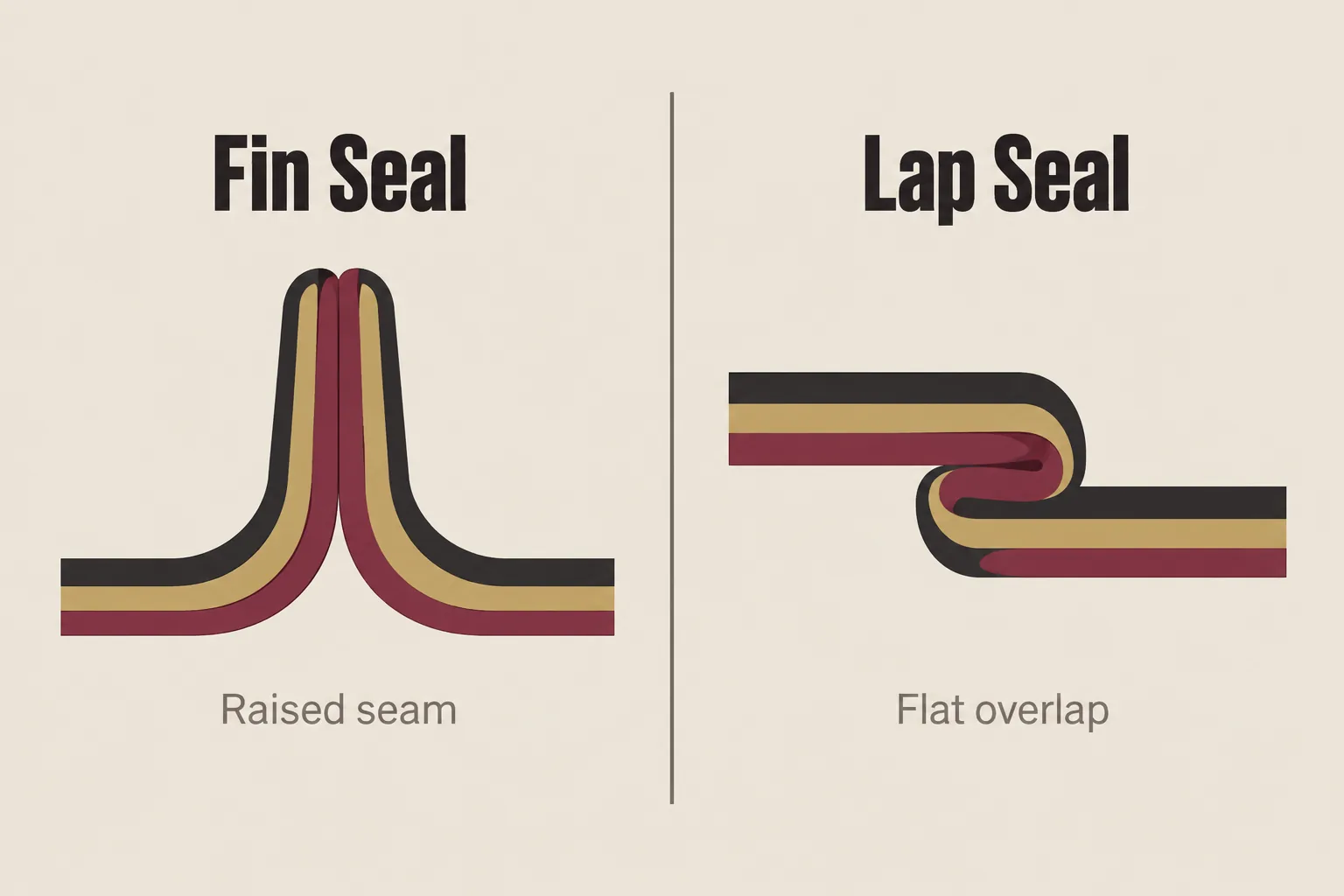
Two common back-seal constructions are fin seals and lap seals. A fin seal joins the inside sealing surfaces together, leaving a raised seam along the back. A lap seal overlaps the film edges and creates a flatter seam. The exact construction depends on the filling equipment and the selected laminate.
A lap seal may use less film across a particular design, but the result is not universal. Depending on the laminate and print arrangement, a film layer that is not intended for product contact may sit near the product side. Confirm the seal structure, ink position, and food-contact documentation with the converter and filling partner before approval.
Seal style also affects web width, registration, artwork placement, and how the finished pack behaves on the line. Confirm which construction the intended equipment can run before artwork is finalised.
End seals and fill behaviour
The top and bottom seals are crimped across the pack. Product caught in a seal area can interrupt the bond, especially when a fine or fatty powder puffs during dosing or settles before the jaws close. Dosing accuracy, drop timing, seal temperature, pressure, and dwell time all influence seal performance.
A fill trial should check seal integrity, opening behaviour, product loss, and visible powder in the seal area before a production order is released.
The film structure
Stick-pack film is commonly made from two or more layers, with each layer serving a different purpose:
- An outer layer that carries the print and protects the structure during handling.
- A barrier layer, which may be foil, metallized film, or a polymer barrier, to help manage moisture, oxygen, aroma, or light. The product and shelf-life target determine the required level of protection.
- An inner sealing layer that bonds under heat and pressure to form the longitudinal and end seals.
Film structures without foil and structures designed around a single material may be available for some products. They may suit certain collection or recycling systems, but the finished barrier, seal performance, local program, and product requirements must be confirmed before making a sustainability claim. The Flexible Packaging Association provides general industry context; it is not a substitute for a structure-specific technical review.
Seal integrity, opening, and finish
Tear notches, laser scoring, and cut styles influence where and how the consumer opens the pack. The opening must balance easy access with protection against accidental leakage before use. Ask the filling partner to evaluate tear force, seal strength, leaks, and product evacuation on representative samples.
Matte, gloss, and soft-touch finishes affect the visual result. Print method, colour count, run length, artwork changes, and supplier capability can affect the cost and appearance, so the best option should be selected from an approved proof or press sample rather than from a general rule.
Illustrative Stick-Pack Sizes and Dimensions
There is no single universal stick-pack size. The starting point is the product’s target fill weight or volume, but bulk density, product flow, headspace, forming equipment, seal width, and the intended carton all affect the final dimensions.
The table below gives illustrative starting ranges for planning conversations. They are not industry standards or a substitute for a physical fill trial.
| Example format | Illustrative finished pack width | Illustrative finished pack length | Example applications |
|---|---|---|---|
| Micro-dose stick | 15–23 mm | 50–100 mm | Sweetener, seasoning, flavouring, and other small measured portions |
| Standard drink-mix stick | 23–30 mm | 95–130 mm | Hydration, greens, instant beverage, and similar powder servings |
| Larger-fill stick | 35–50 mm | 130–170 mm | Larger powder portions or selected liquid applications |
Ask the supplier to define whether “width” means finished pack width, front-face width, or film web width. Web width is a machine and lane-layout measurement; it should not be assumed to equal the visible front face of the finished stick.
Bulk density means how much space a given weight of product occupies. Two powders with the same target weight may need different pack volumes because one is light and aerated while the other is dense and granular. Run a bulk-density check and a physical test fill before locking the film width and repeat length.
Changing the repeat length, seal layout, or artwork after approval may require new tooling or printing setup. Confirm headspace as well: a pack filled too close to the top may not seal cleanly or open as intended. Check the finished stick against the carton, case, tray, and display before those formats are finalised.
Stick Pack vs Sachet: Choosing the Right Format
The terms overlap. “Sachet” is a broad term for a small flexible pouch, while “stick sachet” is commonly used for a sachet made in a narrow stick format. Because suppliers may use the terms differently, confirm the actual shape, seal arrangement, dimensions, and filling method on the specification.
| Decision factor | Stick pack | Sachet |
|---|---|---|
| Shape | Narrow tube with a longitudinal back seal and two end seals. | Flat pouch commonly sealed on three or four sides. |
| Product fit | Often suits free-flowing powders, granules, and selected thin liquids. | Often suits powders, gels, sauces, creams, and products that benefit from a wider opening. |
| Dispensing | The narrow opening may pour into a bottle or cup with less aim required. | The wider opening may be better when the product is squeezed or spread. |
| Print area | The long, narrow face requires careful artwork and copy planning. | The broader face generally provides more room for branding and required copy. |
| Production | Commercial production commonly uses rollstock on multi-lane vertical form-fill-seal equipment. | Production method varies; some sachet formats can use horizontal equipment or preformed packs. |
| Reclosure | Usually single-use, with no zipper or built-in reclosure. | May also be single-use; reclosure depends on the specific construction. |
Choose a stick pack when narrow dispensing, a measured single serving, and the available filling line suit the product. Consider a sachet when the product needs a wider opening, more front-panel space, a different production method, or a smaller pilot approach. Confirm the decision with a product sample and the filling partner.
How Stick Packs Are Made and Filled
A typical multi-lane stick-pack line follows this sequence:
1. Printed rollstock is unwound and, where required by the equipment, divided into lanes. 2. Each film path is guided over a forming tube and shaped into a tube. 3. The longitudinal back seal is formed. 4. The bottom seal is crimped across the pack. 5. The measured product is dosed through the forming tube. 6. The top seal is formed, and the finished stick is cut from the web.
Output varies with lane count, pack size, product characteristics, dosing method, changeover time, and the equipment configuration. A machine supplier’s published rate may illustrate one configuration, but it should not be treated as an industry-wide production standard.
Dosing equipment is matched to the product. Auger systems may be used for powders that require controlled dosing, volumetric cups may suit free-flowing granules, and pumps may be used for liquids. The filling partner should confirm the appropriate system and test the product on the intended line.
Film specification and machine specification must be developed together. Web width, repeat length, seal-temperature range, roll diameter, core size, unwind direction, registration-mark position, and seal-jaw requirements can all be line-dependent.
Related readingSachets and Stick Packs Specified To Your FillerRead the guide →A film that looks appropriate on paper may still need adjustment after a machine trial.
For many small and mid-size brands, the filling line is operated by a co-packer or contract manufacturer. Armour Rose’s co-manufacturer partnerships service is relevant when packaging specifications need to be coordinated with the partner that will fill the product. The film should still be qualified on that specific line before a full production order.
Stick Packs for Supplements and Specialty Products
Stick packs are also used for supplement powders, hydration products, and other specialty products. These programs may require closer attention to moisture sensitivity, dosage consistency, shelf-life evidence, and the compatibility of the finished structure with the product.
This article focuses on food and beverage packaging. For Canadian products, use the Canadian Food Inspection Agency’s food-labelling guidance for industry as a starting reference. For products sold in the United States, the FDA’s Food Ingredients & Packaging resources provide regulatory context, including food-contact packaging topics. These resources do not replace product-specific testing, supplier documentation, or a qualified regulatory review.
Secondary Packaging: What Goes Around the Sticks
For retail multipacks, individual sticks are commonly placed in a folding carton or another secondary package. The carton should be designed around the confirmed stick dimensions and count, not selected before the primary pack is understood.
The folding carton. Decide the number of sticks per carton and whether they will lie flat or stand upright. Then review carton proportions, opening style, board specification, artwork legibility, and the visual relationship between the carton and the film.
The corrugated shipper. Set the case count, stacking arrangement, protective requirements, and whether the shipper should also function as a retail-ready tray.
Displays. Countertop, floor, and pallet displays may be relevant for sampling, club, foodservice, or retail merchandising programs. Their dimensions depend on the carton and case configuration.
A practical sequence is: confirm the stick, design the carton, set the case, then review the pallet pattern and delivery requirements. Once these dimensions are known, shipping, inventory, and delivery planning should be checked against order frequency, storage capacity, and delivery locations.
When film, cartons, and corrugated packaging come from unconnected suppliers, the brand team may need to reconcile dimensions, colour targets, specifications, and timing across separate workstreams. Coordinating those requirements earlier can reduce avoidable rework.
Costs, Lead Times, and Launch Planning
Stick-pack cost can be affected by film structure and barrier level, print process and colour count, tooling or cylinder charges, run length, lane count, changeovers, material waste, packing, freight, and the secondary packaging required for the sales channel.
Separate one-time costs from recurring costs. Tooling, cylinders, plates, artwork setup, and press preparation may be concentrated in the first order or in an artwork change. Compare the expected first order with the repeat-order economics before deciding on a format.
Lead times vary by structure, print process, supplier, tooling status, artwork approval, and the availability of a machine trial. Build time into the schedule for artwork review, press approval, product testing, line qualification, carton or case approval, and delivery to the required locations. Use a confirmed supplier schedule rather than a generic estimate.
Printed film minimums may be quoted by linear metres, kilograms, or another supplier-specific measure rather than by finished pack count. The number of sticks produced depends on repeat length, lanes, waste, and the approved run configuration. Ask for the expected finished-pack yield in the quotation.
Use total landed cost, not only the film price per thousand, as the comparison point. Include film waste, changeover time, line downtime, damaged cases, rework, storage, customs or brokerage where applicable, and freight routing. A slightly lower unit price may not be the lower-cost program if the format is difficult to run or ship.
Common Stick Pack Mistakes and How to Avoid Them
- Designing artwork before confirming web width and repeat length. The artwork may need to be redrawn, or the film and tooling may need to be revisited.
- Ignoring bulk density. The pack may not hold the target fill volume, leading to a size change after the fill trial.
- Choosing a low-barrier structure for a moisture-sensitive powder. Clumping, texture changes, or shorter shelf life may result; validate the structure against the product.
- Failing to qualify the film on the actual filling line. Unwind direction, registration, seal settings, and dosing behaviour should be checked with the co-packer.
- Overloading the narrow face with copy. Review a physical mock-up at the intended viewing distance and confirm all required copy remains legible.
- Sourcing film, cartons, and corrugated packaging without a shared specification plan. Separate vendors can create avoidable reconciliation work for the brand team.
- Treating one supplier or one production plan as the entire risk strategy. Ask how specifications, documentation, inventory, delivery, and contingency planning will be coordinated across the packaging program.
Stick-Pack Specification Checklist Before Ordering
Prepare these details before requesting a quote or approving tooling:
- Product type: powder, granule, liquid, gel, or another format.
- Target fill weight and/or volume, plus a representative product sample when available.
- Bulk density, flow behaviour, moisture sensitivity, and shelf-life target.
- Required barrier properties and the intended sealing layer.
- Target finished pack width, length, headspace, tear feature, and artwork area.
- The filling machine, lane layout, registration requirements, and co-packer contact.
- Expected order frequency, annual or campaign volume, delivery locations, and storage limits.
- Carton count, corrugated case requirements, display needs, and retail or foodservice channel.
- Canadian, U.S., or other market requirements that the finished pack must be reviewed against.
This checklist gives the packaging supplier enough context to compare structures and formats on a practical basis instead of quoting a film size without understanding the product or the line.
How Armour Rose Supports a Stick-Pack Packaging Program
Armour Rose Group is a Toronto-based custom-packaging sourcing and brokerage partner for food and beverage brands across Canada and the United States. Through third-party manufacturing partners, it coordinates flexible films and pouches, folding cartons, corrugated packaging, labels, displays, and related packaging requirements.
Its consultative process starts by reviewing the current packaging, product and fill requirements, co-packer or equipment needs, purchase frequency, quantities, and delivery locations. It then develops specification options and pricing estimates for customer review, adjusts the solution where required, and coordinates the order process.
The intended benefit is a consistent, predictable, and reliable coordination process across connected packaging requirements. Armour Rose can provide a single point of coordination while production remains with third-party manufacturers. Supplier specifications and documentation can be coordinated for review; the buyer remains responsible for confirming food-contact, labelling, sustainability, recycling, and other applicable requirements for the intended market.
Brands that need help aligning multiple packaging suppliers can review Armour Rose’s packaging sourcing and brokering service.
Ready to compare a stick-pack format or review an existing program? Request a packaging review with the product type, fill weight or volume, co-packer details, target quantities, delivery locations, and any current film or carton specifications.