














Flexible films and pouches designed for freshness, durability, and shelf appeal.

Custom boxes and sleeves built for protection, display, and a premium presentation.

High-quality labels and shrink sleeves that elevate your product and ensure compliance.

Displays and trays designed to capture attention and boost conversions.

Food-safe containers and takeout bags built for freshness, durability, and on-the-go convenience.

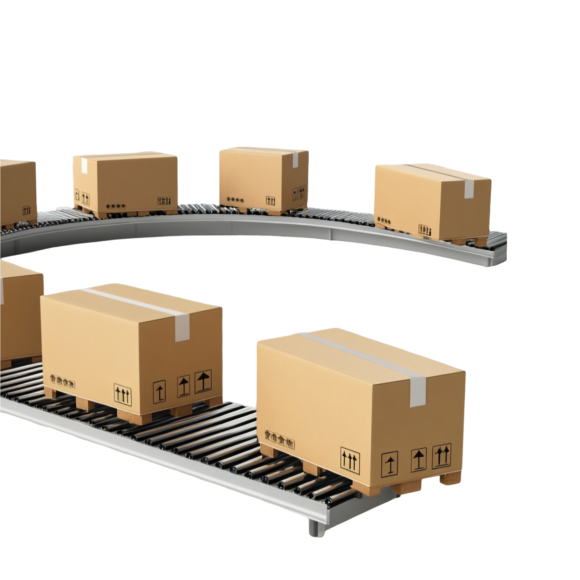
Corrugated boxes are the workhorse of the packaging world and your number-one choice for safely delivering products to your customers.


Packaging designed to keep coffee fresh, protected, and shelf-ready.
Flexible packaging solutions that preserve aroma, freshness, and quality.
Durable, eye-catching packaging built for snack brands of every size.
Protective packaging that helps maintain crunch, freshness, and shelf appeal.
Custom packaging made to keep popcorn fresh, crisp, and ready to stand out.
Reliable packaging that protects texture, freshness, and product presentation.
Packaging solutions designed to protect baked goods and enhance presentation.
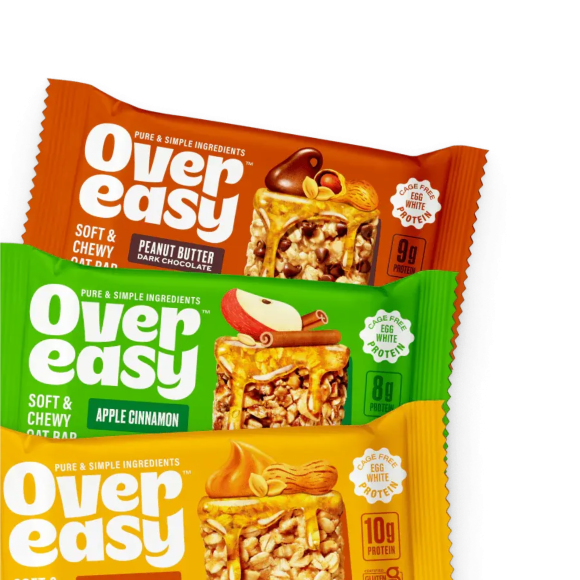
High-performance packaging for bars that need freshness, durability, and impact.
Vibrant packaging designed to protect and showcase confectionery products.
Secure, professional packaging built for supplements and wellness products.
Freshness-focused packaging for dried fruits, nuts, and healthy snacks.
Durable packaging designed to preserve crunch, freshness, and quality.
Protective packaging made for freshness, shelf life, and convenient storage.
Reliable packaging designed for pet food, treats, and specialty products.
Practical packaging solutions for prepared meals, kits, and convenience foods.
Functional packaging built for restaurants, takeout, delivery, and foodservice.
Premium packaging designed to protect products and strengthen brand presentation.
Specialized packaging solutions focused on protection, presentation, and compliance.
A sleeve wraps a tray or container rather than enclosing it, which means it gives you a printed front, back and two narrow sides while using considerably less board than a carton that would have to contain the same product. For chilled and frozen product that is a real advantage, because the tray is already doing the containment and the sleeve only has to do the selling. The catch is tolerance. A sleeve too tight will not go on at line speed, and a sleeve too loose slides off in a case or presents crookedly on shelf. That window is narrower than most briefs assume, and it is the whole specification problem in this format.
Sleeves fail on fit far more often than on print. The tray has its own manufacturing tolerance, the board has a caliber that consumes part of the gap, and a sleeve specified from nominal tray dimensions will sit at the wrong end of that range.
Carton sleeves and wraps, folding cartons, lidding and flexible films, corrugated shipping cartons, shelf-ready trays and labels. A sleeved product is a multi-component pack, and the sleeve is the only part most suppliers will quote you.


The construction is simple. Board, fit, barrier and print are where the decisions are.
Caliber set for rigidity on an applicator without adding cost, with grain direction chosen so the sleeve forms cleanly.
Internal dimensions specified against the tray's real production range rather than its nominal drawing.
Grease resistant or moisture resistant coatings specified where the recipe or the cold chain requires them.
Offset, litho lamination or digital, with the finish chosen for how the pack presents under chilled retail lighting.
Carton sleeves and wraps add structure, protection and shelf presence while keeping packaging efficient and versatile. Explore packaging solutions tailored to the product, presentation, production and handling requirements of each market.
Bags, cartons and displays specified to your roast, your filling equipment and your shelf-life target, sourced to arrive on schedule.
Built around your blend's aroma sensitivity, your fill line and your shelf-life target, so a delicate blend still tastes right months later.
Portfolio packaging that accounts for each SKU's different barrier and protection needs instead of forcing one spec across the whole line.
Specified for popped volume and fragility rather than the kernel, since popcorn's real packaging problem starts after it pops.
Built around breakage protection first and shelf appeal second, because broken pieces undo good print instantly.
Built around what the product actually does inside the box, so a warm loaf doesn't turn soggy and a pastry doesn't dry out.
Specified to your actual flow-wrapping equipment, not a lab sample line, so the wrapper runs cleanly at full production speed.
Specified against oil migration, fat bloom and heat, since sugar and cocoa butter punish a spec that dry snacks tolerate fine.
Structured around what your supplement facts panel and ingredient list require, so the back of the pack holds what regulation demands.
Guards against the three real failure modes: oil oxidation, puncture and weight, that break more packs than barrier alone.
Coordinates the folding carton and the sealed inner liner as one structural package instead of two separately sourced components.
Rated for the weight, grease and abrasion of the product itself, since a five-pound bag reloads its own seal on every handling.
Coordinates tray, lidding film, sleeve and carton components from multiple industries under one ship date.
Built for consistent supply across many locations at weekly frequency, where reliability at volume matters more than unit price.
Structured for formula compatibility first, since essential oils, alcohol and surfactants can soften films and degrade seals over years.
Specialized packaging solutions focused on protection, presentation, and compliance.
If a sleeve goes on by hand, a slightly generous fit is forgiving and an operator can correct a misalignment. If it goes on by machine, the tolerance window narrows sharply and the board has to be rigid enough to stay open as it is placed while flexible enough not to jam. Applicator type matters, since a sleeve pushed onto a tray and a sleeve wrapped and glued around it want different caliber and different grain direction. Speed compresses the window further. We ask whether application is manual or automatic, on what equipment and at what rate, and where a co-manufacturer handles assembly we work from their applicator and their tray supply rather than from a nominal drawing, because the tray’s own tolerance is part of the calculation.
Carton sleeves and wraps look like the simplest paperboard format and have the tightest dimensional dependency of any of them.
The tray varies within its own production tolerance, and the sleeve has to fit at both ends of that range. Specifying from a nominal figure guarantees problems at one extreme.

Manual application forgives a generous fit. Automatic application does not, and it also demands specific rigidity and grain direction to avoid jamming at speed.

Condensation in chilled and frozen distribution attacks uncoated board and lifts print. Coating choice follows from the temperature the pack actually lives at.

Where sauce or oil can reach the board, whether in normal use or through a lidding failure, grease resistance stops being optional and becomes a specification line.

We work from the actual tray and the actual applicator, because in this format both are the constraint.
We take the tray's real dimensional range, the application method and speed, the distribution temperature and any grease or moisture exposure.
We set caliber, grain direction, internal dimensions, coating and print, then produce samples to test on your applicator before volume.
We manage the run, coordinate delivery and customs brokerage, and can hold inventory for release against your assembly schedule.
A sleeved product needs a sleeve, a lidding film, a case and often a portion sachet. We purchase across paperboard, flexible and corrugated and sell all of it to you as one program.
Sleeve, lidding film, sachet and case specified against each other rather than by four suppliers working from four assumptions.
We produce samples to run on your applicator before committing a production quantity, because fit cannot be validated on paper.
Coating and board specified for the temperature the pack actually lives at, not for the ambient conditions it was designed in.
Components sequenced backward from your assembly date, so a sleeve does not arrive three weeks before the lidding film.
The format belongs wherever a container is already doing the containment and something has to do the selling. Chilled and frozen ready meals are the largest use, followed by bakery product in trays and clamshells, prepared salads and deli items, multipack yoghurts and desserts, and sliced or portioned product in rigid bases. It also appears as a board wrap around a bundle of individually wrapped units, which is a cheaper alternative to a full multipack carton where the units already have their own barrier. Bundle wraps have the additional advantage of being straightforward to change seasonally, since the structure stays fixed and only the printed graphic moves, so a promotional variant costs plates rather than tooling. The pattern worth planning for is that none of those products need only a sleeve. They need the sleeve, the lidding, sometimes a sachet and always a case, and sourcing the whole set together is what keeps the assembly date achievable.
Reliability that teams can measure.
As a small but growing brand, we struggled to find a packaging supplier who would take us seriously. AR not only welcomed us — they partnered with us. Their work with other startups showed in the quality of our packaging, and Daron went above and beyond, including helping our co-manufacturer optimize their equipment so our pouches came out perfect. We couldn’t ask for a more supportive, solution-focused partner.
ARG is the packaging partner we always needed. They cut through confusion, move fast, and operate like part of our internal team. Their expertise has streamlined our product development, and their above-and-beyond support — like Daron personally delivering samples to our co-manufacturer — is unmatched. We trust them completely.
Armour Rose Group believed in us when other suppliers didn’t. They treated us with the professionalism of a much larger brand and played a real role in helping us scale. Their team is collaborative, reliable, and always willing to solve problems together. Daron’s proactive support and genuine investment in our success stand out above anything we’ve experienced in packaging. Highly recommended.
From day one, the team has been a trusted partner. They provided clear guidance, cost-effective solutions under tight timelines, and the flexibility to scale with a startup. Communication is fast, pricing is transparent, and deliveries are consistently on time and high quality. Support is always there when needed, which makes a real difference. The entire experience makes you feel safe and in good hands— we absolutely recommend Armour Rose Group.
The tray’s real dimensional range rather than its nominal drawing, because the tray varies within its own manufacturing tolerance and the sleeve has to fit at both extremes. Then the application method, whether hand or machine, and if machine, the applicator type and speed. Then the distribution temperature, since condensation in chilled or frozen conditions changes the board and coating requirement. Then whether grease or sauce can reach the board. With those we can specify caliber, grain direction, internal dimensions, coating and print and produce samples to test.
Because three tolerances stack up in a small gap. The tray varies within its own production range, the board has a caliber that consumes part of the clearance, and the sleeve itself has a manufacturing tolerance. Specify from nominal figures and the sleeve will fit some combinations and jam or slide on others, which produces intermittent line stoppages that are frustrating to diagnose. We calculate the internal dimension against the real range including board caliber, and we test samples on the actual applicator before a production quantity is committed.
We source them. Armour Rose purchases from manufacturing partners and sells to customers, and on this format the practical benefit is that we also source the lidding film, portion sachets and shipping case around the sleeve. A board printer can produce an excellent sleeve to whatever dimensions it is given, but it has no visibility of the tray supply, the lidding or the assembly schedule. Since fit and timing are where sleeves actually fail, having one party responsible across the set changes the outcome more than the printing does.
Almost always uncoated or inadequately coated board meeting condensation. In chilled and frozen distribution moisture forms on surfaces, wicks into unprotected board and lifts the printed layer, which reads to a customer as damaged or old product. Where sauce or oil can also reach the board, whether normally or through a lidding failure, the same problem appears as grease staining. Both are solved with an appropriate coating or barrier board specified from the actual temperature and recipe rather than assumed from an ambient reference.
Usually yes on material, because a sleeve uses substantially less board than a carton enclosing the same product, and that saving is real and recurring. The comparison is only fair where the tray is genuinely doing the containment, since a sleeve provides no protection and no closure. Where the product needs enclosing, a carton is the correct format and a sleeve is a false economy. Where the tray already protects the product, the sleeve delivers the full brand presentation for less board, which is why chilled meal categories use it almost universally.
Good ones, and this format has a structural advantage worth naming: it uses less board than the alternative, which is a genuine material reduction rather than a claim. Beyond that, recycled content and FSC-certified board are both available and documentable. The one constraint is that barrier coatings for grease and moisture resistance can complicate a recycling story, so where a coating is required for performance we would rather specify it and be accurate about the consequence than leave the pack failing in chilled distribution. Where a coating is not strictly needed, leaving it off is both cheaper and cleaner, and that is worth checking rather than applying by default.
Send us your tray range, applicator details, distribution temperature and recipe. We will specify the sleeve and sample it on your line before volume. Start here.