














Flexible films and pouches designed for freshness, durability, and shelf appeal.

Custom boxes and sleeves built for protection, display, and a premium presentation.

High-quality labels and shrink sleeves that elevate your product and ensure compliance.

Displays and trays designed to capture attention and boost conversions.

Food-safe containers and takeout bags built for freshness, durability, and on-the-go convenience.

Corrugated boxes are the workhorse of the packaging world and your number-one choice for safely delivering products to your customers.



Packaging designed to keep coffee fresh, protected, and shelf-ready.
Flexible packaging solutions that preserve aroma, freshness, and quality.
Durable, eye-catching packaging built for snack brands of every size.
Protective packaging that helps maintain crunch, freshness, and shelf appeal.
Custom packaging made to keep popcorn fresh, crisp, and ready to stand out.
Reliable packaging that protects texture, freshness, and product presentation.
Packaging solutions designed to protect baked goods and enhance presentation.
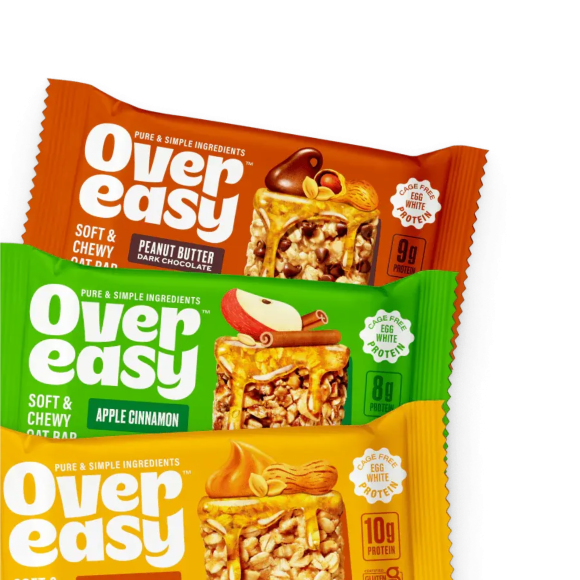
High-performance packaging for bars that need freshness, durability, and impact.
Vibrant packaging designed to protect and showcase confectionery products.
Secure, professional packaging built for supplements and wellness products.
Freshness-focused packaging for dried fruits, nuts, and healthy snacks.
Durable packaging designed to preserve crunch, freshness, and quality.
Protective packaging made for freshness, shelf life, and convenient storage.
Reliable packaging designed for pet food, treats, and specialty products.
Practical packaging solutions for prepared meals, kits, and convenience foods.
Functional packaging built for restaurants, takeout, delivery, and foodservice.
Premium packaging designed to protect products and strengthen brand presentation.
Specialized packaging solutions focused on protection, presentation, and compliance.
A stick pack is a narrow sleeve of film sealed on three or four sides, and the machines that make them run multiple lanes at once at high speed. That combination leaves almost no tolerance. Web width has to divide accurately across the lane count, pitch has to match the machine’s forming and cutting cycle, and the film has to track straight through a narrow former without wandering. Fill volumes are small, so dosing accuracy matters more proportionally than on a larger pack, and a slight variation that would be invisible in a pouch shows up as an underweight sachet. None of this is difficult to get right. All of it has to be specified rather than assumed.
On a single lane pouch line a specification error produces a manageable amount of scrap. On a multi lane sachet machine running at speed, the same error multiplies across every lane and every cycle, which changes the economics of getting it wrong.
Printed films and roll stock for sachet and stick machines, folding cartons for retail packs of sticks, corrugated shipping cartons, counter displays and labels. A stick pack almost never sells individually, so the carton around it is part of the specification.


On sachets and stick packs, machine geometry dominates. The product decides barrier and sealant, and everything else comes from the filler.
Web width, lane count, pitch, core diameter and unwind direction taken directly from the filler rather than assumed.
Three side or four side seal, with sealant chosen for what your product deposits during a small volume fill.
Tear notches or laser scoring positioned so the pack opens cleanly with one hand, which is the whole point of the format.
Laminate set from shelf-life claim, with digital print suiting sampling runs and conventional suiting core volume.
Sachets and stick packs provide convenient, portion-controlled packaging for single-use and measured products. Explore packaging solutions tailored to the barrier, shelf-life, filling and performance requirements of each market.
Bags, cartons and displays specified to your roast, your filling equipment and your shelf-life target, sourced to arrive on schedule.
Built around your blend's aroma sensitivity, your fill line and your shelf-life target, so a delicate blend still tastes right months later.
Structured around what your supplement facts panel and ingredient list require, so the back of the pack holds what regulation demands.
Rated for the weight, grease and abrasion of the product itself, since a five-pound bag reloads its own seal on every handling.
Built for consistent supply across many locations at weekly frequency, where reliability at volume matters more than unit price.
Structured for formula compatibility first, since essential oils, alcohol and surfactants can soften films and degrade seals over years.
A fine powder and a viscous liquid are opposite problems in the same format. Powders carry static, dust the seal area and cling to the former, so film slip properties and sealant choice both have to account for contamination and the fill has to be timed against dust settling. Liquids and gels put the emphasis on seal strength and burst resistance, since a small pack under pressure in transit will find the weakest point in a seal. Viscosity also affects fill speed, which affects how much dwell the seal gets. Add heat sensitive product and the window narrows again. We ask what the product is, its viscosity or particle size, the fill volume, the lane count and your sustained speed, and where the fill happens at a contract manufacturer we work from their machine details rather than yours.
The list is short and skipping any of it produces waste at a rate this format does not forgive.
Web width divided across the lane count has to land within the machine’s tolerance, allowing for slit accuracy. This is arithmetic rather than judgement, and it is the most common failure point.

Pitch has to match the forming and cutting cycle exactly. A small mismatch accumulates across a run and shows as inconsistent pack length and print position.

Product form decides sealant, film slip and how much of a contamination problem the seal area has. Powders and liquids need genuinely different specifications in the same format.

A core retail stick and a promotional sample sachet have different volumes, print needs and order patterns. Sampling favors digital print and shorter runs, which changes the plant choice.

We capture the machine geometry for sachets and stick packs before anything else, because that is what decides whether the order is usable.
We document lane count, web width, pitch, core, unwind direction, fill volume, seal configuration and your sustained operating speed.
We set barrier, sealant, film properties and opening feature around your product, then price through plants that hold tight slit and registration tolerance.
We prove a new structure on a trial quantity where the machine has not run it, then manage supply with delivery and brokerage handled.
We purchase from manufacturing partners and sell to you, so we can place tight tolerance work with plants that hold it rather than with whoever quoted first.
Slit accuracy and registration vary between plants more than most buyers realize. On this format that difference decides whether a run is usable.
We start from lane count, web and pitch rather than from a product brief, because the machine sets the constraints that cannot be negotiated.
Retail cartons, cases and counter displays for stick packs sourced in the same program, since sticks almost never sell individually.
Promotional sampling runs and core retail volume handled differently and priced accordingly rather than forced through one arrangement.
The format exists to deliver one measured dose or portion, and the categories follow from that. Powdered supplements and drink mixes, instant coffee, tea and infusion powders, electrolytes, creamers, sugar and sweeteners, condiments, sauces and dressings, and single use personal care products all use it. Sampling is the other major use and it behaves like a different business, with short runs, many variants and print requirements that favor digital. Where the format really earns its place is trial, because a sachet is the cheapest way to put a product in someone’s hand. Brands running both a core retail stick line and an ongoing sampling program are usually better served treating them as two specifications rather than one, and the cartons, cases and displays around the retail line come from the same program either way.
Reliability that teams can measure.
As a small but growing brand, we struggled to find a packaging supplier who would take us seriously. AR not only welcomed us — they partnered with us. Their work with other startups showed in the quality of our packaging, and Daron went above and beyond, including helping our co-manufacturer optimize their equipment so our pouches came out perfect. We couldn’t ask for a more supportive, solution-focused partner.
ARG is the packaging partner we always needed. They cut through confusion, move fast, and operate like part of our internal team. Their expertise has streamlined our product development, and their above-and-beyond support — like Daron personally delivering samples to our co-manufacturer — is unmatched. We trust them completely.
Armour Rose Group believed in us when other suppliers didn’t. They treated us with the professionalism of a much larger brand and played a real role in helping us scale. Their team is collaborative, reliable, and always willing to solve problems together. Daron’s proactive support and genuine investment in our success stand out above anything we’ve experienced in packaging. Highly recommended.
From day one, the team has been a trusted partner. They provided clear guidance, cost-effective solutions under tight timelines, and the flexibility to scale with a startup. Communication is fast, pricing is transparent, and deliveries are consistently on time and high quality. Support is always there when needed, which makes a real difference. The entire experience makes you feel safe and in good hands— we absolutely recommend Armour Rose Group.
The filler details first. Lane count, web width, pitch, core diameter, unwind direction, seal configuration and your sustained operating speed. If you are still settling on dimensions before you brief us, our reference on standard stick pack sizes and fills sets out the common options. Then the product, meaning whether it is a powder, granule, liquid or gel, its particle size or viscosity, the fill volume per pack and the shelf life you need to hold. Then whether this is core retail volume or a sampling program, since those price and print differently. With that information the specification is straightforward. Without the machine geometry, a quote can arrive perfectly made and unusable.
Because it has to divide accurately across the lane count, and slit accuracy at the plant has to be good enough that every lane lands within the machine’s tolerance. On a single lane pouch line a slight width variation is absorbed. On a multi lane sachet machine it puts some lanes out of specification while others run fine, which produces intermittent faults that are frustrating to diagnose. We calculate the width against your lane count including slit tolerance, and place the work with plants that can hold it, rather than treating width as a nominal figure.
It is the most common failure in the format and it is manageable rather than inevitable. Fine powder carries static, dusts across the seal area during a fast small volume fill and sits between the film layers, creating channels that look sealed and fail testing. The variables are sealant choice, film slip and surface properties, jaw pressure, and the timing between fill and seal that lets dust settle. Because the machine runs multiple lanes, the fault often appears on some lanes and not others, which points to slit or tracking as well. We specify assuming contamination rather than a clean seal.
Yes, and it is usually necessary, because a stick pack rarely sells on its own. A retail pack of thirty sticks needs a folding carton dimensioned to the stick length and count, a corrugated case sized to the retail cartons, and often a counter display. Those are paperboard and corrugated purchases from different industries to the film. We purchase across all of them and sell to you as one program, so the stick dimensions, the carton and the case count are settled against each other rather than by three suppliers working from three assumptions.
No. We purchase from manufacturing partners and sell to customers. On a tight tolerance format the benefit is concrete, because slit accuracy and print registration differ meaningfully between plants and we can place the work where the tolerance is genuinely held. We are also free to treat a sampling program and a core retail line as different sourcing problems, using a plant suited to short digital runs for one and a volume plant for the other, which a single converter quoting its own equipment cannot do.
Less readily than in larger formats, and it is worth being direct about why. These structures are thin, the tolerances are tight and the seal has to be reliable at high speed across multiple lanes, which leaves little latitude for material substitution. Where a percentage of post-consumer recycled content can be introduced without compromising the seal or the tracking, we will specify it. On the retail carton and case around the sticks, recycled content and FSC-certified board are both available, and since that is most of the pack by weight it is where a documentable claim is easiest to make.
Give us your filler geometry, product form, fill volume and speed. We will specify the film, place it with a plant that holds the tolerance and quote the carton. Start here.